Delight Springs

Monday, September 22, 2014

Boethius and the animals

How about that Climate March

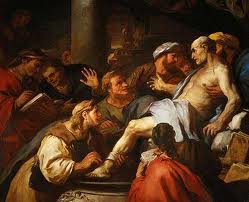
Today in CoPhi it's the pagan/stoic/Christian/Platonist martyr Boethius, and then the rights of animals. 

We saw last time that Bertrand Russell had little regard for how Augustine, despite his philosophical sophistication when it came to hard-nut conceptual problems like time, ironically squandered much of his own on a preoccupation with sin, chastity, and staying out of hell.

Russell liked Boethius, or aspects of his thought at least. Boethius was also perplexed by time, and initially unimpressed by the alleged capacity of timeless divinity to accommodate both omniscience and free will. Like Russell, I'm struck by this "singular" thinker's ability to contemplate happiness (he thought all genuinely happy people are gods) while practically darkening death's door.

Boethius was consoled by the thought that God’s foreknowledge of everything, including the fact that Boethius himself (among too many others) would be unjustly imprisoned and tortured to death, in no way impaired his (Boethius’s) freedom or god's perfection. Consoled. Comforted.Calmed. Reconciled.

That’s apparently because God knows things timelessly, sees everything “in a go.” I don’t think that would really make me feel any better, in my prison cell. The real consolation of philosophy comes when it contributes to the liberation of mind and body (one thing, not two). But it’s still very cool to imagine Philosophy a comfort-woman, reminding us of our hard-earned wisdom when the going gets impossible.


And then, of course, they killed him. The list of martyred philosophers grows. And let’s not forget Hypatia and Bruno. [Russell] The problem of suffering (“evil”) was very real to them, as it is to so many of our fellow world-citizens. You can’t chalk it all up to free will. But can we even chalk torture or any other inflicted choice up to it, given the full scope of a genuinely omniscient creator’s knowledge? If He already knows what I’m going to do unto others and what others will do unto me, am I in any meaningful sense a free agent who might have done otherwise? The buck stops where?

For those keeping score, add Boethius to Aristotle's column.


And now, for something completely different: animals. Not very many philosophers of note have denied that animals are capable of feeling pain. But Descartes did.

"Speciesism" is generally understood to to convey a pejorative connotation, but I went on record a long time ago as a species of speciesist. A pragmatist is bound to give priority to human interests, but an animal-loving pragmatist will always urge the rejection of allowing them to run roughshod over our furry fellow travelers whose planet it also is. Still, if animal research will save human lives I'm going to cast my vote in favor.


[Full movie]

Kant's view that harming animals is wrong because it damages OUR character and relationships, however, is too speciesist for my blood.

I'm happy our text gives me another opportunity to put in a word for quirky old Jeremy Bentham, who rightly noted that pain and suffering know no species bounds. [Animal Rights... A Utilitarian View] Other critters don't process it with the magnifying  human sort of emotional complexity, nor do they typically bear any detectably solicitous mutual regard of the human kind (though some primates and puppies do display what we're bound to anthropomorphize as tenderness and affection). But that doesn't make them robots.

Happily, Jeremy's now feeling no pain.

Friday, September 19, 2014

Created sick, commanded to be well

A student yesterday told us that God is love, that her purpose in life is to share and spread it, and that all who "deny" God are destined to an eternity in Hell. After all, we're all given a choice. And, none of us deserves grace.

But, what if someone sincerely disbelieves in that loving God, on the basis of an honest evaluation of the evidence and its absence? Their choice, their foul, their eternal damnation. Feel the love.

It's certainly not the first time I've heard the casual expression of such breathtaking inhumanity in my classroom, here in God's country. But this time it really rang a bell, on a day when we also discussed Hume's Law and its corollary that Ought implies Can. I was reminded of Mel Gibson, going with "the chair" and consigning his saintly God-fearing wife to the flames:
“Put it this way. My wife is a saint. She’s a much better person than I am. Honestly. She’s, like, Episcopalian, Church of England. She prays, she believes in God, she knows Jesus, she believes in that stuff. And it’s just not fair if she doesn’t make it, she’s better than I am. But that is a pronouncement from the chair. I go with it.”
And, I was reminded of the late Saint Hitch's lament for theistic incoherence: created sick, commanded to be sound.
Oh, wearisome condition of humanity, Born under one law, to another bound; Vainly begot, and yet forbidden vanity, Created sick, commanded to be sound.
― Fulke Greville (quoted by Christopher Hitchens)

What we have here, picked from no mean source, is a distillation of precisely what is twisted and immoral in the faith mentality. Its essential fanaticism, its consideration of the human being as raw material, and its fantasy of purity. 
Once you assume a creator and a plan, it makes us objects, in a cruel experiment, whereby we are created sick and commanded to be well. I'll repeat that. Created sick, and then ordered to be well.
And over us to supervise this, is installed a celestial dictatorship; a kind of divine North Korea. Exigent, I would say, more than exigent greedy for uncritical praise from dawn until dusk. And swift to punish the original sins with which it so tenderly gifted us in the very first place. An eternal, unalterable, judge, jury and executioner, against whom there could be no appeal. And who wasn't finished with you even when you died. However! Let no one say there's no cure! Salvation is offered! Redemption, indeed, is promised, at the low price, of the surrender of your critical faculties. 
Religion, it might be said, must be said, would have to admit, makes extraordinary claims, but, though I would maintain that extraordinary claims require extraordinary evidence, rather daringly provides not even ordinary evidence for its extraordinary supernatural claims. To insist that we are created and not evolved, in the face of all the evidence.
Religion forces nice people to do unkind things and also makes intelligent people say stupid things. 
Handed a small baby for the first time, is it your first reaction to think, "Beautiful, almost perfect. Now please hand me the sharp stone for its genitalia, that I may do the work of the Lord"? No!
As the great physicist Stephen Weinberg has aptly put it, "In the ordinary moral universe, the good will do the best they can, the worst will do the worst they can, but if you want to make good people do wicked things, you'll need religion. 
Religion, and in fact any form of faith, -because it is a surrender of reason, it's a surrender of reason in favor of faith, is a fantastic force multiplier. A tremendous intensifier, of all things that are in fact divisive rather than inclusive. That's why its history is so stained with blood. Crimes against humanity, crimes against womanhood, crimes against reason and science, attacks upon medicine and enlightenment, all these appalling things. There is no conceivable way that by calling on the supernatural, you will achieve anything like your objective of a common humanism, which is I think you're quite right to say, our only chance of, I won't call it salvation. 

Wednesday, September 17, 2014

Augustine, free will, & free speech

It's Constitution Day again, and again I look forward to making a small public profession of fealty to academic freedom. (We'll line up in the courtyard of Peck Hall, some of us, and take turns reading lines from the document whose 1st amendment secures our unreserved right to speak our hearts and minds.) Couldn't do this, without that.

Is anyone, from God on down, “pulling our strings”? We’d not be free if they were, would we? If you say we would, what do you mean by “free”? Jesus and Mo have puzzled this one, behind the wheel with with Moses...
jandmofw
..and with "Free Willy." But as usual, the Atheist Barmaid is unpersuaded.

(As I always must say, when referencing this strip: that’s not Jesus of Nazareth, nor is it the Prophet Mohammed, or the sea-parter Moses; and neither I nor Salman Rushdie, the Dutch cartoonists, the anonymous Author, or anyone else commenting on religion in fictional media are blasphemers. We're all just observers exercising our "god-given" right of free speech, which of course extends no further than the end of a fist and the tip of a nose. We'll be celebrating precisely that, and academic freedom, when we line up to take turns reading the Constitution this morning.

No, they’re just a trio of cartoonish guys who often engage in banter relevant to our purposes in CoPhi. It’s just harmless provocation, and fun.  But if it makes us think, it’s useful.)

Augustine proposed a division between the “city of god” and the “earthly city” of humanity, thus excluding many of us from his version of the cosmos. “These two cities of the world, which are doomed to coexist intertwined until the Final Judgment, divide the world’s inhabitants.” SEP

And of course he believed in hell, raising the stakes for heaven and the judicious free will  he thought necessary to get there even higher. If there's no such thing as free will, though, how can you do "whatever the hell you want"?  But, imagine there's no heaven or hell. What then? Some of us think that's when free will becomes most useful to members of a growing, responsible species.

Someone posted the complaint on our class message board that it's not clear what "evil" means, in the context of our Little History discussion of Augustine. But I think this is clear enough: "there is a great deal of suffering in the world," some of it proximally caused by crazy, immoral/amoral, armed and dangerous humans behaving badly, much more of it caused by earthquakes, disease, and other "natural" causes. All of it, on the theistic hypothesis, is part and parcel of divinely-ordered nature.

Whether or not some suffering is ultimately beneficial, character-building, etc., and from whatever causes, "evil" means the suffering that seems gratuitously destructive of innocent lives. Some of us "can't blink the evil out of sight," in William James's words, and thus can't go in for theistic (or other) schemes of "vicarious salvation." We think it's the responsibility of humans to use their free will (or whatever you prefer to call ameliorative volitional action) to reduce the world's evil and suffering. Take a sad song and make it better.

Note the Manichaean strain in Augustine, and the idea that "evil comes from the body." That's straight out of Plato. The world of Form and the world of perfect heavenly salvation thus seem to converge. If you don't think "body" is inherently evil, if in fact you think material existence is pretty cool (especially considering the alternative), this view is probably not for you. Nor if you can't make sense of Original Sin, that most "difficult" contrivance of the theology shop.


"Augustine had felt the hidden corrosive effect of Adam's Fall, like the worm in the apple, firsthand," reminds Arthur Herman. His prayer for personal virtue "but not yet" sounds funny but was a cry of desperation and fear.
Like Aristotle, Augustine believed that the quality of life we lead depends on the choices we make. The tragedy is that left to our own devices - and contrary to Aristotle - most of those choices will be wrong. There can be no true morality without faith and no faith without the presence of God. The Cave and the Light
Bertrand Russell, we know, was not a Christian. But he was a bit of a fan of Augustine the philosopher (as distinct from the theologian), on problems like time.


As for Augustine the theologian and Saint-in-training, Russell's pen drips disdain.
It is strange that the last men of intellectual eminence before the dark ages were concerned, not with saving civilization or expelling the barbarians or reforming the abuses of the administration, but with preaching the merit of virginity and the damnation of unbaptized infants.
Funny, how the preachers of the merit of virginity so often come late - after exhausting their stores of wild oats - to their chaste piety. Not exactly paragons of virtue or character, these Johnnys Come Lately. On the other hand, it's possible to profess a faith you don't understand much too soon. My own early Sunday School advisers pressured and frightened me into "going forward" at age 6, lest I "die before I wake" one night and join the legions of the damned.  

That's an allusive segue to today's additional discussion of Aristotelian virtue ethics, in its turn connected with the contradictions inherent in the quest to bend invariably towards Commandments. "Love your neighbor": must that mean, let your neighbor suffer a debilitating terminal illness you could pull the plug on? Or is the "Christian" course, sometimes, to put an end to it?

We also read today of Hume's Law, Moore's Naturalistic Fallacy, the old fact/value debate. Sam Harris is one of the most recent controversialists to weigh in on the issue, arguing that "good" means supportive of human well-being and flourishing, which are in turn based on solid facts. "The answer to the question, 'What should I believe, and why should I believe it?' is generally a scientific one..."  Brain Science and Human Values

Also: ethical relativism, meta-ethics, and more. And maybe we'll have time to squeeze in consideration of the perennial good-versus-evil trope. Would there be anything "wrong" with a world in which good was already triumphant, happiness for all already secured, kindness and compassion unrivaled by hatred and cruelty? I think it might be just fine. Worth a try, anyway. Where can I vote for that?

Monday, September 15, 2014

Stoics & ethics

Ken Burns' Roosevelts debuted last night. I never stop marveling at his skill in making old black and white images spring to life. "It is the great arrogance of the present to forget the past," he said, and "Do something that will last and be beautiful." 

It’s a terse and breezy reading assignment in Little History today in CoPhi, on the Stoics EpictetusCicero, and Seneca. We're also looking at the first half of our chapter on Right & Wrong, concerned mainly with deontologists and utilitarians. (They're bumping last year's complementary discussion of Stoics & Pragmatists.)
 ’Being philosophical’ simply means accepting what you can’t change, for instance the inevitable process of growing older and the shortness of life. 
‘Stoic’ came from the Stoa, which was a painted porch. 
Like the Sceptics, Stoics aimed for a calm state of mind. Even when facing tragic events, such as the death of a loved one, the Stoic should remain unmoved. Our attitude to what happens is within our control even though what happens often isn’t. [The Philosophy of Calm, Ph'er Mail]
Stoics think we are responsible for what we feel and think. We can choose our response to good and bad luck… They believe emotions cloud reasoning and damage judgment. 
Epictetus [don't confuse him with his predecessor Epicurus] started out as a slave. When he declared that the mind can remain free even when the body is enslaved he was drawing on his own experience. [Tom Wolfe's Epictetus, nyt]
The brevity of life and the inevitability of aging were topics that particularly interested Cicero and Seneca. 
Cicero said old people can spend more time on friendship and conversation. He believed the soul lived forever, so old people shouldn’t worry about dying. [Epicurus already told us they needn't worry in any event.]
For Seneca the problem is not how short our lives are, but rather how badly most of us use what time we have. 

“The greatest obstacle to living is expectancy, which hangs upon tomorrow and loses today… The whole future lies in uncertainty: live immediately.” Maria Popova, Brainpickings 

The Stoic ideal was to live like a recluse… studying philosophy and get[ting] rid of those troublesome emotions. 
The New Yorker (@NewYorker)
Seneca’s plays were gore-fests. His wealth was vast. He counselled tyrants. And he called himself a Stoic?nyr.kr/1EPqUOh


But Nigel Warburton‘s question is right on target: at what price? If you’re even half human, like Mr. Spock, you’ll only damage yourself by suppressing your affective side. Calm may not be the greatest good, after all. On the other hand, Stoicism is widely misunderstood - even by Vulcans.

Anyway, Roman philosophy is under-rated. The Romans have done a lot for us.


And not all emperors were so bad as Nero. Marcus Aurelius was actually quite sane, and humane.

Stoicism, with its general mindset of not allowing oneself to be moved or harmed by externals beyond one's control, and the crucial assumption that our own thoughts are ours to manage, always courts the cold of Vulcan indifference but also offers the last line of defense for prisoners of war and victims of malice. If you really can persuade yourself that physical pain is nothing to you, that emotional stress can't touch you, that's quite a defensive weapon.

And if Stoicism can turn the chill of age into the warmth of experience, friendship, and joyous memory, that's quite an achievement. The older I get, the more I appreciate old Seneca's wisdom about time (not that it's in such short supply but that we're such bad managers of it). But I continue to question his passive compliance with crazy Nero. Is that Stoicism or impotent resignation? Surely there's a difference.

The Euthyphro Dilemma is on our plate today. "Is the pious or holy [or, ethically speaking, the right or the good]  beloved by the gods because it is holy [right. good], or holy (etc.) because it is beloved?" Euthyphro didn't grasp the issue. Do we? Either God's not the source of good, or good's good only nominally and arbitrarily. Nigel implies there's something destructive or Hobson-ish about this choice, but isn't it just blindingly clear that pole A is the one to grab? Well no, it won't be to many students. A good discussion is called for.

"Deontology," a scary word for a scary over-devotion to "duty." Or so I'll say, today.

And, time permitting, I'll put in some good words for both Jeremy Bentham and J.S. Mill's respective versions of consequentialist utilitarian hedonism. Let's not choose, let's pick cherries.

Finally, the bonus topic: Robert Nozick's Experience Machine. Fire it up, we'll see if anybody really wants to step inside.

I'm "flipping" my classes these days, which practically means less of my "content" explicated during the precious minutes of classtime (though it's still right here for the taking, as always) and more group discussion. I like my DQs today, especially Do you think the only thing preventing you from being good is the fear of divine retribution for being bad? Or do you think that to be good one must simply believe in goodness and reciprocity ("Do unto others" etc.)? 

In other words, Julia Sweeney, Why aren't the godless all "rushing out and murdering people"?

And, Is it better to be a sad but wise Socrates than to be a happy but ignorant fool?

Don't worry, be happy is not too far off the path of wisdom,  is it? 

Thursday, September 11, 2014

Terror-free on 9/11

Another 9/11. Will there ever be one to eclipse that horrific day 13 years ago? Watching the President announce our latest war on terror last night, it really feels like we're stuck in one of those sci-fi time loops. We need something to spring us. We've got to get ourselves back to the Garden.


Humans have always found and will always find something to be terrorized by. Blaise Pascal, we noted in class, was so frightened by the cosmos itself ("the eternal silence of these infinite spaces") that he felt compelled to subdue his own exquisitely rational/mathematical mind and brainwash himself into believing life in our universe comes with ultimate satisfaction guaranteed. Don't bet on it.

The inherent mortal terror of existence is precisely this knowledge that we must die sooner or later, one way or another, without any sure promise of a 2d act. Nor have we any assurance of solid reviews for the show.

We have a hard time remembering our good luck and being suitably appreciative (let alone grateful and joyous): we get to die, because we got to live. We're here now, invited to savor the free lunch of existence.

So: we'll speak again in class today of Epicurus and the simple life, the life of freedom and fearlessness, the privilege of existence. Even when dying a miserably painful death, our philosopher took time to disarm fear and celebrate life. "On this truly happy day of my life, as I am at the point of death, I write this to you. The diseases in my bladder and stomach are pursuing their course, lacking nothing of their usual severity: but against all this is the joy in my heart at the recollection of my conversations with you."

And that's how to beat terror. A good and timely reminder on this date, in this time. We're not dead yet, nor are our children, nor theirs to come. If you want to be happy, be. Live.


Wednesday, September 10, 2014

Pyrrho, Epicurus, & God

In CoPhi today it's Pyrrho the deep skeptic,  Epicurus the hedonist (though I've indicated *my dissatisfaction with applying that label to him) and seeker of simple pleasures and happiness; and God (subbing this time for the APA).


So, to Pyrrho and Epicurus... but first a quick follow-up on Plato and Aristotle. Check out this version of School of Athens.

As for Aristotle’s eudaimonia, in some ways it anticipated Epicurus’s garden and what Jennifer Michael Hecht calls “graceful-life philosophies” that proclaim in all simplicity: “we don’t need answers and don’t need much stuff, we just need to figure out the best way to live.” Then, and only then, will we be happy.

As for Pyrrho: If you’d asked him Who rules the Universe?, he might have replied: Lord knows. Cats, again. And pigs.
pig 

Reminding us of Pyrrho’s famous pig, who impressed Montaigne by riding out a storm at sea with much greater equanimity (and, crucially, much less comprehension) than his human shipmates, and of J.S. Mill’s declaration that it’s “better to be a human dissatisfied than a pig satisfied,” Hecht comments: “This whole pig-versus-philosopher debate is pretty hilarious, yes?”

Yes. But I agree with Spinoza and Hecht. “The happiness of a drunkard is not the happiness of the wise,” though of course there are happy occasions when it has its place too. Bottom line: “Knowledge and wisdom are worth it,” it can be everything to have found true love and meaningful work, and both– all-- can end in a flash, without warning. Stay on your toes, but don’t fret too much about the storm.
piranha
One more little animal image for Pyrrho, whose name I prefer to pronounce compatibly with this mnemonic trick: just remember that a pyrrhonic skeptic is like a piranha fish, toothily devouring every proposed candidate for belief. Cats and pigs too, probably.

Bertrand Russell: "
He is said to have maintained that there could never be any rational ground for preferring one course of action to another. In practice, this meant that one conformed to the customs of whatever country one inhabited. A modern disciple would go to church on Sundays and perform the correct genuflexions, but without any of the religious beliefs that are supposed to inspire these actions." Like Pascal's Wager, this approach smacks of insincerity. Laziness, too, since it purports to show "the ignorant to be as wise as the reputed men of learning." What's a better way? To be curious and hopeful.
The man of science says 'I think it is so and so but I am not sure.' The man of intellectual curiosity says 'I don't know how it is but I hope to find out. The philosophical Sceptic says 'nobody knows, and nobody ever can know.'

And as for Epicurus, Jennifer Hecht‘s got his number. It’s listed.
For an Epicurean, somewhere there are beings that are truly at peace, are happy… The mere idea of this gentle bliss is, itself, a kind of uplifting dream. After all, we human beings know a strange thing: happiness responds to circumstances, but, basically, it is internal. We can experience it when it happens to come upon us; we can induce it with practices or drugs; but we cannot just be happy.

No, we must work to “solve the schism” between how we feel and how we want to feel. Happiness is a choice and a lifetime endeavor, and though it comes easier for some than for others there are tips and tricks we can use to trip our internal happy meters and achieve ataraxia, peace of mind, simple contentment, “tranquillity, or the freedom from disturbance and pain that characterizes a balanced mind and constitutes its first step toward the achievement of pleasure.”

(But btw, as for that claim that we can't just "be happy": Mr. Tolstoy, subject of yesterday's bonus quiz question (and Google Doodle), seems to have thought otherwise. The pithiest quote I've found from the prolix author of War and Peace: "If you want to be happy, be.")

Stop fearing the harmless and remote gods, Epicurus said. Stop fearing your own death, it’s not (as Wittgenstein would echo, millennia later) an event you’ll ever experience. “Life is full of sweetness. We might as well enjoy it.”

*Sissela Bok calls Epicurus a hedonist, but that's only technically correct. Yes, he said pleasure's at the heart of happiness. But what kind of pleasure?

A happy life is tranquil, simple, loving, and above all free from pain, fear, and suffering, available to all regardless of social status, nationality, or gender. Such a life of pleasure, Epicurus held, would of necessity have to be a virtuous one; ...


That’s Alain de Botton, author of a text I used to use in this course, and controversial proponent of religion for atheists. (Don’t confuse him with Boethius.) His interview with Krista Tippett was instructive. Like Jennifer Hecht, he wants us to use philosophy to enhance our bliss and sweeten our dreams.

Pyrrhonian deep skepticism and moral/cultural relativism share a common root. Simon Blackburn voices the right reply to those who say we can function without beliefs, or without discriminating between better and worse beliefs, when he points out that this is simply impractical and socially dysfunctional. Not only might you get run over by a racing chariot or step off a cliff, you also scatter seeds of discord within your community and perhaps even your family.

So I too “would defend the practical importance of thinking about ethics on pragmatic grounds.” To pretend  with “Rosy the Relativist” that we can all simply have and act on our own truths, our own facts, without confronting and negotiating our differences and critically evaluating our respective statements of (dis)belief, really is “farcical.” Lord knows.

We won’t suffer a meaning deficit, though, if we live simply and naturally in the company of friends who’ll help us conquer our fears and address our many questions about life, the universe, and everything. That’s the Epicurean way, when we decide nature’s already provided enough for our peace of mind and our contentment. That’s ataraxia.

So finally there are these dots, connecting Epicurus and Pyrrho:
Epicurus, though no friend to skepticism, admired Pyrrho because he recommended and practiced the kind of self-control that fostered tranquillity; this, for Epicurus, was the end of all physical and moral science. Pyrrho was so highly valued by his countrymen that they honored him with the office of chief priest and, out of respect for him, passed a decree by which all philosophers were made immune from taxation.

Tranquility and a free ride: now that would make me happy. 

We're also finishing the God chapter in Philosophy: The Basics today. We consider Hume on miracles, Pascal's Wager, Don Cupitt's non-realism, faith and fear (and Epicurus again). It's hard to contest Nigel's last observation, that some people would rather give up one or more of God's omni-attributes than give up God, period. But then we're going to have to ask them: Is your downsized God big enough to create and sustain a cosmos? Heretofore, as the late great Carl Sagan observed, most humans have conceived their gods on a blighted and decidedly non-cosmic scale.

Monday, September 8, 2014

Aristotle & God

We have Aristotle on two tracks (the Little History and Philosophy Bites) today in CoPhi. God's on 3d (pinch-hitting for Lucius Outlaw and last year's America the Philosophicaldiscussion of the historical role of African-Americans in philosophy, if you're interested).

Aristotle‘s in the Pythons' philosopher's song too, though he's even more sober than his Ionian predecessors. He rejected his teacher Plato’s metaphysics, returned to the cave of the phenomenal world to take a closer look, avoided universalizing abstractions and CAPS (preferring forms in things to transcendent and remote FORMS "above"), and inspired the name of our annual Spring speaker series in the philosophy department at MTSU, the Lyceum


(We actually now also have a *Fall Lyceum at MTSU, inaugurated last year by Carlin Romano.)


The best quick & graphic way of illustrating the difference between Plato and his student Aristotle, I’ve found, is by pondering Raphael’s famous painting School of Athens [annotated]. Pay close attention to the hands. 

A new history of western philosophy takes that painting to heart. The Cave and the Light: Plato Versus Aristotle, and the Struggle for the Soul of Western Civilization, by Arthur Herman,  traces its implications for centuries of philosophers who lined up to squeeze into the School behind either Plato or Aristotle.
They began as student and master. They ended as rivals. Plato is supposed to have said, “Aristotle kicked me,as foals do their mothers when they are born.”All the evidence, however, suggests the crucial break between them came after Plato's death. Aristotle entered Plato's Academy in Athens at age seventeen, probably in 367 BCE. When he left, he was in his forties...
Why they broke is a fascinating story reflected in centuries of divergent influence. If I were going to have to line up in that painting I'd have to pick Aristotle's side.

"How Aristotle Invented Science"

Aristotle said one swallow doesn't make a summer, and a few moments of pleasure don't add up to a happy life. Nor does a "happy childhood." We must be in it for the long haul, and must see our good as coordinate with that of others including those who'll succeed us after we're gone. It's all about eudaimonia ("you die" is a helpful mnemonic, aggressive and hostile though it sounds, and though it really means you live.)

It's probably for his ethics that Aristotle is most widely renowned, but Bertrand Russell for one was unimpressed. "There is in Aristotle an almost complete absence of what may be called benevolence or philanthropy. The sufferings of mankind, in so far as he is aware of them, do not move him emotionally." (Hold that thought, when we talk about the problem of evil.)

Aristotle was a naturalist, noticing our continuity with the rest of nature. Like trees and plants we flourish when well-nurtured. Unlike them, we must take charge of our own nurture in order to reach our potential and achieve The Good Life in tandem with our peers.

It's so ironic that the middle ages made Aristotle "The Philosopher," i.e. the unquestioned Authority. That was indeed "against the spirit of philosophy."

Terence Irwin's podcast interview is compelling listening, for those unaccustomed to a Yorkshire accent (or whatever it is). He makes the same point I just did about coordinating the personal and the public good, and "identifying one's own interest with other people's interest" etc. 

He also helpfully corrects overly-simple reductions of Aristotle's ethics to a dogged middle-of-the-roadism. Avoiding extremes doesn't mean choosing the blandest, milk-toastiest possibility. No, his Golden Mean means doing the right thing at the right time for the right reason etc., and that could very well turn out to be something exciting. Or scary. (Like going after ISIS? What would Aristotle say?)

Aristotle's version of God, on the other hand, may just be too bland for your taste. It's not a he or she, or really even an it as we typically understand things. 
To Aristotle, God is the first of all substances, the necessary first source of movement who is himself unmoved. God is a being with everlasting life, and perfect blessedness, engaged in never-ending contemplation. IEP
This is a remote and impersonal God, who won't intervene in our affairs and could really care less about them. 

The God implied in the Hebrew Bible book of Ecclesiastes seems fairly indifferent to human suffering & flourishing too, and unpromising with respect to the old dream of Sunday School heaven and immortality. Jennifer Hecht glosses it smartly in Doubt:
Koheleth brushed aside the dream of an afterlife with a simple appeal to reason--Who knows this?--and the conclusion that humans have nothing above the beasts in this regard...
But it doesn't follow that simple happiness is unavailable in this life. The recipe's pretty simple too.
Love your spouse. Get some work to do, do it with all your might; enjoy the simple pleasures of food, drink, and love. Everything else is vanity. 
But, it's a form of vanity we can live with. The search for true love, solid friendship, good work, and daily delight might just be enough. Enjoy your life. A person could do worse. The search for happiness on this orb is anything but a "dismal" undertaking, as someone sadly suggested. You could ask Aristotle. It's the end and aim of life.

Not everyone agrees with Aristotle about that, of course. For some, the end and aim is to serve and glorify God (and maybe reap the reward of that elusive afterlife after all). Their god knows and cares about human striving, and presumably abhors gratuitous suffering.

But there's the rub that's rubbed raw in our Philosophy: The Basics reading today: the perennial problem of evil or suffering, or the worry that our world is too full of woe to lay at the figurative feet of an omni-being. And even if we think we can disarm some of the problem by deploying the timeworn Free Will Defense, we leave "natural" evil (killer storms, quakes, disease) unaccounted for.

We also read today of David Hume's posthumous objections to weakly-analogical Paley-ish Design Arguments. Human artifacts are one thing, the products of complex time-borne natural phenomena seem to be something very different. 

But natural selection, the "blind" and unpremeditated evolutionary process whereby organisms thrive when they develop adaptations suitable to the conditions of their environment, can be considered a form of Design without a Designer. We should ask and try to answer: Is there an important difference between intelligent design and natural complexity?

Must there have been a universal First Cause? But what caused the cause? That question is neck-and-neck with the problem of evil, in turning out many a young non-theist. J.S. Mill and Bertrand Russell, for instance.
[T]the argument that there must be a First Cause is one that cannot have any validity. I may say that when I was a young man and was debating these questions very seriously in my mind, I for a long time accepted the argument of the First Cause, until one day, at the age of eighteen, I read John Stuart Mill's Autobiography, and I there found this sentence: "My father taught me that the question 'Who made me?' cannot be answered, since it immediately suggests the further question `Who made god?'" That very simple sentence showed me, as I still think, the fallacy in the argument of the First Cause. If everything must have a cause, then God must have a cause. If there can be anything without a cause, it may just as well be the world as God, so that there cannot be any validity in that argument. Bertrand Russell, Why I Am Not A Christian

I think I've heard just about every imaginable response to this question, through the years in my classrooms, but I'll ask it again: 

If you believe in God, how do you attempt to reconcile or understand the full extent of human suffering? (Think of particular instances such as the "agony of a young child dying of an incurable disease," or an innocent gunshot or terror victim, or someone killed in a storm and their survivors.) Do you see it as part of a divine plan we just have to trust, or a deep mystery we shouldn't think too much about? Or do you believe in a God who is less than omnipotent and is just doing the best He/She/It can to bring about a harmonious and just Creation?

If you don't believe in God, is that in whole or in part because of the Problem of Evil? Or something else?

Or maybe you're like Charlie Brown's antagonist Lucy, who once responded to his Socratic query about the meaning of it all that "I just don't think about things I don't think about." Didn't seem to make her any happier, not thinking. Did it?

Friday, September 5, 2014

Socrates in Love

Our CoPhi discussions of Socrates, Plato, Platonic love, Higher Love, and human reality yesterday inspired at least one student, who boldly and generously offered to host gatherings that might partake of the free truth-seeking spirit of Socratic dialogue. We noted (with M.M. McCabe) the allure of a kind of conversation our culture's almost forgotten how to have, an occasion for everyday people to get together and 
to discuss with others in this open-minded, open-ended way that allows them to reflect on what they think and us to reflect on what we think, without dictating, without dogma, without insistence, and without imperative... to be true to themselves: to be sincere about their beliefs and to be honest... and to have some respect for their companion.
Christopher Phillips was similarly inspired when he created Socrates Cafe,
gatherings where people from different backgrounds get together and exchange thoughtful ideas and experiences while embracing the central theme of Socratizing; the idea that we learn more when we question and question with others.
The point is to foster mutual understanding, empathy, respect, and collaborative enlightenment, to break down barriers to communication, to go beyond the superficial plane of trivial and meaningless talk that so often characterizes our public exchanges, to put partisan prejudice aside and really listen to one another.

And, as with the great Gadfly himself, the point is to puncture the pretense that only a few of us really Know, and are licensed to engage in such discourse. No: philosophy is supposed to be for everyone.

So, with the pleasing vision of Socrates Cafe coming soon to the agora of our little 'boro in mind, it felt serendipitous to come across this last night in the Times:
We can talk across lines [of partisan division and mistrust] by talking about what we love, because a lot of us love the same things: our kids and grandkids, our country, the natural world, the idea that people should be able to get ahead in life. Then we can talk about our doubts, because we all doubt that what we love is being served well. Beginning a conversation with loves and doubts rather than political ideologies opens a new door to dialogue, driven by story-telling rather than political point scoring. ("Reclaiming 'We the People,' One Person at a Time")
This is the Socratic dream of one Parker J. Palmer, who runs retreats based on something he calls a Circle of Trust. Like Chris Phillips, he wants "to help people step back from the noise of modern life, reflect, and return more centered and effective in their vocations." 

"Talking about what we love": that's what Socrates was all about, at his ancient Symposium and in Phillips' Socrates in Love. Let's do it too.