"Blockadia" is where the climate action is, these days.
Where's that? Nowhere, everywhere, "wherever extractive projects are attempting to dig and drill." Or frack, or lay pipe, or in some other way disrupt and despoil local lands and communal traditions. It's a "roving transnational conflict zone" immediately focused on environmental integrity but ultimately about democratic control of vital resources by those whose lives and livelihoods depend on them.
Who are the Blockadians? Increasingly, everyday people. Professors, students, grandmothers, all kinds. Increasingly not stereotypical activists. Klein travels the globe in this chapter, finding Blockadians in Greece, Russia, China, Canada, Texas, "the middle of nowheres" that become "centers of everywhere."
All of this is so heartening, so encouraging of hopefulness that a critical mass of concerned citizens might actually begin not just to hold invasive corporate marauders and their government sponsors accountable for damages but actually to anticipate and prevent home invasion before it happens.
But, remember the 2010 BP oil spill? It was such a horror, now it's another old news story nearly forgotten. Do we have collective memory enough to make Blockadia a permanent place? Wendell Berry says we all just need to recommit ourselves to the concept of home, making global thinking the unforced flower of local action and "affection." "If each of us loved our homeplace enough to defend it, there would be no ecological crisis, no place could ever be written off as a sacrifice zone."
He's surely right, if we can see and value the sweetness of home wherever anyone hangs a hat. "Look again at that dot..." We may not get it right in the first several drafts, but if we persevere we may endure.
6 am/6:37, 66/93, 6:42
Thursday, September 22, 2016

Wednesday, September 21, 2016
Anselm, Aquinas, and Emerson's eyeball
It's Anselm's ontology and Aquinas's Aristotelian "special pleading" today in CoPhi, with a side of Emersonian transparency.
Anselm's famous argument, less popular among theologians than some philosophers, merits Russell's respect. Is there "a bridge between pure thought to things," an armchair way of knowing? Wouldn't it be nice! But subordinating reason to faith, believing before understanding, gets things backwards. Existence runs faster than our knowledge of essence, Aquinas concluded, so you can't really know God from your armchair.
Anselm's famous argument, less popular among theologians than some philosophers, merits Russell's respect. Is there "a bridge between pure thought to things," an armchair way of knowing? Wouldn't it be nice! But subordinating reason to faith, believing before understanding, gets things backwards. Existence runs faster than our knowledge of essence, Aquinas concluded, so you can't really know God from your armchair.
And yet, Aquinas's five "ways" of knowing about unmoved movers, first causes, necessity, perfection, and purpose, though fair, forceful, sharp, and clear, are plenty sedentary. They too place the cart before the horse, the conclusion before the argument.
And that's why good philosophers get up out of their armchairs and move themselves to walk, talk, and think before they issue their summas. They roam, they take in nature's pagaent, and sometimes they ecstatically effuse.
Crossing a bare common, in snow puddles, at twilight, under a clouded sky, without having in my thoughts any occurrence of special good fortune, I have enjoyed a perfect exhilaration. I am glad to the brink of fear. In the woods too, a man casts off his years, as the snake his slough, and at what period soever of life, is always a child. In the woods, is perpetual youth. Within these plantations of God, a decorum and sanctity reign, a perennial festival is dressed, and the guest sees not how he should tire of them in a thousand years. In the woods, we return to reason and faith. There I feel that nothing can befall me in life, — no disgrace, no calamity, (leaving me my eyes,) which nature cannot repair. Standing on the bare ground, — my head bathed by the blithe air, and uplifted into infinite space, — all mean egotism vanishes. I become a transparent eye-ball; I am nothing; I see all...
Ralph was getting carried away there, the way poets can. Nobody's ever nothing, no seer sees all. But knowers go looking and seeing, they don't just muse from their seats. And then, like the other poet we mentioned, they frequently and unapologetically contradict themselves. "Nature always wears the colors of the spirit," we see what we project. So we'd better look often, all over. Only the armchair affords a single prospect.
==
Happy birthday H.G. Wells, who said "Every time I see an adult on a bicycle, I no longer despair for the future of the human race." WA
6 am/6:36, 63/90, 6:44
Tuesday, September 20, 2016
Dim desperation
"Our science is a drop, our ignorance a sea," declared William James a century and a quarter ago in an essay whose title cuts to the chase of Naomi Klein's next chapter: "Is Life Worth Living?" If we think it is, we might think twice about following the geoengineers who propose to dim the sun, spray sulfur into the stratosphere, induce a permanent haze, create a virtual volcanic parasol, or do any of the other mammoth-scale projects whose unforeseen outcomes could very well make life unlivable.
Or, in a last-ditch Hail Mary situation they could be our final dimming prospect for salvation. We're not quite there yet. not quite to Plan B. But what's Plan A, if not harnessing the sun and other sources of life here on the surface of our earth?
Klein reminds us that it is indeed our salvation we're talking about here. "In pragmatic terms our challenge is less to save the earth from ourselves and more to save ourselves from an earth that, if pushed too far, has ample power to rock, burn, and shake us off completely." So maybe we want to instruct the engineers to tread lightly and put the parasol away, until our science is at least an island and not just a drop in the sea.
James's theme is suicide, Klein's ecocide. How to resist both? James had an idea: "Be not afraid of life. Believe that life is worth living, and your belief will help create the fact." Or at least the will to postpone Hail Mary. It is a characteristic of wisdom not to do desperate things.
6 am/6:36, 65/88, 6:45
Or, in a last-ditch Hail Mary situation they could be our final dimming prospect for salvation. We're not quite there yet. not quite to Plan B. But what's Plan A, if not harnessing the sun and other sources of life here on the surface of our earth?
Klein reminds us that it is indeed our salvation we're talking about here. "In pragmatic terms our challenge is less to save the earth from ourselves and more to save ourselves from an earth that, if pushed too far, has ample power to rock, burn, and shake us off completely." So maybe we want to instruct the engineers to tread lightly and put the parasol away, until our science is at least an island and not just a drop in the sea.
James's theme is suicide, Klein's ecocide. How to resist both? James had an idea: "Be not afraid of life. Believe that life is worth living, and your belief will help create the fact." Or at least the will to postpone Hail Mary. It is a characteristic of wisdom not to do desperate things.
6 am/6:36, 65/88, 6:45
Monday, September 19, 2016
Angell, Apples, Augustine, Boethius
It's Augustine and Boethius in CoPhi today, and peripatetic thoughts on solitude and silence.
Boethius, on the other hand, impresses Russell greatly despite his Platonism. Finding his greatest consolation in the philosophy of the Stoics, he didn't whine over his appalling imprisonment or weep for his sins.
Frederic Gros says you can't ever really walk alone. I agree, as did Charles Schulz. One thing to be said for canines (and maybe this is what the Cynics really admired most): they don't wear you down with too much chatter. Sometimes I do think I too could turn and live with them.

 Weekend update. Highlight of parents' weekend in Illinois: the annual Apple Festival in Murphysboro where we met an old woman who said she'd been at the very first one, 65 years ago. We came home with apples, apple butter, apple cider, apple pie... but without apple-induced anxiety for our eternal souls. Life is still good.
6 am/6:35, 71/87/61, 6:47
First, happy birthday to the great New Yorker editor and writer Roger Angell. He made himself a place in Cooperstown, saying baseball is "a great game for writers because it's just the right pace. You can watch the game and keep score and look around and take notes. Now and then you even have time to have an idea, which in many sports you don't have room for."
Young Augustine had ideas, some not half bad, but he was also stuffed with a sense of his and our sinfulness. He prayed hard for deliverance in due course but first dallied with delight and the dark-and-light Manichean struggle that seemed to suit his temperament. Unlike the Greeks he was sure that space and time are ex nihilo. Bertrand Russell thinks his philosophy of time, unlike the core of his theology, is worthy of consideration. The idea that Adam freely bit an apple and corrupted the rest of us for all time, though, infants and John Calvin included, was not so brilliant. He might have said more, we may say in hindsight, to address the impending darkness of medieval time.
Young Augustine had ideas, some not half bad, but he was also stuffed with a sense of his and our sinfulness. He prayed hard for deliverance in due course but first dallied with delight and the dark-and-light Manichean struggle that seemed to suit his temperament. Unlike the Greeks he was sure that space and time are ex nihilo. Bertrand Russell thinks his philosophy of time, unlike the core of his theology, is worthy of consideration. The idea that Adam freely bit an apple and corrupted the rest of us for all time, though, infants and John Calvin included, was not so brilliant. He might have said more, we may say in hindsight, to address the impending darkness of medieval time.
Boethius, on the other hand, impresses Russell greatly despite his Platonism. Finding his greatest consolation in the philosophy of the Stoics, he didn't whine over his appalling imprisonment or weep for his sins.
Frederic Gros says you can't ever really walk alone. I agree, as did Charles Schulz. One thing to be said for canines (and maybe this is what the Cynics really admired most): they don't wear you down with too much chatter. Sometimes I do think I too could turn and live with them.
Weekend update. Highlight of parents' weekend in Illinois: the annual Apple Festival in Murphysboro where we met an old woman who said she'd been at the very first one, 65 years ago. We came home with apples, apple butter, apple cider, apple pie... but without apple-induced anxiety for our eternal souls. Life is still good.6 am/6:35, 71/87/61, 6:47
Thursday, September 15, 2016
Not the messiah
Speaking of cynics...
A cynic, as we deploy the term nowadays, is someone whose highest regard is for his own self-interest, who considers himself too cool for rules, who mocks and scorns the public and its problems. But he may also, simultaneously, be a gifted and charismatic self-promoter, skilled in the arts of public relations and image-polishing, a lively fellow well-met and fun to be with, widely admired and envied, welcome on all the chat shows, followed by millions in social media, an opinion-leader and trend-setter whose influence and largesse politicians lust for.
Meet Richard Branson. He's no Diogenes, with the original Cynics "ardent passion for 'virtue' but little interest in material wealth or the standard conventions and 'amenities of civilization'." But he is a bit of a dog, it turns out, not necessarily with respect to our best friends' qualities of love and loyalty but displaying their inconstant tendency, their swerving and meandering sense of direction guided by their latest sniff in the wind.
That, at any rate, is the picture of Sir Richard that emerges from Naomi Klein's "No Messiahs" chapter. His pledge a decade ago to spend $3 billion battling climate change and developing alternatives to fossil fuels has withered, his $25 million dollar Earth Prize has disappeared, his fleet of carbon-spewing Virgin flyers has expanded considerably and they're "burning significantly more carbon than when the pledge period began." A Friend of the Earth naturally concludes: "Branson's reinvention as a guilt-ridden planet-wrecker volunteering to use his carbon profits to solve the climate crisis was little more than a cynical ploy."
So sad. He's really not the messiah. Nor is Warren Buffett or Bill Gates or Michael Bloomberg or C. Boone Pickens. Or Brian Cohen. There's still no sign that help will come to save us and our pale blue dot from ourselves and our false messiahs.
But we didn't have to follow Brian, and we don't have to follow Richard. We just have to keep on swelling the ground with a canine kind of loyalty to our home the earth, and the cynics will be forced to follow us.
5:40/6:32, 71/92/68, 6:53
A cynic, as we deploy the term nowadays, is someone whose highest regard is for his own self-interest, who considers himself too cool for rules, who mocks and scorns the public and its problems. But he may also, simultaneously, be a gifted and charismatic self-promoter, skilled in the arts of public relations and image-polishing, a lively fellow well-met and fun to be with, widely admired and envied, welcome on all the chat shows, followed by millions in social media, an opinion-leader and trend-setter whose influence and largesse politicians lust for.
Meet Richard Branson. He's no Diogenes, with the original Cynics "ardent passion for 'virtue' but little interest in material wealth or the standard conventions and 'amenities of civilization'." But he is a bit of a dog, it turns out, not necessarily with respect to our best friends' qualities of love and loyalty but displaying their inconstant tendency, their swerving and meandering sense of direction guided by their latest sniff in the wind.
That, at any rate, is the picture of Sir Richard that emerges from Naomi Klein's "No Messiahs" chapter. His pledge a decade ago to spend $3 billion battling climate change and developing alternatives to fossil fuels has withered, his $25 million dollar Earth Prize has disappeared, his fleet of carbon-spewing Virgin flyers has expanded considerably and they're "burning significantly more carbon than when the pledge period began." A Friend of the Earth naturally concludes: "Branson's reinvention as a guilt-ridden planet-wrecker volunteering to use his carbon profits to solve the climate crisis was little more than a cynical ploy."
So sad. He's really not the messiah. Nor is Warren Buffett or Bill Gates or Michael Bloomberg or C. Boone Pickens. Or Brian Cohen. There's still no sign that help will come to save us and our pale blue dot from ourselves and our false messiahs.
But we didn't have to follow Brian, and we don't have to follow Richard. We just have to keep on swelling the ground with a canine kind of loyalty to our home the earth, and the cynics will be forced to follow us.
5:40/6:32, 71/92/68, 6:53
Wednesday, September 14, 2016
Ancient therapy
It's Cynics, Skeptics, Epicureans, & Stoics today in CoPhi.
Cynics weren't so cynical as many of us have become. Diogenes "had an ardent passion for 'virtue' but little interest in material wealth or the standard conventions and "amenities of civilization." He did not value the common script that people called honor, wisdom, and happiness. Like Thoreau, he considered himself rich in the extent of all he could afford to let alone. He and his friends were, says our walking guide Gros, the only authentic peripatetics. He so loved dogs that he decided to live like one.
Pyrrho the skeptic cultivated indifference and neutrality, with respect to belief and conduct. Timon the skeptic acknowledged appearances but withheld all assent to their reality.
Epicurus disdained luxury, sought tranquility, and said neither death nor the gods are anything to fear. Sex for him (despite his movement's spurious reputation) was overrated, friendship underrated. His priority was the avoidance of pain, not the voracious chase for pleasure. He died like a Stoic.
Seneca died like a Stoic's Stoic, either heroically or foolishly depending on how much you value consistency and fatalism. Like Diogenes he inverted the conventional view of riches, preferring "the example of a virtuous life."
"It is remarkable that Epictetus and Marcus Aurelius," slave and emperor respectively, "are completely at one on all philosophical questions." Epictetus said, and all of the philosophical therapists we're seeing today, Aurelius to Zeno, agreed: "I am a citizen of the universe." In that highest allegiance they all felt "safe," and at home. Their civic sense, I say, is far superior to the Spartan chauvinism that inspired Plato's vision of republican perfection.
5:30/6:31, 69/90/67, 6:54
5:30/6:31, 69/90/67, 6:54
Tuesday, September 13, 2016
Fruits and roots
"Fruits, not roots" is our next chapter today from Naomi Klein, opening the "Magical Thinking" section of This Changes Everything. "When the Big Green groups refer to (carbon) offsets as the 'low-hanging fruit' of climate action," they're picking easy fruit rather than digging up the roots of our trouble.
It's also a strong pragmatic slogan favored by the likes of William James, emphasizing (with a twist of meaning) the greater value and impact of outcomes ("fruits") over origins ("roots"). It counters the "magical thinking" and false reassurance that we're going to be "saved at the last minute" by the market, by billionaires of conscience, by technology, or something. That sort of thinking is rooted in denial, denial in ideology, ideology in what James called "moral flabbiness" and our national disease.
The cure? Clear-eyed focus on the perilous probable outcomes of such wishful thinking, and a groundswell of popular sentiment demanding a switch to something else. How do you create a groundswell?
For starters, you don't go and join the other side, give aid and comfort to the enemy, or pretend that we're all fighting the same good fight. Fred Krupp is the villain primus inter pares in this regard. As leader of the Environmental Defense Fund, as Klein sees it, he flipped the wrong switch, from "sue the bastards" to "create markets for the bastards." He scolded aggressive greens for being too shrill and called for more humility and compromise. He gave up the fight, for the "low-hanging fruit" that doesn't fundamentally challenge the fossil fuel industry or the profligate consumption and pollution it sustains.
Some pragmatists would offer a different characterization of such a run to the middle, suggesting that confrontation only marginalizes, that cooperation wins in the end. Klein's point is that it's too late for that kind of thinking, which in the present context is really just another tepid variety of magic. There was a time when genuine bipartisanship coalesced around responsible centrism to save the habitable earth, a time that gave us the Clean Air Act, the Wilderness Act, the Water Quality Act... It was the time of environmental statesmen and advocates for the earth like Stewart Udall. But that time has passed. We're now, very clearly, in a fight. Its fruits depend on our success in cultivating and spreading another kind of roots: grassroots.
And that's today's good news: "a resurgent grassroots climate movement has now arrived, and it is winning a series of startling victories against the fossil fuel sector." The ground has just begun to swell, the movement to grow. Can we help?
5:30/6:30, 65/91, 6:56
It's also a strong pragmatic slogan favored by the likes of William James, emphasizing (with a twist of meaning) the greater value and impact of outcomes ("fruits") over origins ("roots"). It counters the "magical thinking" and false reassurance that we're going to be "saved at the last minute" by the market, by billionaires of conscience, by technology, or something. That sort of thinking is rooted in denial, denial in ideology, ideology in what James called "moral flabbiness" and our national disease.
The cure? Clear-eyed focus on the perilous probable outcomes of such wishful thinking, and a groundswell of popular sentiment demanding a switch to something else. How do you create a groundswell?
For starters, you don't go and join the other side, give aid and comfort to the enemy, or pretend that we're all fighting the same good fight. Fred Krupp is the villain primus inter pares in this regard. As leader of the Environmental Defense Fund, as Klein sees it, he flipped the wrong switch, from "sue the bastards" to "create markets for the bastards." He scolded aggressive greens for being too shrill and called for more humility and compromise. He gave up the fight, for the "low-hanging fruit" that doesn't fundamentally challenge the fossil fuel industry or the profligate consumption and pollution it sustains.
Some pragmatists would offer a different characterization of such a run to the middle, suggesting that confrontation only marginalizes, that cooperation wins in the end. Klein's point is that it's too late for that kind of thinking, which in the present context is really just another tepid variety of magic. There was a time when genuine bipartisanship coalesced around responsible centrism to save the habitable earth, a time that gave us the Clean Air Act, the Wilderness Act, the Water Quality Act... It was the time of environmental statesmen and advocates for the earth like Stewart Udall. But that time has passed. We're now, very clearly, in a fight. Its fruits depend on our success in cultivating and spreading another kind of roots: grassroots.
And that's today's good news: "a resurgent grassroots climate movement has now arrived, and it is winning a series of startling victories against the fossil fuel sector." The ground has just begun to swell, the movement to grow. Can we help?
5:30/6:30, 65/91, 6:56
Monday, September 12, 2016
Progress, Plato, Aristotle
More Platonic reflections from Rebecca Newberger Goldstein in CoPhi today, and Russell on Aristotle.
Goldstein continues her reply to the philosophy jeerers and their slight that philosophy bakes no bread and gets us nowhere. She might have recalled William James's opening salvo in Pragmatism acknowledging the former but entirely repudiating the latter.
Goldstein continues her reply to the philosophy jeerers and their slight that philosophy bakes no bread and gets us nowhere. She might have recalled William James's opening salvo in Pragmatism acknowledging the former but entirely repudiating the latter.
Believing in philosophy myself devoutly, and believing also that a kind of new dawn is breaking upon us philosophers, I feel impelled, per fas aut nefas, to try to impart to you some news of the situation.
Philosophy is at once the most sublime and the most trivial of human pursuits. It works in the minutest crannies and it opens out the widest vistas. It 'bakes no bread,' as has been said, but it can inspire our souls with courage; and repugnant as its manners, its doubting and challenging, its quibbling and dialectics, often are to common people, no one of us can get along without the far-flashing beams of light it sends over the world's perspectives. These illuminations at least, and the contrast-effects of darkness and mystery that accompany them, give to what it says an interest that is much more than professional.
In fact, philosophy constantly progresses in this way, by illuminating the "covert presumptions" that lie buried beneath our awareness. Facing, discussing, and sometimes revising or rejecting our various unexamined convictions can be the epitome, and always is the requisite condition, of progress at the level of reflective thought. What is truth, beauty, or goodness? You may think you know, but we need to talk about it.
The path of progress for Plato is dialogic, argumentative, and collaborative, like much scientific discourse; but unlike most scientific results, those of philosophy register most powerfully in personal terms, and are revealed in the progressive personal transformations of individuals rather than in "paradigm shifts" impacting whole disciplines and epochs.
What is Platonism? It's an unfamiliar idea about ideas, that when they embody truth they do so by subsisting in an abstract realm beyond the reach of everyday sense (and common sense). "A Platonist asserts that the abstract is as real as the concrete, the general as realized as the particular." Or moreso. A Platonist is the diametric opposite of a Pragmatist.
And, a Platonist asserts the eternal intertwining of goodness, beauty, and truth: a Sublime Braid that cashes out for Plato's Socrates as humility and piety of a secular sort, a "strengthened kinship with the cosmos" through an uplifted infatuation with wisdom and "love for that which isn't oneself."
Aristotle's student Alexander, "arrogrant, drunken, cruel, vindictive, and grossly superstitious," was evidently not a good philosopher. Russell doubts he learned much from his tutor, but he did us the service of keeping Hellenic civilization alive long enough to produce a big chunk of our curriculum.
Aristotle was optimistic and teleological (or purpose-driven), convinced that "the universe and everything in it is developing towards something continually better." Coulda fooled us, or most of us. (But Goldstein's husband Steve Pinker, with his Better Angels, might offer qualified agreement.)
Aristotle's "good," unlike Plato's remote and abstract Form, is immanent and practically universal. It's that activity of the virtuous soul called eudaimonia, flourishing, or happiness. Everybody wants some, for its own sake. Aristotle's god is another story.
And what is virtue? It's any action that tends to produce happiness (but don't confuse happiness with fleeting pleasure. One swallow does not make a summer.
Some more possible points for discussion today: If Aristotle's metaphysics is Plato diluted by common sense, what's so common about it? Does each of us have an "essence"? What do you think of Aristotle's airy and impersonal God? Is happiness the only thing in the world that's intrinsically good, for its own sake? Is Aristotle's golden mean really golden, or is it vapid, formulaidc, and equivocal? Is it true what Fish said to Boghossian, that philosophical conclusions "do not travel"? What can that possibly mean, from a peripatetic or pragmatic point of view?
Aristotle's student Alexander, "arrogrant, drunken, cruel, vindictive, and grossly superstitious," was evidently not a good philosopher. Russell doubts he learned much from his tutor, but he did us the service of keeping Hellenic civilization alive long enough to produce a big chunk of our curriculum.
Aristotle was optimistic and teleological (or purpose-driven), convinced that "the universe and everything in it is developing towards something continually better." Coulda fooled us, or most of us. (But Goldstein's husband Steve Pinker, with his Better Angels, might offer qualified agreement.)
Aristotle's "good," unlike Plato's remote and abstract Form, is immanent and practically universal. It's that activity of the virtuous soul called eudaimonia, flourishing, or happiness. Everybody wants some, for its own sake. Aristotle's god is another story.
And what is virtue? It's any action that tends to produce happiness (but don't confuse happiness with fleeting pleasure. One swallow does not make a summer.
Some more possible points for discussion today: If Aristotle's metaphysics is Plato diluted by common sense, what's so common about it? Does each of us have an "essence"? What do you think of Aristotle's airy and impersonal God? Is happiness the only thing in the world that's intrinsically good, for its own sake? Is Aristotle's golden mean really golden, or is it vapid, formulaidc, and equivocal? Is it true what Fish said to Boghossian, that philosophical conclusions "do not travel"? What can that possibly mean, from a peripatetic or pragmatic point of view?
Today is the anniversary of the Battle of Marathon, "regarded as the kicking-off point for the rise of Classical Greece and the birth of Western civilization" (if you want to call it that). We're debating, at this late date, the deplorability of racists and other haters? People who casually fling the ugly word that rhymes with stitch, and worse, are offended by that perfectly apt and descriptive word? That's deplorable.
Why is it so hard to live in the present? Past and future do seem more safe, sane, and secure. But here and now is where it's always happening, and here and now is where we store our past and hatch our possible futures. Here's where the progress has to happen.
==
Weekend update. Highlights: the veggie chimichanga at Guac, Meryl Streep as a really good bad singer, one last Sounds game, honey (etc.) from the Green Door csa, wonderful songs at summer's end (loving the new WMOT roots music!), and Sunday brunch at home. Especially that. No time for Titans. Life is good.
==
Weekend update. Highlights: the veggie chimichanga at Guac, Meryl Streep as a really good bad singer, one last Sounds game, honey (etc.) from the Green Door csa, wonderful songs at summer's end (loving the new WMOT roots music!), and Sunday brunch at home. Especially that. No time for Titans. Life is good.
5:45/6:29, 57/88, 6:57
Thursday, September 8, 2016
Sustainable spirit
We are Extractivists. We are addicted to extracting and depleting finite resources. We've got to leave it in the ground, against the wishes of powerful private profiteers and their paid operatives who intend to drill and dig until it's all out, and against our own wishful denial of reality. Facing reality means challenging the model of limitless material growth and consumption. That's the message of Naomi Klein's next chapter: "We extract and do not replenish..." That can't be sustained indefinitely.
Klein nominates Sir Francis Bacon as the patron saint of our profligacy. Knowledge is power, the power to subdue and "hound nature... penetrating into [her] holes and corners." Klein enjoys noting the "poetic justice" of his catching pneumonia while trying to subdue a chicken. Nature does bite back.
The anti-extractivist ethic recognizes and reveres our reciprocal interdependency with the Earth and all its life-structures and forms. Aldo Leopold's land ethic, for instance, places us firmly within the biotic community not as master but as citizen-steward. Rachel Carson called out the arrogance of presuming to control nature, an attitude "born of the Neanderthal age of biology and philosophy, when it was supposed that nature exists for the convenience of man."
Thoreau stands as the anti-Bacon in this narrative. “The earth I tread on is not a dead inert mass. It is a body—has a spirit—is organic—and fluid to the influence of its spirit—and to whatever particle of the spirit is in me.” That's no spooky spirit, it's simply the salute of life respecting life, living light to live long and prosper. It's the spirit of survival and sustainability, and it's the spirit we'll need to propel us to the stars. The cosmic piety of Sagan and Tyson and Roddenberry ("we are star-stuff" etc.) has its roots in the natural piety of Wordsworth ("my heart leaps up") and James and Dewey.
Happy Trek Day. #LLAP
Klein nominates Sir Francis Bacon as the patron saint of our profligacy. Knowledge is power, the power to subdue and "hound nature... penetrating into [her] holes and corners." Klein enjoys noting the "poetic justice" of his catching pneumonia while trying to subdue a chicken. Nature does bite back.
The anti-extractivist ethic recognizes and reveres our reciprocal interdependency with the Earth and all its life-structures and forms. Aldo Leopold's land ethic, for instance, places us firmly within the biotic community not as master but as citizen-steward. Rachel Carson called out the arrogance of presuming to control nature, an attitude "born of the Neanderthal age of biology and philosophy, when it was supposed that nature exists for the convenience of man."
Thoreau stands as the anti-Bacon in this narrative. “The earth I tread on is not a dead inert mass. It is a body—has a spirit—is organic—and fluid to the influence of its spirit—and to whatever particle of the spirit is in me.” That's no spooky spirit, it's simply the salute of life respecting life, living light to live long and prosper. It's the spirit of survival and sustainability, and it's the spirit we'll need to propel us to the stars. The cosmic piety of Sagan and Tyson and Roddenberry ("we are star-stuff" etc.) has its roots in the natural piety of Wordsworth ("my heart leaps up") and James and Dewey.
Happy Trek Day. #LLAP
6 am/6:26, 69/93, 7:03
Wednesday, September 7, 2016
Caving with Plato
More Russell and Goldstein on Plato today in CoPhi.
Gold, silver, and bronze don't just honor Olympians in Plato's "perfect" world, they sort and order persons. His "royal lie" is about as hostile to democracy and equal opportunity as it gets, his sense of justice as a matter of discharging our assigned roles without complaint or overreach is shackling and stultifying, his confidence in the unique capacity of the guardian caste to discern and distinguish knowledge from opinion is immodest and elitist.
We'll also continue our consideration and practice of the peripatetic life, observing with Frederic Gros how prolonged habitation outdoors inverts our normal sense of where we're most at home, and how slowing down has a way of filling up the hour. Speed, on the other hand, kills. As Thoreau asked, how can you kill time without injuring eternity? One world at a time, one step at at time, and the pure presence of that shining moment.
==
Gold, silver, and bronze don't just honor Olympians in Plato's "perfect" world, they sort and order persons. His "royal lie" is about as hostile to democracy and equal opportunity as it gets, his sense of justice as a matter of discharging our assigned roles without complaint or overreach is shackling and stultifying, his confidence in the unique capacity of the guardian caste to discern and distinguish knowledge from opinion is immodest and elitist.
But, the cave makes for a nice metaphor if we don't pretend it limns more than the shadowy recesses of the un-philosophic mind. He thinks it points to the very gates of heaven, the ideal world of Form. Escaping the cave, for Plato, is apprehending and ascending to another world. For us Aristotelian skeptics it makes more sense to correct our shadowy misapprehension of caveland by seeking not another world but greater clarity about this one.
Still, the philosopher's compulsion to return to the cave bearing light is also the teacher's, and the Buddhist master's. It's a humanely-motivated and compassionate impulse. It's why you'd want to bring Plato to the Googleplex.
Still, the philosopher's compulsion to return to the cave bearing light is also the teacher's, and the Buddhist master's. It's a humanely-motivated and compassionate impulse. It's why you'd want to bring Plato to the Googleplex.
So, amidst my mild Plato-bashing I must remember to credit his good points. They include generational respect for the larger experience of older people, a call for gender equality way ahead of his time, and a probing curiosity to know the real world(s).
We'll also continue our consideration and practice of the peripatetic life, observing with Frederic Gros how prolonged habitation outdoors inverts our normal sense of where we're most at home, and how slowing down has a way of filling up the hour. Speed, on the other hand, kills. As Thoreau asked, how can you kill time without injuring eternity? One world at a time, one step at at time, and the pure presence of that shining moment.
==
Happy birthday Joe Klein, who

said of Donald Drumpf: “He has a feral intelligence. He reminds me of the Emperor Caligula who got his greatest pleasure from destroying his opponents and humiliating them, and he is brilliant at that.” He told Joe Scarborough: “I think that we have a citizenship deficit in this country where people don’t look at the issues. They do not study them at all and I think that [...] the American people are more comfortable with reality TV than with reality.” WAAnd in that dull flickering light, happy Philo T. Farnsworth day.
6 am/6:25, 69/95, 7:04
Tuesday, September 6, 2016
Sally Brown's new philosophy
Back from the long Labor Day weekend, from the last regular season Sounds game, from Cheekwood, from biking the former railbed, and from practicing life in the empty nest, with more of Goldstein's Plato in CoPhi. Then in Environmental Ethics we'll consider Naomi Klein's contention that our aversion to long-term planning and our inability to so "no" have cut us off from past and future. Our entire present is a state of deep disconnect.
Plato's Ring of Gyges might be a tempting tool to use, to try and restore our lost connections. Would that end justify duplicitous means? What would Sally Brown say?*
Some scientists can't see the philosophical forest for the trees and thus become trapped in generational prejudice. They become philosophy jeerers, programmatically Ionian but without the enchantment. As for Goldstein, Russell's History was the source of her first philosophical enchantment.
Just say "no," says Klein, "to pipelines linked to expanded extraction," to coal, and to "demands to open up new carbon frontiers (like the oil trapped under melting Arctic ice)." Saying no the the Alberta tar sands was a nice, if belated, start. [SciAm]
"On this date in 1847, Henry David Thoreau left Walden Pond..." He'd have said no to all that, and an emphatic yes to David Budbill's shining present.
5:45/6:25, 69/95, 7:06
Plato's Ring of Gyges might be a tempting tool to use, to try and restore our lost connections. Would that end justify duplicitous means? What would Sally Brown say?*
Some scientists can't see the philosophical forest for the trees and thus become trapped in generational prejudice. They become philosophy jeerers, programmatically Ionian but without the enchantment. As for Goldstein, Russell's History was the source of her first philosophical enchantment.
Just say "no," says Klein, "to pipelines linked to expanded extraction," to coal, and to "demands to open up new carbon frontiers (like the oil trapped under melting Arctic ice)." Saying no the the Alberta tar sands was a nice, if belated, start. [SciAm]
*No!! I like it! "No!" That's a good philosophy.
"No!" "No!" "No!"
[SCHROEDER]
That's you new philosophy, huh?
[SALLY]
Yes. I mean-- "No!"
=="On this date in 1847, Henry David Thoreau left Walden Pond..." He'd have said no to all that, and an emphatic yes to David Budbill's shining present.
...the crippling power of mind, the curse of thought,
and I pause and wonder why I so seldom find
this shining moment in the now. WA
5:45/6:25, 69/95, 7:06
Thursday, September 1, 2016
Vox populi and Pogo
In Environmental Ethics today, we consider one of the obstacles to a Great Transition: ideological hostility to the public sector. Germany, whose public sector not so long ago was the scourge of history, has shown the way with its Energiewende.
A war on climate change that strengthens local economies, spreads social justice, and secures health and happiness for all is one we can all enlist in, once we remove from our eyes that mote of disdain for public ownership and control. It won't be an easy extraction, so deeply embedded as it is in our tradition of contempt for guv'mint initiatives.
Ronald Reagan said it's not the solution to our problems but is itself the problem, and his unblinking acolytes haven't doubted him. But we just have to keep reminding ourselves why governments are instituted among free men and women in the first place - to do the essential things the private sector can't or won't, for the common good. The public interest. The general will. It's possible to serve our shared interest and will without sacrificing respect for individual voices in the collaborative effort of securing the general welfare. We shouldn't let the specter of Rousseau or Lenin haunt or halt our public spirit.
So the Germans have achieved the world's most rapid shift to wind and solar. Boulder and Austin have taken important steps that way too. Several reports have suggested we could all follow suit in the decades just ahead, if we harness that political will to do the public's bidding. Some say the shift could happen as soon as 2030.
The Big Five oil companies keep promoting their own public spirit, in television advertising championing themselves as leaders in the race to transition. In fact, they've devoted a relative pittance to renewables. We shouldn't be surprised. They're in it for the money. The government, aka we the people, is going to have to mandate the transition. We're going to have to make them pay.
President Carter's famous "malaise" speech gets a mention today. I remember that speech, remember thinking how impressive a call it made for frugality in service of our survival and eventual flourishing. That's not what the pundits heard, though, and Carter's own adviser Christopher Lasch said it should have made a greater populist appeal for sacrifice from everyone including the corporate polluters.
"Why not the best?" was the rhetorical question Carter used to challenge us with. Part of why we fall short of our best is because our political culture has ingrained in us a deep self-mistrust, and an inability to grasp the Pogo-wisdom that we are our own worst enemy when we fail to see that the government is us. Nobody else is going to demand leaders "committed to making polluters pay for a climate-ready public sphere."
5:45/6:21, 75/86/65, 7:13
A war on climate change that strengthens local economies, spreads social justice, and secures health and happiness for all is one we can all enlist in, once we remove from our eyes that mote of disdain for public ownership and control. It won't be an easy extraction, so deeply embedded as it is in our tradition of contempt for guv'mint initiatives.
Ronald Reagan said it's not the solution to our problems but is itself the problem, and his unblinking acolytes haven't doubted him. But we just have to keep reminding ourselves why governments are instituted among free men and women in the first place - to do the essential things the private sector can't or won't, for the common good. The public interest. The general will. It's possible to serve our shared interest and will without sacrificing respect for individual voices in the collaborative effort of securing the general welfare. We shouldn't let the specter of Rousseau or Lenin haunt or halt our public spirit.
So the Germans have achieved the world's most rapid shift to wind and solar. Boulder and Austin have taken important steps that way too. Several reports have suggested we could all follow suit in the decades just ahead, if we harness that political will to do the public's bidding. Some say the shift could happen as soon as 2030.
The Big Five oil companies keep promoting their own public spirit, in television advertising championing themselves as leaders in the race to transition. In fact, they've devoted a relative pittance to renewables. We shouldn't be surprised. They're in it for the money. The government, aka we the people, is going to have to mandate the transition. We're going to have to make them pay.
President Carter's famous "malaise" speech gets a mention today. I remember that speech, remember thinking how impressive a call it made for frugality in service of our survival and eventual flourishing. That's not what the pundits heard, though, and Carter's own adviser Christopher Lasch said it should have made a greater populist appeal for sacrifice from everyone including the corporate polluters.
"Why not the best?" was the rhetorical question Carter used to challenge us with. Part of why we fall short of our best is because our political culture has ingrained in us a deep self-mistrust, and an inability to grasp the Pogo-wisdom that we are our own worst enemy when we fail to see that the government is us. Nobody else is going to demand leaders "committed to making polluters pay for a climate-ready public sphere."
5:45/6:21, 75/86/65, 7:13
Wednesday, August 31, 2016
Socrates and Plato disturb the universe
Today in CoPhi it's Bertrand Russell's take on Socrates and Plato, and Rebecca Newberger Goldstein's prologue to Plato at the Googleplex.
We'll consider the charges against Socrates, both formal and insinuated. His most notorious offense was "corrupting the youth," a charge all subsequent philosophy profs have worn with honor inasmuch as the corrupting influence is simply the instigation to think, to question, to challenge uncritical conventions and traditions, to sapere aude.
To fear death is unwise and ill-informed., said Socrates. We simply don't know if our terminal state is something dreadful, something wonderful, or merely something we'll not be present for. Wisdom is a refusal to speak authoritatively whereof one is ignorant, and in this matter of mortality we must learn to hold our tongues and repel our terror. "To philosophize is to prepare to die."
We'll consider the charges against Socrates, both formal and insinuated. His most notorious offense was "corrupting the youth," a charge all subsequent philosophy profs have worn with honor inasmuch as the corrupting influence is simply the instigation to think, to question, to challenge uncritical conventions and traditions, to sapere aude.
To fear death is unwise and ill-informed., said Socrates. We simply don't know if our terminal state is something dreadful, something wonderful, or merely something we'll not be present for. Wisdom is a refusal to speak authoritatively whereof one is ignorant, and in this matter of mortality we must learn to hold our tongues and repel our terror. "To philosophize is to prepare to die."
A new Stone essay says the best preparation is to live well and realize we'll live on in "multiple dimensions in the physical world, in the material and cultural vestiges we leave, as well as in the psychological and social effects we have on those around us."
Our existence has numerous dimensions, and they each live according to different times. The biological stratum, which I naïvely took to mean life in general, is in certain ways a long process of demise — we are all dying all the time, just at different rhythms. Far from being an ultimate horizon beyond the bend, death is a constitutive feature of the unfolding of biological life. In other words, I am confronting my death each day that I live.
If we can learn to identify with dimensions of life beyond our own small biological boundaries, we'll also confront the rich and rolling spectacle of life on the grand scale each day as well. Goldstein puts it this way:
We become better as we take in the universe, thinking more about the largeness that it is and less about the smallness that is us. Plato often betrays a horror of human nature, seeing it as more beastly than godlike. Human nature is an ethical and political problem to be solved, and only the universe is adequate to the enormous task.Don't just take it in, though. Don't just think about it, Prufrock. Do we dare disturb the universe? That's why we're here.
5:45/6:20, 75/91/70, 7:14
Tuesday, August 30, 2016
The Great Transition
I'm going to miss that smiling morning moon, when it shifts to the right and behind the tree (from my present point of view) out here in the pre-dawn. But shift happens.
In Environmental Ethics today Naomi Klein tells us "the right is right," to admit the reality of climate change would also be to concede the necessity of a fundamental change in the American way of life. That would shatter their free-market worldview. Easier simply to cry "hoax" and deny reality. They're dead wrong about the science of climate change, but they do understand that if enough of us take it seriously it will change everything. That's why they deny. Klein says it's rational for them to deny climate change, given the stakes. It's not, though. It's not rational for anyone to deny the conditions of life.
In Environmental Ethics today Naomi Klein tells us "the right is right," to admit the reality of climate change would also be to concede the necessity of a fundamental change in the American way of life. That would shatter their free-market worldview. Easier simply to cry "hoax" and deny reality. They're dead wrong about the science of climate change, but they do understand that if enough of us take it seriously it will change everything. That's why they deny. Klein says it's rational for them to deny climate change, given the stakes. It's not, though. It's not rational for anyone to deny the conditions of life.
We all suffer that kind of confirmation bias, that tendency to deny inconvenient truths that undermine our complacency and subvert our convictions. But as recently as 2007, "climate change was something almost everyone acknowledged was happening." It's a bit frightening to reflect on just how quickly that changed, in direct response to targeted propaganda campaigns. We're that manipulable. But this also shows how quickly a cultural ethos can change, and that offers a glimmer of hope that an ardent counter-campaign on behalf of reality might still succeed.
So the issue is stark: do we "need to plan and manage our societies to reflect our goals and values," or can we all just go to the tailgate party and the football game and leave the fate of the earth "to the magic of the market"?
The magic of the voting booth may play a role this year too. Are all those tailgaters going to vote? Are their hearts and minds in the game too? We'd better assume that they are.
In "Hot Money" Klein begins to tackle "a logic even more entrenched than free trade - the logic of indiscriminate economic growth." Instead we need, she says, to think differently and begin to "conceive of alternative futures." That's why, later in the course, we'll ponder varieties of "ecotopia."
The "Great Transition" to a very different way of life, to deliberately-restrained levels of consumption, to less driving and flying, to local food and, really, local everything (except thinking), to "selective degrowth," and maybe even to fewer "shitty jobs" and more access to health care, education, food, clean water... is it only a dream? Or is it about to become a real fight?
5:30/5:42, 75/93/71, 7:16
5:30/5:42, 75/93/71, 7:16
Monday, August 29, 2016
Walking to the stars
What a gorgeous, beckoning crescent moon out here in this morning's pre-dawn.
In CoPhi we're talking walking today, with side-orders of space-faring and belief-sharing.
We'll discuss the first two chapters of Frederic Gros's Philosophy of Walking, and Christopher Orlet's Gymnasiums of the Mind.
We'll also consider these old posts and this one on walking and believing (and the ongoing This I Believe franchise), Carl Sagan's Pale Blue Dot, and Sagan heir Neil de Grasse Tyson's Why exploring space still matters. The common thread? Some of us fervently believe, with Nietzsche, Rousseau, and so many others, that the best ideas first come while walking. Some of us also believe we should expand our range to include more distant turf, over the Terran horizon. I'm a believer.
Given the vast scale of the cosmos, and the fact that we've really only just learned to walk, "we" means future humans. But the horizon just came a lot closer, with the discovery of our sister planet at Proxima Centauri. By present propulsion technology, of course, Proxima Centauri is NOT in such close proximity. It's 80,000 years away. If that Russian billionaire figures out how to boost those iPhone-size probes to a fifth of the speed of light they'll get there in 20 years. This is less about us getting there, than about us getting excited about our great-great...grandchildren getting there, and for that even to be possible we have to get excited about sustaining this planet, here and now. An Exoplanet Too Far
Neil Tyson believes a redoubling of our efforts in space would be the most practical investment we could ever make in our species.
'We need to double NASA's budget because not only is it the grandest epic adventure a human being can undertake, not only would the people who led this adventure be the ones we end up building statues to and naming high schools after and becoming the next generation's Mercury 7 as role models, not only will there be spinoff products from these discoveries, but what's more important than all of those, what's more practical than all of those, is that he will transform the economy into one that will lead the world once again rather than trail the world as we are inevitably going to be doing over the next decade.'"And it'll give us peripatetics a lot more room to roam.
The cosmic perspective need not lead to resignation and existential despair, of the sort hinted in Bertrand Russell's "A Free Man's Worship" - "For countless ages the hot nebula whirled aimlessly through space..." -and made light of in his "Why I Am Not a Christian" - "Nobody really worries much about what is going to happen millions of years hence..."
Some do, actually. But others, reflecting on a mote of dust with Carl Sagan, dream.
We humans have set foot on another world in a place called the Sea of Tranquility, an astonishing achievement for creatures such as we, whose earliest footsteps three and one-half million years old are preserved in the volcanic ash of east Africa. We have walked far.It all began with one small step. Between now and the end of eternity, we have countless more steps to enjoy. Let's go.
And bring a book. I recommend Five Billion Years of Solitude: the Search for Life Among the Stars by Lee Billings.
5:45/6:18, 73/90, 7:17
Friday, August 26, 2016
Alt-right all wrong
She's right.
From the start, Donald Drumpf has built his campaign on prejudice and paranoia.
He’s taking hate groups mainstream and helping a radical fringe take over one of America’s two major political parties.
His disregard for the values that make our country great is profoundly dangerous.
In just the past week, under the guise of “outreach” to African Americans, Drumpf has stood up in front of largely white audiences and described black communities in insulting and ignorant terms:
“Poverty. Rejection. Horrible education. No housing. No homes. No ownership.
Crime at levels nobody has seen… Right now, you walk down the street, you get shot.”
Those are his words.
Donald Drumpf misses so much.
He doesn’t see the success of black leaders in every field…
The vibrancy of black-owned businesses…Or the strength of the black church…
He doesn’t see the excellence of historically black colleges and universities or the pride of black parents watching their children thrive…And he certainly doesn’t have any solutions to take on the reality of systemic racism and create more equity and opportunity in communities of color.
It takes a lot of nerve to ask people he’s ignored and mistreated for decades, “What do you have to lose?” The answer is everything!
Thursday, August 25, 2016
Klein's intro
Today in Environmental Ethics we begin Naomi Klein's This Changes Everything: Capitalism vs. the Climate, led by two epigraphs.
The first, from a past director of the Rainforest Action Network, insists that climate change is but the tip of an iceberg. "What we're really talking about... is transforming everything about the way we live on this planet." That's a lot more change than most of us want to believe in, and Klein acknowledges that until recently she was herself a kind of Denialist - not the Drumpf kind, drumming up conspiracy theories and anti-science absurdities, confusing occasional cool spells (like Monday's here) with a cooling climate. She was the kind who just couldn't bear to look hard at the full implications of our situation because they threaten everything about our way of life.
One of the more common forms of denial, with "one eye tightly shut," is to look at the big picture but then to look away and "focus on ourselves." It's understandable, and self-therapeutics is not a bad place to start. Consciousness-raising, locavore eating, biking and pooling instead of driving are all good. Just not good enough, if we're to get to the root of the problem. Part of us would rather just forget about it.
So why do we engage in ecological amnesia? "We deny because we fear..." In class last time someone said fear was the problem, but maybe it's the canary in the coal mine. Maybe we fear the truth, and the truth will set us free.
Or if not the truth per se, then a mass movement of regular people who are mad as hell and aren't going to take politicians' pusillanimous procrastination any more.
The 2009 Copenhagen Climate Conference pledged (only verbally) to accept a temperature rise of 2 degrees Celsius (3.6 F.) We're on track for catastrophically more. Last month was the hottest yet. We're facing "an existential crisis for the human species."
Or we could think of it as a last-ditch opportunity. But it will only be that if we can shake our "fetish of centrism" and give up the illusion that we can compromise with the profiteers who want to haul every last ounce of carbon out of the earth and burn it up. That means a shift from corporations to communities, not just in quaint isolated communities like Ashton Hayes but all over.
The other opening epigraph is from Kim Stanley Robinson, author of the ecotopian Pacific Edge who says "comprehensively changing capitalism" is more difficult to imagine than just about anything. Is that a challenge and an opportunity, or just a big raspberry to us all?
The first, from a past director of the Rainforest Action Network, insists that climate change is but the tip of an iceberg. "What we're really talking about... is transforming everything about the way we live on this planet." That's a lot more change than most of us want to believe in, and Klein acknowledges that until recently she was herself a kind of Denialist - not the Drumpf kind, drumming up conspiracy theories and anti-science absurdities, confusing occasional cool spells (like Monday's here) with a cooling climate. She was the kind who just couldn't bear to look hard at the full implications of our situation because they threaten everything about our way of life.
One of the more common forms of denial, with "one eye tightly shut," is to look at the big picture but then to look away and "focus on ourselves." It's understandable, and self-therapeutics is not a bad place to start. Consciousness-raising, locavore eating, biking and pooling instead of driving are all good. Just not good enough, if we're to get to the root of the problem. Part of us would rather just forget about it.
So why do we engage in ecological amnesia? "We deny because we fear..." In class last time someone said fear was the problem, but maybe it's the canary in the coal mine. Maybe we fear the truth, and the truth will set us free.
Or if not the truth per se, then a mass movement of regular people who are mad as hell and aren't going to take politicians' pusillanimous procrastination any more.
The 2009 Copenhagen Climate Conference pledged (only verbally) to accept a temperature rise of 2 degrees Celsius (3.6 F.) We're on track for catastrophically more. Last month was the hottest yet. We're facing "an existential crisis for the human species."
Or we could think of it as a last-ditch opportunity. But it will only be that if we can shake our "fetish of centrism" and give up the illusion that we can compromise with the profiteers who want to haul every last ounce of carbon out of the earth and burn it up. That means a shift from corporations to communities, not just in quaint isolated communities like Ashton Hayes but all over.
The other opening epigraph is from Kim Stanley Robinson, author of the ecotopian Pacific Edge who says "comprehensively changing capitalism" is more difficult to imagine than just about anything. Is that a challenge and an opportunity, or just a big raspberry to us all?
After talking yesterday about the 10,000 year clock and the investment in our future it symbolizes, I recalled Michael Chabon's essay "The Omega Glory." It concludes,
When I told my son about the Clock of the Long Now, he listened very carefully, and we looked at the pictures on the Long Now Foundation’s website. “Will there really be people then, Dad?” he said. “Yes,” I told him without hesitation, “there will.” I don’t know if that’s true, any more than do Danny Hillis and his colleagues, with the beating clocks of their hopefulness and the orreries of their imaginations. But in having children—in engendering them, in loving them, in teaching them to love and care about the world—parents are betting, whether they know it or not, on the Clock of the Long Now. They are betting on their children, and their children after them, and theirs beyond them, all the way down the line from now to 12,006. If you don’t believe in the Future, unreservedly and dreamingly, if you aren’t willing to bet that somebody will be there to cry when the Clock finally, ten thousand years from now, runs down, then I don’t see how you can have children. If you have children, I don’t see how you can fail to do everything in your power to ensure that you win your bet, and that they, and their grandchildren, and their grandchildren’s grandchildren, will inherit a world whose perfection can never be accomplished by creatures whose imagination for perfecting it is limitless and free. And I don’t see how anybody can force me to pay up on my bet if I turn out, in the end, to be wrong.
That's what I was trying to say, when I said it's intuitive to me that if we care about our children, about the next generation, then it's a small next step to care about the long-term fate of life on Earth and about all generations. That's the bet we take, when we have children. And we do all have children. They're all ours, we're theirs. We're all in this ship together. Hope it stays afloat.
Postscript. The local environment just got a lot bigger... (What's so special about another Earth)... and the National Park Service is 100 today. Celebrate!
5:15/6:15, 73/94, 7:23
Postscript. The local environment just got a lot bigger... (What's so special about another Earth)... and the National Park Service is 100 today. Celebrate!
5:15/6:15, 73/94, 7:23
Wednesday, August 24, 2016
Russell's intro
We're off, with Bertrand Russell's introductory chapter in his History. There we're cautioned against the "impertinent insolence towards the universe" of dogmatic theology, and directed instead to the gray space between certainty and paralysis that good philosophers occupy. Then we're told that the Stoics presaged Christianity, that Montaigne's "fruitful disorder" made him a representative man of his age, that Descartes' subjectivist inflation of ego as philosophic method was insanely contrary to common sense, and that every community must negotiate the extreme opposite dangers of either too stultifying a regard for tradition or too much personal independence.
Those are just a few of the countless sharp opinions Russell will deliver, with audacity and biting wit, in this narrative. Another: that philosophy occupies a No Man's Land between theology and science. So, we'll wonder: are no theologians or scientists philosophers? Is there more than one way to be a philosopher? Here I'll invoke Professor James's observation that we all have some implicit philosophy or other. For a No Man's Land, it's pretty crowded.
Other points to ponder, prompted by this chapter: Is there any higher duty than that to one's fellow humans? What do we owe the state, our contemporaries, our successors? In what specific ways should it matter to us that we're standing on a planet that's evolving and revolving, on a distant spiral arm of a relatively nondescript galaxy, one among trillions? Ought we ever to acknowledge the authority of any individual or institution, to settle matters of belief and conscience? (Good question to ask on the anniversary of the first edition of the Gutenberg Bible.)
Some students will become frustrated with all these questions. I'll happily suggest answers, and will not hesitate to advocate for my own. But the key takeaway today is that in philosophy the questions always outpace the answers, and we're okay with that. Love it, in fact.
5:30/6:15, 72/93, 7:24
Those are just a few of the countless sharp opinions Russell will deliver, with audacity and biting wit, in this narrative. Another: that philosophy occupies a No Man's Land between theology and science. So, we'll wonder: are no theologians or scientists philosophers? Is there more than one way to be a philosopher? Here I'll invoke Professor James's observation that we all have some implicit philosophy or other. For a No Man's Land, it's pretty crowded.
Other points to ponder, prompted by this chapter: Is there any higher duty than that to one's fellow humans? What do we owe the state, our contemporaries, our successors? In what specific ways should it matter to us that we're standing on a planet that's evolving and revolving, on a distant spiral arm of a relatively nondescript galaxy, one among trillions? Ought we ever to acknowledge the authority of any individual or institution, to settle matters of belief and conscience? (Good question to ask on the anniversary of the first edition of the Gutenberg Bible.)
Some students will become frustrated with all these questions. I'll happily suggest answers, and will not hesitate to advocate for my own. But the key takeaway today is that in philosophy the questions always outpace the answers, and we're okay with that. Love it, in fact.
5:30/6:15, 72/93, 7:24
Tuesday, August 23, 2016
Visions of Ecotopia
Two more Honors CoPhi classes today, then Environmental Ethics. There we'll be looking for hope, amidst all the ominous portents of planetary catastrophe we've noted lately. July apparently was the warmest month on record, ever. The heat is on. (Yesterday happened to be a marvelously mild respite, in middle Tennessee. Weather's not climate.)
But is hope vanishing? Naomi Klen says wait a minute, "we can seize the existential crisis of climate change to transform our failed economic system into something radically better." It's just barely possible, at least through 2017. Grasping and running with possibility is what philosophy is all about. Just look at what this little English village has done. Look what's in the wind just offshore.
Our next author, Tim Flannery, says "there is also diverse, effective, and innovative activity toward cutting carbon dioxide emissions." If we can do that, in tandem with moving towards renewable energy sources, there may indeed be hope for something radically better.
But is hope vanishing? Naomi Klen says wait a minute, "we can seize the existential crisis of climate change to transform our failed economic system into something radically better." It's just barely possible, at least through 2017. Grasping and running with possibility is what philosophy is all about. Just look at what this little English village has done. Look what's in the wind just offshore.
Our next author, Tim Flannery, says "there is also diverse, effective, and innovative activity toward cutting carbon dioxide emissions." If we can do that, in tandem with moving towards renewable energy sources, there may indeed be hope for something radically better.
Then we'll revisit the late Ernest Callenbach's vision of Ecotopia, because hope requires vision. Without it, the people proverbially perish. "The novel, now being rediscovered, speaks to our ecological present: in the flush of a financial crisis, the Pacific Northwest secedes from the United States, and its citizens establish a sustainable economy, a cross between Scandinavian socialism and Northern California back-to-the-landism, with the custom — years before the environmental writer Michael Pollan began his campaign — to eat local."
And then, my hope is that the class will decide to read at least one more text in November before our curtain falls. My candidates, pending a class vote:
- The Clock of the Long Now by Stewart Brand - "How do we make long-term thinking automatic and common," asks Stewart Brand, "instead of difficult and rare?" Or, to put it another way, how does one get people to develop a natural perspective of their present moment that extends beyond a few days in either direction? The Clock of the Long Now describes a potential solution..."
- The Sixth Extinction by Elizabeth Kolbert - "She makes an irrefutable case that what we are doing to cause a sixth mass extinction is clearly wrong. And she makes it clear that doing what is right means accelerating our transition to a more sustainable world."
- Pacific Edge by Kim Stanley Robinson - "Robinson presents us with three options of how the future might be, and some concrete ideas for making the third (and best) future come true... his most important idea seems to be that we should limit the size of corporations."
- OR all of the above, via crowdsourcing & division of labor
- OR none...
So we'll begin the conversation today. Full of hope, can't wait.
5:20/6:14, 63/89, 7:25
5:20/6:14, 63/89, 7:25
Monday, August 22, 2016
Opening Day
Another one again, already. Meeting the first of three Honors Intro sections today. Hooray.
We'll introduce ourselves in the usual way: Who are you? Why are you here?
I'll explain why I call the Intro to Philosophy course CoPhilosophy: because we're all in it together, and because I agree with William James's collaborative approach: "The pluralistic form takes for me a stronger hold on reality than any other philosophy I know of, being essentially a social philosophy, a philosophy of co..."
And, we'll remind ourselves that there should be far more to a university education than just a quick crash-course in vocational credentialing. Higher education is supposed to equip us to become good people leading good lives, not just good consumers earning good salaries. It's supposed to make us successful in the fullest sense, not in the constricted way James ridiculed in a wonderfully acidic epistle to H.G. Wells: “The moral flabbiness born of the exclusive worship of the bitch-goddess SUCCESS. That - with the squalid cash interpretation put on the word 'success' - is our national disease."
Our goal, simply put, is success at school as the first step on the road to non-squalid success in life. That's what college is for.
One clear mark of our success in CoPhilosophy will be the enhanced ability to perceive and consider alternative points of view, to sustain amicably constructive conversation in the face of dissent. To that end, and now that "an Authorized Employee may carry a concealed handgun on MTSU property," I'm in the market for one of these:
 POV gun
We'll introduce ourselves in the usual way: Who are you? Why are you here?
I'll explain why I call the Intro to Philosophy course CoPhilosophy: because we're all in it together, and because I agree with William James's collaborative approach: "The pluralistic form takes for me a stronger hold on reality than any other philosophy I know of, being essentially a social philosophy, a philosophy of co..."
And, we'll remind ourselves that there should be far more to a university education than just a quick crash-course in vocational credentialing. Higher education is supposed to equip us to become good people leading good lives, not just good consumers earning good salaries. It's supposed to make us successful in the fullest sense, not in the constricted way James ridiculed in a wonderfully acidic epistle to H.G. Wells: “The moral flabbiness born of the exclusive worship of the bitch-goddess SUCCESS. That - with the squalid cash interpretation put on the word 'success' - is our national disease."
Our goal, simply put, is success at school as the first step on the road to non-squalid success in life. That's what college is for.
One clear mark of our success in CoPhilosophy will be the enhanced ability to perceive and consider alternative points of view, to sustain amicably constructive conversation in the face of dissent. To that end, and now that "an Authorized Employee may carry a concealed handgun on MTSU property," I'm in the market for one of these:
It's Annie Proulx's birthday. She "dropped out of a Ph.D. program after realizing she wasn’t fit for the academic life. She said: 'I’m not a person who works well with others. Having to get along with people you don’t respect very much, having to deal with a bureaucracy, just the whole weight of idiots turned me off.'”
She'd probably not be a very good CoPhilosopher, with that attitude, but I have to admit - even on Opening Day - that sometimes I know just what she means. Don't point that thing at me.
She'd probably not be a very good CoPhilosopher, with that attitude, but I have to admit - even on Opening Day - that sometimes I know just what she means. Don't point that thing at me.
6:00/6:13, 62/83, 7:27
Wednesday, August 10, 2016
Golden cave
Back from Illinois, helping Older Daughter settle in for senior year. Time flies faster and faster.
We returned to another storm-induced cable service disruption. Not wanting to miss the Olympics, we headed to the nearest sports cave. What a metaphor, so many flickering, captivating shadowy images on the walls all around. It was Sam's, but it coulda been Plato's.

Got there just in time to experience the crowd's frenzied cheering reaction to Michael Phelps' and Katie Ledecky's wins. Heard no chants of U-S-A (the TV sound was down), but if our heroes had been swimming for Canada or Belarus it would have been a different scene entirely. We won gold last night, was the clear implication. Add another medal to our total.
Wouldn't it be nice, if we could all learn to cheer like that for all the winners of every nationality, and if every winner would be gracious enough in victory to deserve all those cheers?
6 am/6:03, 76/91, 7:41
We returned to another storm-induced cable service disruption. Not wanting to miss the Olympics, we headed to the nearest sports cave. What a metaphor, so many flickering, captivating shadowy images on the walls all around. It was Sam's, but it coulda been Plato's.
Got there just in time to experience the crowd's frenzied cheering reaction to Michael Phelps' and Katie Ledecky's wins. Heard no chants of U-S-A (the TV sound was down), but if our heroes had been swimming for Canada or Belarus it would have been a different scene entirely. We won gold last night, was the clear implication. Add another medal to our total.
Wouldn't it be nice, if we could all learn to cheer like that for all the winners of every nationality, and if every winner would be gracious enough in victory to deserve all those cheers?
6 am/6:03, 76/91, 7:41
Thursday, August 4, 2016
Shelley's truth & Satchmo's love
Good words from two radically different, astonishingly creative people on their birthday:
"Do it now — write nothing but what your conviction of its truth inspires you to write.” Percy Bysshe Shelley
“Seems to me it ain’t the world that’s so bad but what we’re doing to it, and all I’m saying is: see what a wonderful world it would be if only we’d give it a chance. Love, baby, love. That’s the secret." Louis Armstrong
"Do it now — write nothing but what your conviction of its truth inspires you to write.” Percy Bysshe Shelley
“Seems to me it ain’t the world that’s so bad but what we’re doing to it, and all I’m saying is: see what a wonderful world it would be if only we’d give it a chance. Love, baby, love. That’s the secret." Louis Armstrong
Simple expressions, to the world, of what it needs now.
In that spirit, listen to what my favorite septuagenerian student - "Donald in Murfreesboro TN" - said to On Point's radio audience Tuesday morning, 18 minutes in. His point: we all have a lot to offer, if we're motivated by truth and love.
5:53/5:59, 74/86/72, 7:48
In that spirit, listen to what my favorite septuagenerian student - "Donald in Murfreesboro TN" - said to On Point's radio audience Tuesday morning, 18 minutes in. His point: we all have a lot to offer, if we're motivated by truth and love.
5:53/5:59, 74/86/72, 7:48
Wednesday, August 3, 2016
Parting advice, unsettled hash
Trotting out William James's signature parting words once again today, for our last Stroll Thru Western Civilization class of the summer. They were never more apt.
But we still need to read and argue with Plato, and not simply dismiss him. That's one of the few nonambivalent conclusions our main texts have led us to this summer. The empiricist-rationalist conversation has not concluded. The stroll continues.
But we need to stroll with a lightness of step, and resist the heaviness of heart that weighs down too many philosophers with too inflated a self-regard. A few years before his final farewell James acknowledged this malady, and punctured its pretensions.

There is implicit "advice to be given," after all. It pairs well with Mr. Einstein's: "The important thing is not to stop questioning."
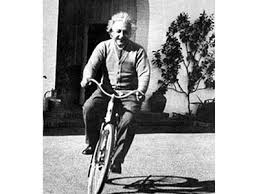
*Found another one:

"There is no conclusion. What has concluded, that we might conclude in regard to it? There are no fortunes to be told, and there is no advice to be given.--Farewell!"That was James's farewell in the summer of 1910, an encomium to a certain "pluralistic mystic" whose openness to new experience and constant intellectual reconstruction was unstinting. Aristotle and his peripatetics were early exemplars of that kind of openness in philosophy. Plato's mind, from a Jamesian perspective, was not so supple.
But we still need to read and argue with Plato, and not simply dismiss him. That's one of the few nonambivalent conclusions our main texts have led us to this summer. The empiricist-rationalist conversation has not concluded. The stroll continues.
But we need to stroll with a lightness of step, and resist the heaviness of heart that weighs down too many philosophers with too inflated a self-regard. A few years before his final farewell James acknowledged this malady, and punctured its pretensions.
I am convinced that the desire to formulate truths is a virulent disease. It has contracted an alliance lately in me with a feverish personal ambition, which I never had before, and which I recognize as an unholy thing in such a connection. I actually dread to die until I have settled the Universe's hash in one more book, which shall be epoch-making at last, and a title of honor to my children! Childish idiot—as if formulas about the Universe could ruffle its majesty, and as if the common-sense world and its duties were not eternally the really real!So this is not goodbye, it's "talk to you later." Meanwhile, I just want to leave my fellow strollers with the message on the sign on the little looping trail in my neighborhood. I used to recite it mantra-like, every time I passed it. So though the sign's now gone the message is indelibly stored in memory, and in an old photo* on my bulletin board:
"Regular walking can
strengthen your heart and
improve your general health.
Walk and enjoy yourself as
you enhance the quality of
your life."
There is implicit "advice to be given," after all. It pairs well with Mr. Einstein's: "The important thing is not to stop questioning."
Later, guys.
==*Found another one:
5:50/5:58, 77/92/72, 7:49
Tuesday, August 2, 2016
Antimatter lunch
Tomorrow's my last class of summer, and Younger Daughter's first of "fall." Reason enough, we thought, to go out for lunch yesterday at the eccentrically-appointed chicken shack we like so much. Delicious! Delightful! Also ephemeral, evanescent... not forever, not even close. Like summer.
And that's why it's so important to me to document these small but worthy moments, notch them on that walking stick of extruded memory Thoreau talked about. Sic transit gloria mundi.
Something completely different, but maybe not really: "on this day in 1932, American physicist Carl Anderson discovered the first physical evidence[of] antimatter..."
My scifi pre-education taught me that we need that stuff to balance our material existence, but if it comes into too-direct contact with our world the whole thing goes kablooey. The whole thing. That's how fragile it all is.
Another reason why we need to get out to the chicken shack once in a while, to notice how delicious and delightful it is to be here. Soon enough it'll all be gone.
6:30/5:57, 73/91/70, 7:49
And that's why it's so important to me to document these small but worthy moments, notch them on that walking stick of extruded memory Thoreau talked about. Sic transit gloria mundi.
Something completely different, but maybe not really: "on this day in 1932, American physicist Carl Anderson discovered the first physical evidence[of] antimatter..."
My scifi pre-education taught me that we need that stuff to balance our material existence, but if it comes into too-direct contact with our world the whole thing goes kablooey. The whole thing. That's how fragile it all is.
Another reason why we need to get out to the chicken shack once in a while, to notice how delicious and delightful it is to be here. Soon enough it'll all be gone.
6:30/5:57, 73/91/70, 7:49
Monday, August 1, 2016
Captain Fantastic
Saw Captain Fantastic at the renovated Belcourt Saturday, another film with a profusion of Spocks (in a hilarious scene that makes you feel bad for the brilliant young man who knows the Baby Doctor but, having been raised beyond the range of tv land, not the Vulcan).
I wouldn't want to live so far off the grid, it's not how I imagine Plato's "paradise" republic, and it really wouldn't be good for kids not to know all their Spocks. But, what a dual indictment of both our know-nothing consumer/pop culture and of utopian social experiments gone too far. And what a great idea, "Noam Chomsky Day"!
Another weekend highlight: listening to the Angels-Sox game while getting play-by-play updates from Older Daughter, in the stands in Anaheim as her first summer in the city of Angels winds down. The slight radio delay made her prescient, I knew the home manager had been tossed before it happened.
This is not the birthday of Noam Chomsky but it is that of Herman Melville AND of Maria Mitchell, "the first acknowledged female astronomer." May this be another great year of female firsts, lest we be sunk by the great orange whale.
7:15/5:56, 74/93/72, 7:50
I wouldn't want to live so far off the grid, it's not how I imagine Plato's "paradise" republic, and it really wouldn't be good for kids not to know all their Spocks. But, what a dual indictment of both our know-nothing consumer/pop culture and of utopian social experiments gone too far. And what a great idea, "Noam Chomsky Day"!
Another weekend highlight: listening to the Angels-Sox game while getting play-by-play updates from Older Daughter, in the stands in Anaheim as her first summer in the city of Angels winds down. The slight radio delay made her prescient, I knew the home manager had been tossed before it happened.
This is not the birthday of Noam Chomsky but it is that of Herman Melville AND of Maria Mitchell, "the first acknowledged female astronomer." May this be another great year of female firsts, lest we be sunk by the great orange whale.
7:15/5:56, 74/93/72, 7:50
Subscribe to:
Comments (Atom)