Delight Springs

Showing posts sorted by date for query emerson circles. Sort by relevance Show all posts

Thursday, November 13, 2025

Repetition and the aging brain

"The more predictable your days become, the faster your neurons quiet down."*

True, but only up to a point. Complete unpredictability is chaos. What the brain needs most is novelty of thought, perspective, insight… not an absence of stable habits. Our days are inevitably predictable, mostly,  in outer form. But they can be constantly improvised and experienced anew from the inside. 

Take my dogwalks, for instance. The pooches and I vary our routes daily, but inevitably traverse familiar ground. Yet no two dogwalks feel exactly the same. It's the old Heraclitus observation: you can't step into the same river twice. Time marches on, as do we. Subjectivity makes the difference. Our repetitive circles can expand their orbits, as inner experience expands and grows. That's how you "break the loop." (See Emerson's essay Circles.)

That's how I do, anyway. As for the dogs? They never seen bored. They never meet a squirrel, for instance, or another dog's backside, that doesn't fascinate them. They never seem old in spirit. (See Mark Rowland's The Word of Dog: What Our Canine Companions Can Teach Us About Living A Good Life.)

*

Tuesday, January 30, 2024

"Nothing great was ever achieved without enthusiasm"

Emerson would have a thing or two to say to the young people who fret and worry about what others think of them, lack enthusiasm, doubt their own originality and prospects. 

He said of the "meek young men" of his own day that they "grow up in libraries, believing it their duty to accept the views which Cicero, which Locke, which Bacon have given, forgetful that Cicero, Locke and Bacon were only young men in libraries when they wrote these books.” American Scholar

In Nature he said "The sun shines today also," so "Why should we not also enjoy an original relation to the universe? Why should we not have a poetry and philosophy of insight and not of tradition, and a religion by revelation to us, and not the history of theirs?" 

I've circled around again to Circles, the tenth of his first series of essays (1841), for reaffirmation of my own original relation to the universe. He'd of course prod me to "tell me what you know" rather than recycle his words, and I will. I do. I also share the circumspection he and I both admire in Montaigne: “Que sais-je?” We're all experimenting with words and visions here.

But so many of the words in Circles bear repeating. Here are some that struck me yesterday on re-reading.

The life of man is a self-evolving circle, which, from a ring imperceptibly small, rushes on all sides outwards to new and larger circles, and that without end. The extent to which this generation of circles, wheel without wheel, will go, depends on the force or truth of the individual soul… if the soul is quick and strong it bursts over that boundary on all sides and expands another orbit on the great deep, which also runs up into a high wave, with attempt again to stop and to bind. But the heart refuses to be imprisoned…

There is no outside, no inclosing wall, no circumference to us…

Conversation is a game of circles. In conversation we pluck up the termini which bound the common of silence on every side.

We can never see Christianity from the catechism:—from the pastures, from a boat in the pond, from amidst the songs of wood-birds we possibly may.

The natural world may be conceived of as a system of concentric circles, and we now and then detect in nature slight dislocations which apprise us that this surface on which we now stand is not fixed, but sliding.

No facts are to me sacred; none are profane; I simply experiment, an endless seeker with no Past at my back.

Nature abhors the old, and old age seems the only disease; all others run into this one. We call it by many names,—fever, intemperance, insanity, stupidity and crime; they are all forms of old age; they are rest, conservatism, appropriation, inertia; not newness, not the way onward. We grizzle every day. I see no need of it.[RWE was 38.]

But the man and woman of seventy assume to know all, they have outlived their hope, they renounce aspiration, accept the actual for the necessary and talk down to the young… This old age ought not to creep on a human mind. In nature every moment is new; the past is always swallowed and forgotten; the coming only is sacred. Nothing is secure but life, transition, the energizing spirit. No love can be bound by oath or covenant to secure it against a higher love. No truth so sublime but it may be trivial to-morrow in the light of new thoughts. People wish to be settled; only as far as they are unsettled is there any hope for them.

Life is a series of surprises…

The one thing which we seek with insatiable desire is to forget ourselves, to be surprised out of our propriety, to lose our sempiternal memory and to do something without knowing how or why; in short to draw a new circle. Nothing great was ever achieved without enthusiasm. The way of life is wonderful; it is by abandonment.

Abandonent. Let go the past, just for now. Write your words, imagine your vision. Let it rip. 

Then circle back for another pass, as the gyre expands to contain your expanding imagination. 

And repeat the cycle. 


Saturday, June 4, 2022

Philosophy as Poetry

LISTEN. Thinking this morning about philosophy and poetry, Emerson and James and Shelley and Rorty. (And a bit about baseball and the beach, each of which figure prominently in the poetry of life as I've experienced it.)

"Mankind does nothing save through initiatives on the part of inventors, great or small, and imitations by the rest of us—these are the sole factors active in human progress. Individuals of genius show the way, and set the patterns, which common people then adopt and follow. The rivalry of the patterns is the history of the world." In that passage, James is echoing Emerson, whose essay "Circles" is perhaps the best expression of the romantic view of the nature of progress. "The life of man," Emerson writes there, is a self-evolving circle, which, from a ring imperceptibly small, rushes on all sides outwards to new and larger circles, and that without end. The extent to which this generation of circles, wheel without wheel, will go, depends on the force or truth of the individual soul. . . . Every ultimate fact is only the first of a new series. . . .There is no outside, no inclosing wall, no circumference to us. The man finishes his story—how good! how final! how it puts a new face on all things! He fills the sky. Lo! on the other side rises also a man, and draws a circle around the circle we had just pronounced the outline of the sphere. Then already is our first speaker not man, but only a first speaker. His only redress is forthwith to draw a circle outside of his antagonist. . . . In the thought of to-morrow there is a power to upheave all thy creed, all the creeds, all the literatures of the nations. . . . Men walk as prophecies of the next age. The most important claim Emerson makes in this essay is that there is no "inclosing wall" called "the Real." There is nothing outside language to which language attempts to become adequate. Every human achievement is simply a launching pad for a greater achievement. We shall never find descriptions so perfect that imaginative redescription will become pointless. There is no destined terminus to inquiry. There are only larger human lives to be lived. As James echoed Emerson, so Emerson was echoing the romantic poets. They too urged that men should walk as prophecies of the next age rather than in the fear of God or in the light of Reason. Shelley, in his 'Defence of Poetry,' deliberately and explicitly enlarged the meaning of the term 'poetry' [as] 'the expression of the Imagination'..." — Philosophy as Poetry (Page-Barbour Lectures) by Richard Rorty

Well, I have to admit that while my Purist instincts recoil at the artificial "ballet" the Savannah Bananas have imposed on our beautiful (former) national pastime, which always already embodied the real ballet of athleticism combined with collaboration and commitment to a shared cause, they nonetheless represent an impressive display of expressive Imagination. Philosophy could do that too; not all philosophy, perhaps, but surely that part of the wisdom quest concerned with ameliorating our condition and "prophesying the next age" of human achievement.

I'm still resisting the Rortian "nothing outside language" locution, though. I imagine there's much outside language, and that great poets are doing their best to imagine it. Maybe the big point, however, is that poetry and imagination are adequately expressive whether they mirror what's "outside" or not. We'd never know if they did. But we can know if they gratify our prophetic wills, and our collective will to truth and reality as we can hope to know it. Truth and reality are different but mutually implicated aspects of a singular referent: facts are real, truth is what we say about the facts and reality when our talk succeeds in moving us forward towards something better.

Wisdom, then, is to recognize and promote what gratifies that impulse. Thus will we live larger lives. That, James reminds us, was always the point. Life, more life. Richer experience. Not mere verbal abstraction. 


Wednesday, May 27, 2020

Circling

This afternoon we'll find out if Elon Musk can successfully launch astronauts into the next frontier. "If a private company can loft humans to orbit today, why not the moon next or Mars some years in the future? A successful launch could ignite a future long imagined by science fiction writers in which space is a destination for more and more people." nyt 


Or, it could escalate the monetization and militarization of space. Today, though, I’m going to focus on the brighter prospect and just enjoy the ride.

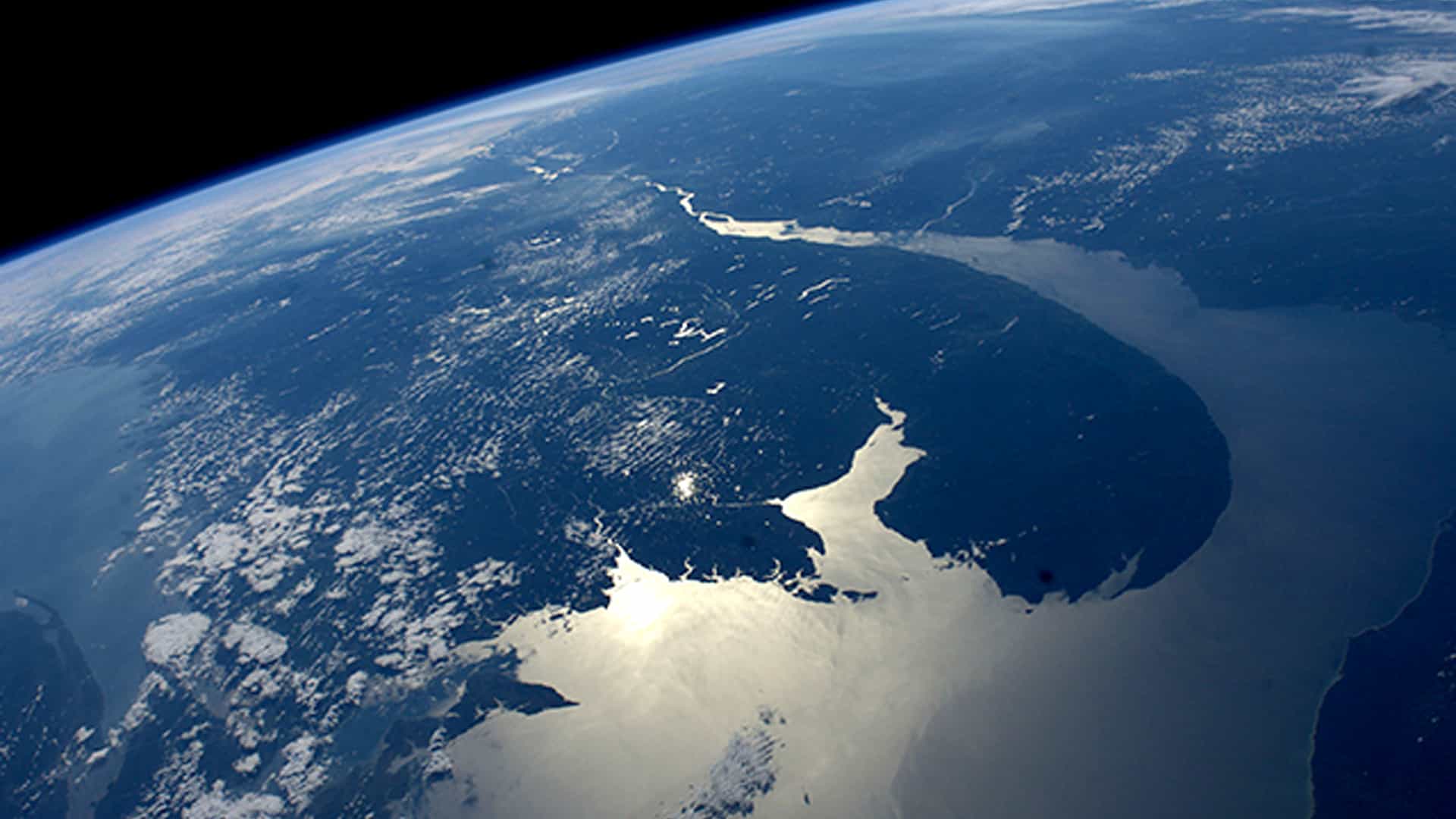
In anticipation, yesterday I tuned in to the NASA channel’s livestream from the ISS. Round and round the old globe spun, sunrise sunset... It was mesmerizing and, in a way I suppose many others might not fathom, joyously reassuring. Call it the joy of circling the rock.

A section of Sunday’s Times celebrated the unanticipated joys of life in quarantine, including “the joy of circling the block.” That’s nothing new to a peripatetic, we already knew the pleasures of close attention to the expanding circles of one’s native ground.

Ralph Waldo Emerson, who just turned 217, was a peripatetic and thus a circler. “This surface on which we now stand is not fixed, but sliding...There are no fixtures in nature. The universe is fluid and volatile.” Circles

Circling day after day after day, the volatility becomes manageable for those who’ve learned the art of sliding steadily and constantly onward. “We live best as appreciators of horizons, whether we reach them or not,” says my new favorite poet/philosopher David Whyte (“What to Remember When Waking”). 

Hold that thought, it’s full of  evolutionary and  environmental implications I look forward to exploring  in July’s virtual classroom (my reprised summer course Evolution in America) and in a real (!) classroom this fall (Environmental Ethics).

What I remember when waking and walking is what I tend to forget when caught up in everydayness, especially the beckoning horizon. That’s what makes today’s rocket launch so peripatetically compelling. Let’s get out there and see what’s just around the corner. LISTEN

Space Cam - watch live video from the International Space Station ...

(Postscript, 3:18 pm -- launch scrubbed due to weather, rescheduled for Saturday.)