I've been wondering how to justify adding a daytrip to the Wordsworths' Dove Cottage in the Lake District, during our Study Abroad course in Britain. What's the hook, philosophically?
It's freedom and liberty, especially mental freedom and the liberty to roam. It's the impact Wordsworth and the romantic poets had on young J.S. Mill, as reported in his Autobiography and recounted by Arthur Herman. They awakened him to the "actual experience of life," to the importance of motility to his sanity and creativity and philosophical acuity.
The point of actually living, rambling, and poetizing, for the romantics, was "to add sunshine to daylight by making the happy happier." Mill had been missing that, and so had been missing the experience of liberty and life.With it, he went on to inspire William James to invoke him in "On a Certain Blindness in Human Beings" ("a limitless significance in natural things") and then dedicate Pragmatism to his memory ("from whom I first learned the pragmatic openness of mind and whom my fancy likes to picture as our leader were he alive today").
Pretty good hook, and a good bridge between American and English philosophy. An English root, for sure.
Do I mix my metaphors? Very well. Walkers are always churning out metaphors, because everything flows into everything else when you're self-propulsive and free.Wordsworth was the prince of walking poets. He inspired Mill and James to get out of their studies and away from their books. He inspired them to write their books.
Me too.
Must be lots of other great Brit Lit walks of comparable philosophical significance, besides the Wordsworths' Lake District, we've not yet thought to include. July's the time to think of them.
Tuesday, July 1, 2014

Monday, June 30, 2014
How we ground our ethics
That was a quintessentially lazy summer Sunday afternoon, full of just the sort of "nothing" Calvin was talking about: Sunday Times, hammock, cold Fat Tire, On Being on the radio...
But the conversation between a mathematician and a philosopher on science and religion was something. They were both smart and civil, the theist mathematician (Jim Bradley) sounding like Michael J. Fox and the Darwinian humanist philosopher (Michael Ruse) responding to the tired old question of how nontheists "ground" their ethics by reminding us to heed the wisdom of le Bon David.
Today, by the way, is the anniversary of the most famous historical public debate between a theist and a Darwinian, the notorious Wilberforce-Huxley exchange. Bishop versus Bulldog. That was really something.
Happy Independence week.
But the conversation between a mathematician and a philosopher on science and religion was something. They were both smart and civil, the theist mathematician (Jim Bradley) sounding like Michael J. Fox and the Darwinian humanist philosopher (Michael Ruse) responding to the tired old question of how nontheists "ground" their ethics by reminding us to heed the wisdom of le Bon David.
Ms. Tippett: But I think the question is, um, where is your ethical sensibility rooted, or what...
Dr. Ruse: I think it’s rooted in my psychology. I mean, I’m a Humian. I mean, ultimately, I’ve — David Hume says you can do all this philosophy you like, but it, you know, you end in skepticism, but fortunately, you know, I dine, I converse with my friends, I play a game of backgammon, uh, when I get back to my study, it all seemed cold and strained. And basically that’s where I’m at. I personally think that, you know, psychology — I don’t go through life worrying about whether the world is going to end tonight.
I don’t go through life thinking, okay, I’m a Darwinian, it’s okay for me to go out and rape and pillage, and, you know, and get away with it, because I’m an evolved human being. So why would I do anything else? So, at a certain level, I know Jim would disagree with me, I think Christianity is irrelevant. You know, in fact, it’s just something of a...
Ms. Tippett: You mean in terms of...
Dr. Ruse: ...scab on the situation?An irrelevant scab! I'll be using that.
Today, by the way, is the anniversary of the most famous historical public debate between a theist and a Darwinian, the notorious Wilberforce-Huxley exchange. Bishop versus Bulldog. That was really something.
In the end it will be a win for the Darwinians. At the far end, of course, there will be no victories to tally because there will be no victors left on the field. My favorite tweeter put it this way:There is no transcript of the day's events, but one exchange has reached the status of legend. Wilberforce asked Huxley whether he was descended from an ape on his father's side or his mother's, and Huxley retorted that he was not ashamed to have a monkey as an ancestor, but he would be ashamed to descend from someone who used his great gifts to obscure the truth. Most accounts include some version of this story, but according to Hooker, that may have been all that most people heard. In his report to Darwin (who was too ill to attend), Hooker wrote:"Well, Sam Oxon got up and spouted for half an hour with inimitable spirit, ugliness and emptiness and unfairness ... Huxley answered admirably and turned the tables, but he could not throw his voice over so large an assembly nor command the audience ... he did not allude to Sam's weak points nor put the matter in a form or way that carried the audience. The battle waxed hot. Lady Brewster fainted, the excitement increased as others spoke; my blood boiled, I felt myself a dastard; now I saw my advantage; I swore to myself that I would smite that Amalekite, Sam, hip and thigh if my heart jumped out of my mouth, and I handed my name up to the President as ready to throw down the gauntlet."Hooker was the closing speaker of the discussion, and he felt that his speech had carried the day (of course, Wilberforce and Huxley each felt the same way about their own speeches). In the end, though each side claimed victory, most accounts chalk it up as a win for the Darwinians. Writer's Almanac
Not a sentiment to dwell on, in the sweet light of dawn. The back of everything can wait. What would David do? Fire a rocket, eat a hot dog, play some backgammon or watch some futbol and baseball with friends."Truly the light is sweet, and a pleasant thing it is for the eyes to behold the Sun." But remember... "Back of everything is the great spectre of universal death, the all-encompassing blackness."

Happy Independence week.
Friday, June 27, 2014
I just want to celebrate
The world will little note, nor long remember... but it was fun all the same, watching the live stream of Vandy's welcome home celebration for the new College World Series champions last evening. The Chancellor said "this is a very big deal" and told the boys "you are the absolute best!" The Governor more quietly praised the team for how it went about achieving its success, and claimed it for the great state of Tennessee. No orange in sight, for once.
Is it too soon for me to complain that mere academic collegiate success is never greeted with anything like this level of ecstatic celebration? When was the last time a Nobel recipient was feted with that kind of reception? (When was the last time the Nobel competition was featured in ESPN prime time for three consecutive nights? I guess that's a relevant riposte.)
Yeah, too soon. Anchor Down, boys!
Meanwhile, Team USA lost to Germany and is being heralded for making the cut. I'll never understand futbol. But never mind. If you can't indulge mindless celebration in the waning days of June, when can you? Jennifer Hecht is right, occasionally surrendering to the festive spirit in public is happy-making.
Is it too soon for me to complain that mere academic collegiate success is never greeted with anything like this level of ecstatic celebration? When was the last time a Nobel recipient was feted with that kind of reception? (When was the last time the Nobel competition was featured in ESPN prime time for three consecutive nights? I guess that's a relevant riposte.)
Yeah, too soon. Anchor Down, boys!
Meanwhile, Team USA lost to Germany and is being heralded for making the cut. I'll never understand futbol. But never mind. If you can't indulge mindless celebration in the waning days of June, when can you? Jennifer Hecht is right, occasionally surrendering to the festive spirit in public is happy-making.
One day of a blissful community festival can forge allegiances to an idea or a place that can go on to animate a lifetime. The emotion of ecstasy is shockingly potent stuff. It is a good thing the effect lasts so long, because ecstasy is not easy to obtain.Let's just play that song my subconscious woke me with this morning...
Thursday, June 26, 2014
Safe at home
I've never paid much attention to the College World Series, and was prepared to pay no more this morning, but my school won it last night. That's never happened before. In fact, the only other national championship Vandy's ever won was in women's bowling.
So, I'll resume my kvetching about the corruptions of the NCAA, the misplaced priorities of major collegiate athletics, and the general loopiness of spectator sports mania later. Right now I'm just going to celebrate that great "safe at home" feeling. Virginia acquitted themselves admirably, and as late as the 8th inning looked like a champion-in-waiting. But that's why they play the games. Congrats, Commies!
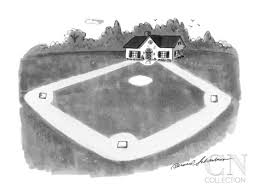
So, I'll resume my kvetching about the corruptions of the NCAA, the misplaced priorities of major collegiate athletics, and the general loopiness of spectator sports mania later. Right now I'm just going to celebrate that great "safe at home" feeling. Virginia acquitted themselves admirably, and as late as the 8th inning looked like a champion-in-waiting. But that's why they play the games. Congrats, Commies!
(What other game?)
Wednesday, June 25, 2014
Walk the dog
Last night's game in Omaha left me frowning, so I went looking for some baseball humor. This works for me.
Tuesday, June 24, 2014
Solitude
The feeling of a good walk is of connected solitude, of self-possessed relatedness to the ground beneath one's feet and all those other dawn treaders (on two legs or four) we share it with. It's not at all a feeling of loneliness, or even aloneness, even on those rare days when it's too hot for canine or other companionship.
Good walks engender humane and empathetic fellow-feeling, they break through all isolating walls, material and notional. This goes for mundane neighborhood strolls no less than for extraordinary treks in remote and exotic locales. Emerson's exhilarated common-crossing is one kind of example. One of Admiral Byrd's 1934 Antarctic rambles (as related by Anthony Storr) is another. "Took my daily walk at 4 p.m. today in 89° of frost... I paused to listen to the silence..."
The reported experience of unity with nature is sometimes tinged with a mystical significance, or is interpreted as such. The Admiral seems here to list in that direction. Emerson always muddled the distinction between nature and ego, but nature for him was always inclusive of our greatest and most distinctive perceptions.
I don't usually feel the tug of mysticism, myself. But I do get that natural sense of the "sheer beauty and miracle of being alive," and much more vividly when in a state of bipedal motion than when parked and seated. Cosmic emotion of this sort is an earth-centered wonder, even for those who would infer another source. This is still the only home we've ever known.
I don't usually feel the tug of mysticism, myself. But I do get that natural sense of the "sheer beauty and miracle of being alive," and much more vividly when in a state of bipedal motion than when parked and seated. Cosmic emotion of this sort is an earth-centered wonder, even for those who would infer another source. This is still the only home we've ever known.
Monday, June 23, 2014
Unforced flowers
First, to mark the moment: I was really into that futbol match yesterday afternoon, right up until the terminal "strike" when it ended in an irresolute and deeply unsatisfying tie. Yuck.
Far more gratifying was my alma mater's 10th inning 4-3 win Saturday night against Texas, propelling them unambiguously into the finals of the College World Series against Virginia. (Suspending my standard objection to major collegiate athletics to say: Anchor down.)
But those are only games. I'm here to speak of life.
John Dewey is my second-favorite philosopher, even though I probably agree with him more frequently (were we keeping score) than I do with William James. Critics have objected to Dewey's scientism, but his democratic version of that mindset is much like Carl Sagan's and not at all like (say) Alex Rosenberg's: in a word, it's humane.
And, it's right for our time. Only a suitably-scientific form of intellectual honesty can possibly save us from ourselves and our selective approach to the recognition of realities. Yesterday's Doonesbury spoke nicely to that.
Critics also have objected to Dewey's prose style, which admittedly can sometimes be workmanlike and stolid. But it soars often enough for me, as in the conclusion of the first book of Dewey's I ever read cover-to cover back in my first semester of Grad School.

And then I go walking. On my return it looks like this.

Unforced. Nice metaphor, John Dewey.
Far more gratifying was my alma mater's 10th inning 4-3 win Saturday night against Texas, propelling them unambiguously into the finals of the College World Series against Virginia. (Suspending my standard objection to major collegiate athletics to say: Anchor down.)
But those are only games. I'm here to speak of life.
John Dewey is my second-favorite philosopher, even though I probably agree with him more frequently (were we keeping score) than I do with William James. Critics have objected to Dewey's scientism, but his democratic version of that mindset is much like Carl Sagan's and not at all like (say) Alex Rosenberg's: in a word, it's humane.
And, it's right for our time. Only a suitably-scientific form of intellectual honesty can possibly save us from ourselves and our selective approach to the recognition of realities. Yesterday's Doonesbury spoke nicely to that.
Critics also have objected to Dewey's prose style, which admittedly can sometimes be workmanlike and stolid. But it soars often enough for me, as in the conclusion of the first book of Dewey's I ever read cover-to cover back in my first semester of Grad School.
Poetry, art, religion are precious things. They cannot be maintained by lingering in the past and futilely wishing to restore what the movement of events in science, industry and politics has destroyed. They are an out-flowering of thought and desires that unconsciously converge into a disposition of imagination as a result of thousands and thousands of daily episodes and contact. They cannot be willed into existence or coerced into being. The wind of the spirit bloweth where it listeth and the kingdom of God in such things does not come with observation. But while it is impossible to retain and recover by deliberate volition old sources of religion and art that have been discredited, it is possible to expedite the development of the vital sources of a religion and art that are yet to be. Not indeed by action directly aimed at their production, but by substituting faith in the active tendencies of the day for dread and dislike of them, and by the courage of intelligence to follow whither social and scientific changes direct us. We are weak today in ideal matters because intelligence is divorced from aspiration. The bare force of circumstance compels us onwards in the daily detail of our beliefs and acts, but our deeper thoughts and desires turn backwards. When philosophy shall have co-operated with the course of events and made clear and coherent the meaning of the daily detail, science and emotion will interpenetrate, practice and[Pg 213] imagination will embrace. Poetry and religious feeling will be the unforced flowers of life. To further this articulation and revelation of the meanings of the current course of events is the task and problem of philosophy in days of transition. Reconstruction in PhilosophyI have a new hanging plant just before my gaze, out here on the back porch. When I arrive each morning it looks wan and paltry. Then I write a bit. It begins opening to the dawn. Like me.
And then I go walking. On my return it looks like this.
Unforced. Nice metaphor, John Dewey.
Friday, June 20, 2014
On going
William Hazlitt (1778-1830) is a neglected walking philosopher and philosopher of walking, though they did an entire In Our Time on him without mention of his pedestrian proclivity. Odd, since Melvyn Bragg's chatty post-production missives frequently recount his own traipses about London ("he walks to and from his home and the House of Lords, and in the Cumbrian fells"). What Bragg says of writing applies equally to walking: "Time goes past and you’ve been somewhere and come back that hasn’t hurt you and you’ve been somebody else." And you're just a bit more sure, at least for now, of who & what you really are.)
But all dedicated walkers know this Hazlitt reflection, only superficially misanthropic for its repudiation of human companionship during his walks:
Hazlitt said "travel's greatest purpose is to replace an empty mind with an open one.” That'll be a good motto for our peripatetic Study Abroad course, which is again at the front of my drawing board.
But all dedicated walkers know this Hazlitt reflection, only superficially misanthropic for its repudiation of human companionship during his walks:
Give me the clear blue sky over my head, and the green turf beneath my feet, a winding road before me, and a three hours' march to dinner--and then to thinking! It is hard if I cannot start some game on these lone heaths. I laugh, I run, I leap, I sing for joy. From the point of yonder rolling cloud I plunge into my past being, and revel there... and I begin to feel, think, and be myself again. Instead of an awkward silence, broken by attempts at wit or dull common-places, mine is that undisturbed silence of the heart which alone is perfect eloquence.The impulse here is to break free of artifice and pretense, and stride into full self-possession. There's nothing hateful or reclusive about it. It foreshadows Thoreau. (What would either of them make of the automa-technology that produced this wooden - though still oddly charming - representation?)
Hazlitt said "travel's greatest purpose is to replace an empty mind with an open one.” That'll be a good motto for our peripatetic Study Abroad course, which is again at the front of my drawing board.
Thursday, June 19, 2014
The music recommences
"From the bottom of every fountain of pleasure," claimed William James (and an old poet) "arises a falling dead of the delight, a whiff of melancholy." A putrid whiff of meaninglessness and futility, a demoralized sense of time as ticking too quickly away without a sequel, a gnawing feeling that the music of life is a mere distraction from life's underlying unmusical dissonance and despair, in a cold uncaring universe.
Maybe you have to have a touch of melancholia yourself, as he did, to catch the whiff. I think he probably overcompensated for this feeling in himself by trying to embrace varieties of experience that seemed to counter it, including religious experience he was reluctant to admit as alien to his own sensibility.
When I feel it, only infrequently, I compensate by walking briskly away (figuratively and literally) from the offending odor. And then, as James also observed, "the music can commence again." He meant that metaphorically, but of course actual music can lift the spirit in ways wonderful and strange.
It spurs one's appreciation of the music of life, too, to have the small occasional brush with mortality. My gas grill tried to kill me last night. Eyebrows won't need a trim anytime soon.
I'd decided the other day that I needed to get more actual music into my daily round, and finally plunked down the $25 so Apple would "turn on" & "match" my music. I've been having fun uploading my neglected CD collection to the cloud - one good metaphor deserves another - and blasting it back wirelessly through those booming little Bose speakers.
And now, Amazon has announced its new Prime Music service. All at once I'm inundated with musical options.
The best music, though, is still the birdsong soundtrack surrounding these dawn porch posts in summertime.
Maybe you have to have a touch of melancholia yourself, as he did, to catch the whiff. I think he probably overcompensated for this feeling in himself by trying to embrace varieties of experience that seemed to counter it, including religious experience he was reluctant to admit as alien to his own sensibility.
When I feel it, only infrequently, I compensate by walking briskly away (figuratively and literally) from the offending odor. And then, as James also observed, "the music can commence again." He meant that metaphorically, but of course actual music can lift the spirit in ways wonderful and strange.
It spurs one's appreciation of the music of life, too, to have the small occasional brush with mortality. My gas grill tried to kill me last night. Eyebrows won't need a trim anytime soon.
I'd decided the other day that I needed to get more actual music into my daily round, and finally plunked down the $25 so Apple would "turn on" & "match" my music. I've been having fun uploading my neglected CD collection to the cloud - one good metaphor deserves another - and blasting it back wirelessly through those booming little Bose speakers.
And now, Amazon has announced its new Prime Music service. All at once I'm inundated with musical options.
The best music, though, is still the birdsong soundtrack surrounding these dawn porch posts in summertime.
Wednesday, June 18, 2014
A big juicy creative life
"Seeing yourself from a distance as part of a landscape," says David Brooks, is crucial to personal growth and the eventual mastery of a skill or a vocation. He's right, I think: the virtuoso in any field may first excel on the strength of native ability, but ultimate and enduring excellence requires diligence and repetitive, routine daily devotion. And for most of us, that requires a wider perspective and a firm vision of ourselves at the other end of the journey.
But that doesn't mean we should expect ever to arrive at perfection, as Maria Popova usefully invokes Anne Lamott to point out. "Perfectionism is always lurking nearby, like the demonic prowling lion in the Old Testament, waiting to pounce. It will convince you that your work-in-progress is not great," it'll fog your landscape. So, graduates, don't forget "to have a big juicy creative life, of imagination and radical silliness and staring off into space like when you were a kid... Pick a new direction, one you wouldn’t mind ending up at, and aim for that. Shoot the moon."
That's inspired advice. How do you reach the "moon"? Visualize yourself on that lunar landscape, and get on with your daily training.
One other thing I want to note this morning: a report from LA that seems to me to vindicate the approach I've been taking to my own daily training. "While it may seem counterintuitive to move more when moving hurts, a new study suggests about one hour of walking per day, at an average pace of 100 steps per minute, may be the perfect dose to ward off the debilitating effects of osteoarthritis."
Not to mention warding off the debilitating effects of directionlessness, limited vision of a wider landscape, and inadequate preparation for that big juicy creative life.
In other words: shoot the moon, one day and one small step at a time.
But that doesn't mean we should expect ever to arrive at perfection, as Maria Popova usefully invokes Anne Lamott to point out. "Perfectionism is always lurking nearby, like the demonic prowling lion in the Old Testament, waiting to pounce. It will convince you that your work-in-progress is not great," it'll fog your landscape. So, graduates, don't forget "to have a big juicy creative life, of imagination and radical silliness and staring off into space like when you were a kid... Pick a new direction, one you wouldn’t mind ending up at, and aim for that. Shoot the moon."
That's inspired advice. How do you reach the "moon"? Visualize yourself on that lunar landscape, and get on with your daily training.
One other thing I want to note this morning: a report from LA that seems to me to vindicate the approach I've been taking to my own daily training. "While it may seem counterintuitive to move more when moving hurts, a new study suggests about one hour of walking per day, at an average pace of 100 steps per minute, may be the perfect dose to ward off the debilitating effects of osteoarthritis."
Not to mention warding off the debilitating effects of directionlessness, limited vision of a wider landscape, and inadequate preparation for that big juicy creative life.
In other words: shoot the moon, one day and one small step at a time.
Tuesday, June 17, 2014
Ayahuasca, trending
“I experienced first a feeling of serene wisdom so that I was quite content to sit there indefinitely.”
Lines like that jump out at me, since I've been thinking so pointedly about the relative virtue of motion as against stasis. The speaker in this instance was William S. Burroughs, the crazy old Naked Lunch hipster, writing to Alan Ginsberg about his experience with Ayahuasca. It's trendy again, apparently. Some say it enhances empathy and emotional intelligence, deepens self-awareness and spirituality, conquers addictions and anxieties, puts mundane reality in clear perspective, helps them enjoy life.
(Others say it "creates an excess of serotonin in the central nervous system, which can cause confusion and tremulousness.")
I, unlike Burroughs and unlike the new hipsters with their yoga mats and their careful preparations, am content to sit here 'til the coffee's gone or the sun is atop the treeline. But to sit anywhere indefinitely is not in my book a mark of wisdom or serenity. It's more like Calvin's botched version of the Serenity Prayer.
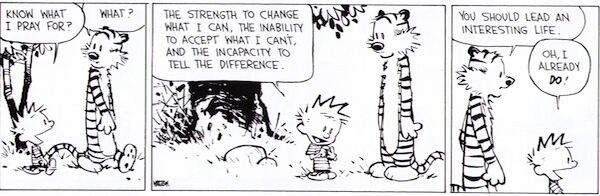
Lines like that jump out at me, since I've been thinking so pointedly about the relative virtue of motion as against stasis. The speaker in this instance was William S. Burroughs, the crazy old Naked Lunch hipster, writing to Alan Ginsberg about his experience with Ayahuasca. It's trendy again, apparently. Some say it enhances empathy and emotional intelligence, deepens self-awareness and spirituality, conquers addictions and anxieties, puts mundane reality in clear perspective, helps them enjoy life.
(Others say it "creates an excess of serotonin in the central nervous system, which can cause confusion and tremulousness.")
I, unlike Burroughs and unlike the new hipsters with their yoga mats and their careful preparations, am content to sit here 'til the coffee's gone or the sun is atop the treeline. But to sit anywhere indefinitely is not in my book a mark of wisdom or serenity. It's more like Calvin's botched version of the Serenity Prayer.
As a pragmatist about the pursuit of happiness, and a devotee of personal liberty, I would never interfere with anyone's self-regarding right to go adventuring in place with Ayahuasca. But to the guy whose trip taught him that "everything written on paper is a lie" I say: don't believe everything you think. Or dream.
Monday, June 16, 2014
Dads day afternoon
Back from our orientation trip to Older Daughter's new school in the "Heartland" sector of the Land of Lincoln, an island of Blue (as the admissions officer said) in a midwestern Red Sea. It's very different from her old school, in a quintessential little college town far from the big city, abutted by a national forest and wildlife preserve. The town was a booming rail and mining center in the 19th century, now it looks like Lake Wobegon ("the town that time forgot and the decades could not improve").

The campus itself is a miniature version of the surrounding countryside, with lots of trees and a (walkably) circumnavigable lake.

We were welcomed to the fold by real live Salukis, and introduced by a witty student tour guide to many of the place's qualities and quirks - including the oxymoronic "clean coal" facility that powers it. We were reassured to come upon the Office of Sustainability, I hope they get everyone there to "pledge."

Fathers Day was wonderful. Lunch at the Blue Moon Marina restaurant, with a live band at waterside. Younger Daughter put a lot of time and thought into an elaborate homemade card, and the whole family thanked me for doing the simple things Dads do. They gave me a DVD slideshow of paternal memories, a porta-hammock for the beach, and the Cadillac of folding chairs - built-in umbrella, footstool, and side cooler. Somebody wrote a misguided complaint about this holiday. I'm not complaining.

The campus itself is a miniature version of the surrounding countryside, with lots of trees and a (walkably) circumnavigable lake.
We were welcomed to the fold by real live Salukis, and introduced by a witty student tour guide to many of the place's qualities and quirks - including the oxymoronic "clean coal" facility that powers it. We were reassured to come upon the Office of Sustainability, I hope they get everyone there to "pledge."
Fathers Day was wonderful. Lunch at the Blue Moon Marina restaurant, with a live band at waterside. Younger Daughter put a lot of time and thought into an elaborate homemade card, and the whole family thanked me for doing the simple things Dads do. They gave me a DVD slideshow of paternal memories, a porta-hammock for the beach, and the Cadillac of folding chairs - built-in umbrella, footstool, and side cooler. Somebody wrote a misguided complaint about this holiday. I'm not complaining.
Thursday, June 12, 2014
A desk is no place to think
Unlike yesterday's dawn, the Sun is present for this one. Another cool-crisp 60ish autumnal morning in June, but the mercury will climb soon enough. Enjoying the mild hammock season while it lasts.
Thought I'd lost my copy of Rebecca Solnit's Wanderlust, which I felt a sudden impulse to haul to the hammock last night, but it turned up just in time. (A quick archive search shows I last dipped into it exactly a year ago. There seems to be a seasonal pattern to my biblio-promiscuity.)
One of Solnit's opening epigraphs notes an old eskimo custom of sending angry persons walking, to walk off the emotional excess. Nowadays people tend to get behind the wheel, when they've just got to get away. The eskimo way was better, for people and planet alike. Safer. More respectful of the elders. But children in every culture have always found ways to tweak the elders, much as we sometimes think "kids these days" are worse.
Another epigraph, from Wallace Stevens, indicates a problem with staying too long in your room. Exactly. Solnit says "I sat down one spring day to write about walking and stood up again, because a desk is no place to think on the large scale."
That's why, in the warmer months, mine is a lap desk nestled between the arms of the glider out back, positioned to glimpse dawn's first light when I look up from the shadows it casts on notebook and keyboard. Those shadows are a signpost, pointing away from the cave and into the light.
Just as Steve Pinker was saying of writing, that it should evoke a conversational feeling, so it is with wandering.
Thought I'd lost my copy of Rebecca Solnit's Wanderlust, which I felt a sudden impulse to haul to the hammock last night, but it turned up just in time. (A quick archive search shows I last dipped into it exactly a year ago. There seems to be a seasonal pattern to my biblio-promiscuity.)
One of Solnit's opening epigraphs notes an old eskimo custom of sending angry persons walking, to walk off the emotional excess. Nowadays people tend to get behind the wheel, when they've just got to get away. The eskimo way was better, for people and planet alike. Safer. More respectful of the elders. But children in every culture have always found ways to tweak the elders, much as we sometimes think "kids these days" are worse.
Another epigraph, from Wallace Stevens, indicates a problem with staying too long in your room. Exactly. Solnit says "I sat down one spring day to write about walking and stood up again, because a desk is no place to think on the large scale."
That's why, in the warmer months, mine is a lap desk nestled between the arms of the glider out back, positioned to glimpse dawn's first light when I look up from the shadows it casts on notebook and keyboard. Those shadows are a signpost, pointing away from the cave and into the light.
Just as Steve Pinker was saying of writing, that it should evoke a conversational feeling, so it is with wandering.
Walking, ideally, is a state in which the mind, the body, and the world are aligned,And, as the Buddhist walking meditators remind us, it leaves us free not to think. On the large scale.
as though they were three characters finally in conversation together, three notes
suddenly making a chord. Walking allows us to be in our bodies and in the world without being made busy by them. It leaves us free to think without being wholly lost in our thoughts.
Wednesday, June 11, 2014
Get up, stand up
I thought a bit during yesterday's walk about the suggestion that "real" thinking begins only with the assumption of a motionless meditative posture, but could not muster much sympathy for the view. It sounds more like a self-serving rationalization for the sedentary life, than an argument for the metaphysical probity of zazen.
True, I am sitting as I write this. I'm also sipping coffee, and gently gliding, and feeling the breeze, and hearing the birdsong, and checking the eastern sky for the day's first sighting of Sol. Have I not begun to think?
I suppose maybe I haven't, if your definition of real thinking requires me to suspend all external engagement except for a focus on my stationary breathing. But I still prefer doing it my way, which feels much more like a continuing conversation with the world than like a silent meditation. And, the thing about breathing as a humility-inducing demonstration of my dependence upon the world and its oxygen? That's even more evident to me when coupled with rhythmic motion and an elevated heart rate.
But of course, those who'd rather sit perfectly still and deflect all passing perception are welcome to their way. Live and let live.
So I should withdraw the gratuitous "self-serving" accusation, that was uncharitable and unpluralistic of me. If ever I find myself unable to pound the ground and flit about from thought to thought on my accustomed perambulatory peregrinations, I'm sure I'll learn to love sitting. Or at least appreciate it more.
There was a silly piece on NPR yesterday about a guy who decided he needed to break out of his sedentary lifestyle by going a month without sitting. What we all need is a sane and sensible balance. Sit when you sit, stand and move when you stand and move. Isn't that really the meditative essence of zen?
Coffee's about gone, I've got to get moving. Two thoughts are pulling me from my glider this morning: first, Ann Druyan's comment about the yearning of many to "feel something spiritual" but also honest, something they "don't have to lie to themselves in order to believe." She spoke, for instance, of how it felt to revisit the places where she and Carl Sagan worked on the first Cosmos, for the second.
True, I am sitting as I write this. I'm also sipping coffee, and gently gliding, and feeling the breeze, and hearing the birdsong, and checking the eastern sky for the day's first sighting of Sol. Have I not begun to think?
I suppose maybe I haven't, if your definition of real thinking requires me to suspend all external engagement except for a focus on my stationary breathing. But I still prefer doing it my way, which feels much more like a continuing conversation with the world than like a silent meditation. And, the thing about breathing as a humility-inducing demonstration of my dependence upon the world and its oxygen? That's even more evident to me when coupled with rhythmic motion and an elevated heart rate.
But of course, those who'd rather sit perfectly still and deflect all passing perception are welcome to their way. Live and let live.
So I should withdraw the gratuitous "self-serving" accusation, that was uncharitable and unpluralistic of me. If ever I find myself unable to pound the ground and flit about from thought to thought on my accustomed perambulatory peregrinations, I'm sure I'll learn to love sitting. Or at least appreciate it more.
There was a silly piece on NPR yesterday about a guy who decided he needed to break out of his sedentary lifestyle by going a month without sitting. What we all need is a sane and sensible balance. Sit when you sit, stand and move when you stand and move. Isn't that really the meditative essence of zen?
Coffee's about gone, I've got to get moving. Two thoughts are pulling me from my glider this morning: first, Ann Druyan's comment about the yearning of many to "feel something spiritual" but also honest, something they "don't have to lie to themselves in order to believe." She spoke, for instance, of how it felt to revisit the places where she and Carl Sagan worked on the first Cosmos, for the second.
Because when you don’t believe in an afterlife — and we don't — you realize that the person that you adored with all your heart is not there anymore. But when you come back to the place you were together, to do the work you did together, keep the faith and let the light shine, it's a tremendous feeling.Second, Steven Pinker's thoughts on good writing as
a combination of vision and conversation. When you write you should pretend that you, the writer, see something in the world that's interesting, that you are directing the attention of your reader to that thing in the world, and that you are doing so by means of conversation.Sounds simple and honest and natural. Like cosmic spirituality. Like breathing.
Tuesday, June 10, 2014
Getting around
Woke early, rolled out just in time to see Older Daughter off to work. Watching her drive away in her own vehicle, her first, newly acquired just a couple days ago. She's gone Rogue. Major milestone.
And Younger Daughter celebrated her own internally combustive milestone yesterday, passing the test for her learner's permit (after a morning's eternity at the DMV, surely one of our world's most depressive institutions) and proceeding to drive us all over town on one contrived errand after another. She's saving for her own first car, which she says will be an old truck.
My Dad owned a series of GMC pickups, topped with the campers our family toured the continent in, when fossil fuel was artificially cheap. In one of our last conversations he spoke with a mix of pride and embarrassment at the pleasure he'd taken, through the years, in his serial automotive possessions. Somewhere I have a photo of him beaming next to his own first guzzler, a wide and heavy old Dodge I think, c. 1950.
My first was a '70 Dart Swinger. (Really.) My favorite, a few years later, a Mitsubishi Colt. My current ride is reliably functional but the romance is gone. I just want to get there, and in my dreams "there" would be a lot closer to here.
Won't it be a better world, when we no longer mark our independent maturity by laying claim to our own personal carbon emitters? When we'd all rather ride the rails (or monorails) again, or pedal, or simply ambulate to work? And practically can?
But this side of commutopia, I'm happy for my girls and their traditional transportative aspirations. I just hope their second cars, and their grownup thoughts and feelings about locomotion, are more sustainable than ours have been. More like Neil's, maybe?

And Younger Daughter celebrated her own internally combustive milestone yesterday, passing the test for her learner's permit (after a morning's eternity at the DMV, surely one of our world's most depressive institutions) and proceeding to drive us all over town on one contrived errand after another. She's saving for her own first car, which she says will be an old truck.
My Dad owned a series of GMC pickups, topped with the campers our family toured the continent in, when fossil fuel was artificially cheap. In one of our last conversations he spoke with a mix of pride and embarrassment at the pleasure he'd taken, through the years, in his serial automotive possessions. Somewhere I have a photo of him beaming next to his own first guzzler, a wide and heavy old Dodge I think, c. 1950.
My first was a '70 Dart Swinger. (Really.) My favorite, a few years later, a Mitsubishi Colt. My current ride is reliably functional but the romance is gone. I just want to get there, and in my dreams "there" would be a lot closer to here.
Won't it be a better world, when we no longer mark our independent maturity by laying claim to our own personal carbon emitters? When we'd all rather ride the rails (or monorails) again, or pedal, or simply ambulate to work? And practically can?
But this side of commutopia, I'm happy for my girls and their traditional transportative aspirations. I just hope their second cars, and their grownup thoughts and feelings about locomotion, are more sustainable than ours have been. More like Neil's, maybe?
Monday, June 9, 2014
Cosmos!
The final episode of "Cosmos" 2.0 was as good as we've come to expect, emphasizing the point that science is both our best tool for dispelling ignorance and fear and our surest source of humility. "It's ok to admit that we don't know" about dark matter or what happened before the Big Bang or what will become of the grand experiment of life. More than ok, it's crucial to our self-respect and our survival.
I wondered if we'd hear Carl Sagan's voice again last night, before they aired the entire Pale Blue Dot meditation. I've heard or read and repeated it myself so often, through the years. It still gets to me every time
.
And, the Golden Record segment with its snippet of a child's greeting "from the children of Earth" - "Hey," tweeted Nick Sagan, "that's me!" That record has a billion year shelf-life.
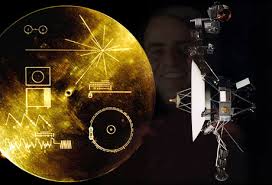
Lovely, that moment and the whole show with its hopeful/humble spirit of adventure and discovery. "Cosmos was a labor of love, an offer of hope, and a vision of a future that could be," says Neil Tyson. Beautiful writing, Ann Druyan. (She signed off with "the ship is now yours.") Carl would indeed be proud.
Now, Seth or someone, when will we see Cosmos 3? Can it be kickstarted?
Meanwhile, I'm going back to re-read and re-view 1 and 2.
"Somewhere, something incredible is waiting to be known."
I wondered if we'd hear Carl Sagan's voice again last night, before they aired the entire Pale Blue Dot meditation. I've heard or read and repeated it myself so often, through the years. It still gets to me every time
.
And, the Golden Record segment with its snippet of a child's greeting "from the children of Earth" - "Hey," tweeted Nick Sagan, "that's me!" That record has a billion year shelf-life.
Lovely, that moment and the whole show with its hopeful/humble spirit of adventure and discovery. "Cosmos was a labor of love, an offer of hope, and a vision of a future that could be," says Neil Tyson. Beautiful writing, Ann Druyan. (She signed off with "the ship is now yours.") Carl would indeed be proud.
Now, Seth or someone, when will we see Cosmos 3? Can it be kickstarted?
Meanwhile, I'm going back to re-read and re-view 1 and 2.
"Somewhere, something incredible is waiting to be known."
Friday, June 6, 2014
The springs of life
It's the morning after the premier of "The Fault in Our Stars," the film adaptation of John Green's touching tale of tragically fated teen romance. I didn't see it, just ran one of the taxis.
I did read the book last year, at Older Daughter's insistence. So I understand the passions it provokes. Our girls nearly came to blows last night over precisely how and when to get to the cineplex. But that's all I'm going to say about that. Just writing it already defuses it. Humans are funny sometimes.
Scanning the marquee, I noticed exactly no current offerings I'd cross the street to see. Just monsters and street fighters and comic buffoons with an arrested adolescent sensibility. Other than the young doomed heroes of TFIOS, apparently, no mature and thoughtful hearts of gold are to be found up on the silver screen at present. Hollywood doesn't seem to do films for grownups anymore.
So, entertainment and insight are still best sought beyond the screen. I'm happily reminded (by John Man) of one of HDT's better lines and the great Lake Poet's better instincts:
One more thought before striding. Still nailing down texts for Environmental Ethics, I want to find something that effectively communicates a point well made by Michael Sandel in What Money Can't Buy. The newly announced federal target of reducing CO2 emissions 30% by 2030, by variable means, will revive talk of carbon credits and such. Sandel's point is that we can't afford to let big companies buy their way around the moral limits of markets. Over time, that would dry up our "springs of life." It's just not sustainable.
I did read the book last year, at Older Daughter's insistence. So I understand the passions it provokes. Our girls nearly came to blows last night over precisely how and when to get to the cineplex. But that's all I'm going to say about that. Just writing it already defuses it. Humans are funny sometimes.
Scanning the marquee, I noticed exactly no current offerings I'd cross the street to see. Just monsters and street fighters and comic buffoons with an arrested adolescent sensibility. Other than the young doomed heroes of TFIOS, apparently, no mature and thoughtful hearts of gold are to be found up on the silver screen at present. Hollywood doesn't seem to do films for grownups anymore.
So, entertainment and insight are still best sought beyond the screen. I'm happily reminded (by John Man) of one of HDT's better lines and the great Lake Poet's better instincts:
[T]he walking of which I speak has nothing in it akin to taking exercise... but is itself the enterprise and adventure of the day. If you would get exercise go in search of the springs of life... you must walk like a camel which is said to be the only beast which ruminates when walking. When a traveler asked Wordsworth’s servant to show him her master’s study, she answered "Here is his library, but his study is out of doors."Just so.
One more thought before striding. Still nailing down texts for Environmental Ethics, I want to find something that effectively communicates a point well made by Michael Sandel in What Money Can't Buy. The newly announced federal target of reducing CO2 emissions 30% by 2030, by variable means, will revive talk of carbon credits and such. Sandel's point is that we can't afford to let big companies buy their way around the moral limits of markets. Over time, that would dry up our "springs of life." It's just not sustainable.
Thursday, June 5, 2014
An image of life itself
I started walking seriously in college, in the late 70s. Coincidentally, that's also when English travel writer John Man published Walk! It Could Change Your Life..., a used unjacketed copy of which has been languishing unnoticed and unread for many years on a shelf in my Little House out back (the rear porch of which is my conveniently remote summer office).
It's an undeservedly neglected gem. My Philosophy Walks project has finally drawn me to this compendium of insight and delight, drawings, period photos, practical tips for dedicated walkers (including a section at the end on stretching), and judiciously selected quotations like this one from Donald Culross Peattie's Joy of Walking:
There's nothing about Walk! in John's published biographical note. I suppose he considers it too slight (compared with his impressive subsequent body of work) to mention. I would differ with that judgment, and concur enthusiastically with his conclusion:
I actually think better, I think, at a faster clip. With dogs. Without a stick.

It's an undeservedly neglected gem. My Philosophy Walks project has finally drawn me to this compendium of insight and delight, drawings, period photos, practical tips for dedicated walkers (including a section at the end on stretching), and judiciously selected quotations like this one from Donald Culross Peattie's Joy of Walking:
Time is not money; time is a an opportunity to live before you die. So a man who walks, and lives and sees and thinks as he walks, has lengthened his life.I'm happy to acknowledge another unsung fellow philosopher of walking.
There's nothing about Walk! in John's published biographical note. I suppose he considers it too slight (compared with his impressive subsequent body of work) to mention. I would differ with that judgment, and concur enthusiastically with his conclusion:
Walking means seeing the unseen, understanding, friendship, privacy, emotional perspective, physical capacity... an image of life itself.Early in the book, Man offers a partial taxonomy of walking styles including the Peripatetics' "stroll" - " the type of locomotion adopted by tourists, lovers, promenaders and thinkers."
I actually think better, I think, at a faster clip. With dogs. Without a stick.
Wednesday, June 4, 2014
Philosophy travels
It's the very moment of dawn, 5:32, and I'm at my appointed station without the assistance of any servitor more mechanical than a chirping avian. I know why the uncaged bird sings.
David Brooks says the cure for our inattention disorder is to "dive down to your obsessions six fathoms deep," like a child.
That's a little vague, but I think I know what he means. I'll think about it during my walk. If I don't get distracted.
Hung a new feeder yesterday. It's still full, under the radar. I've spotted just one patron so far. Summer's young.
My elective reading's been unsystematic of late, as it should be this time of year. Following fancy and whim. Rebecca Goldstein's fun as always, in Plato at the Googleplex, with a fresh slant on my least favorite footnoted ancient philosopher.
Picture Plato all of a heart- pounding sudden on an airless Athenian summer night, these words thundering in his head: Philosophy doesn't travel.
Oh yes it does. Philosophy walks.
This "thundering" locution traces to the relativist anti-philosopher Stanley Fish, who'd insisted "the conclusions reached in philosophical disquisitions do not travel... into contexts that are not explicitly philosophical" (or putatively and restrictively so, like seminars, journals, and conferences).
Now picture Goldstein's improbable book-length refutation. Her time-shifted Plato goes everywhere, talks to everyone, has no apparent use for mere seminars, journals, or conferences. She really rehabs the old boy, brings him back to life for me in a way nothing I've read in a long time has done. I'll have to consider using it in class.
Likewise for Arthur Herman's lengthy unfolding of Whitehead's famous reduction of the history of western philosophy to "a series of footnotes to Plato." And Aristotle.
The Cave and the Light: Plato Versus Aristotle, and the Struggle for the Soul of Western Civilization is just out in paper. It's cut from the same long Form as Goldstein's tome, and indulges the same playful spirit of "what if?" and "why not?" Of the Epicureans, Stoics, Skeptics, and Cynics Herman opines:
They were also hungry for the age's equivalent of media attention. Publicity brought them fame and students from every corner of the Greek-speaking world. They would have been as at home on Facebook or Twitter as any contemporary blogger.And like Herman and Goldstein, they'd have been uncontained by a character limit and unconstrained by mere reality. Good for them and good for us, especially those of us who've been upbraiding ourselves for spending too much time flitting from one short perch to another and not committing to "long reads."
David Brooks says the cure for our inattention disorder is to "dive down to your obsessions six fathoms deep," like a child.
That's a little vague, but I think I know what he means. I'll think about it during my walk. If I don't get distracted.
Tuesday, June 3, 2014
Waking up & forgetting
What an eventful long weekend that was: anniversary, Younger Daughter's birthday, house-guests, harder-than-usual decision to avoid an academic conference. Through it all, still scoring my steps. Dawn walks averaging 8,000+ each morning. But I rediscover that postponing reports to this journal until after walking makes them increasingly harder to track and easier to lose. So, my modified summer routine henceforth is to be here before 7 am, whenever possible.
It's possible this morning. I rolled out before 6. 71 degrees out here, the sun still masked by heavy cloud cover. So strange to get up and find the driveway half empty, Older Daughter having headed out to work before 5. She's not infatuated with the dawn, but is an impressive riser when she wants to be.
And speaking of waking up, I got another squib from Sam Harris promoting his new and forthcoming book of that title. Looks like a strong candidate for the atheism class, next time. Sam's latest blog entry ruminates on time's toll, health-wise, and his discovery that "it is possible to accept the present moment fully, even when it isn't the present one wants." So, he says, thanks to meditation he fully accepts his tinnitus, and other symptoms of decline.
Well, thanks to my form of walking meditation I'm prepared to suspend non-acceptance of all my physical complaints (my ears ring too), which I shouldn't rehearse in public. Rehearsal leads to recollection, and one of the great benefits of walking is that it enables a healthy forgetfulness that lasts just long enough. It's 6:58. Time to get out there and forget about it.
It's possible this morning. I rolled out before 6. 71 degrees out here, the sun still masked by heavy cloud cover. So strange to get up and find the driveway half empty, Older Daughter having headed out to work before 5. She's not infatuated with the dawn, but is an impressive riser when she wants to be.
And speaking of waking up, I got another squib from Sam Harris promoting his new and forthcoming book of that title. Looks like a strong candidate for the atheism class, next time. Sam's latest blog entry ruminates on time's toll, health-wise, and his discovery that "it is possible to accept the present moment fully, even when it isn't the present one wants." So, he says, thanks to meditation he fully accepts his tinnitus, and other symptoms of decline.
Well, thanks to my form of walking meditation I'm prepared to suspend non-acceptance of all my physical complaints (my ears ring too), which I shouldn't rehearse in public. Rehearsal leads to recollection, and one of the great benefits of walking is that it enables a healthy forgetfulness that lasts just long enough. It's 6:58. Time to get out there and forget about it.
Thursday, May 29, 2014
A perfect summer life
8,611 steps through the neighborhood this morning, some of them thoughtless (in a good way), others accompanied by and productive of thoughts about optimism. For many of us the constructively hopeful habit of mind is learned, not innate, and regular walking is one of its best teachers.
Wrapping up his experimental sojourn at Walden, Thoreau recounts the tale of a long-dormant "bug" resurrected from his "well-seasoned tomb" in an old wooden table and then asks: "Who knows what beautiful and winged life... may unexpectedly come forth from amidst society's most trivial and handselled furniture, to enjoy its perfect summer life at last!"
That's a good optimist's question. (And, a self-therapist's). I'll bet it came to him on his way to work.
Wrapping up his experimental sojourn at Walden, Thoreau recounts the tale of a long-dormant "bug" resurrected from his "well-seasoned tomb" in an old wooden table and then asks: "Who knows what beautiful and winged life... may unexpectedly come forth from amidst society's most trivial and handselled furniture, to enjoy its perfect summer life at last!"
That's a good optimist's question. (And, a self-therapist's). I'll bet it came to him on his way to work.
Tuesday, May 27, 2014
The best things
Summer! Our Memorial Day highlights included pool reconstruction followed by a family outing to the Cineplex and Million Dollar Arm. Four thumbs up, and fie on whichever critic called it "pleasant to a fault." It was faultlessly lovely and life-affirming. The real Jon Hamm is not Don Draper, he's a Cards fan from St. Louis. "Hello old friend."
Later we caught up on the latest and possibly most affirming episode ever of Mad Men. Those of us who remember being there recalled the excitement of global "connection" when Neil Armstrong took his giant lunar leap in '69.
And fie on whichever other critic said Robert Morse's closing dance number was lame. It made Don smile, and me too. It also gave me my thinking theme for this morning's 8K-step dawn walk, the very best epitome of free.
Later we caught up on the latest and possibly most affirming episode ever of Mad Men. Those of us who remember being there recalled the excitement of global "connection" when Neil Armstrong took his giant lunar leap in '69.
And fie on whichever other critic said Robert Morse's closing dance number was lame. It made Don smile, and me too. It also gave me my thinking theme for this morning's 8K-step dawn walk, the very best epitome of free.
Friday, May 23, 2014
Squalid success
Already logged 10, 539 steps this morning and it's only 7:25 a.m., thanks to Older Daughter's work schedule. It's hard not to feel virtuously smug about my new dawn ritual. Makes Ben Franklin's "morning question" easier to answer. "What good shall I do this day?" We'll see, but whatever it is will be frosting.
The centering subject of this morning's ramble was "Success." William James still gets the first and last word on that, in my book. He wrote to H.G. Wells in 1906 of "the moral flabbiness born of the exclusive worship of the bitch-goddess SUCCESS. That - with the squalid cash interpretation put on the word 'success' - is our national disease."
I think TB-B missed that one.
The centering subject of this morning's ramble was "Success." William James still gets the first and last word on that, in my book. He wrote to H.G. Wells in 1906 of "the moral flabbiness born of the exclusive worship of the bitch-goddess SUCCESS. That - with the squalid cash interpretation put on the word 'success' - is our national disease."
I think TB-B missed that one.
Thursday, May 22, 2014
Walk and enjoy
7,933 steps before breakfast this morning, and countless moments of elevated, unmediated perception. That’s important, because we’ve conspired with the makers of our phones and devices and social media platforms to turn immediacy into an increasingly scarce commodity.
Did you hear George Clooney on NPR yesterday, lamenting his inability to actually meet and greet his public because they’re all shielded by a self-imposed screen of archival urgency to record the moment? We’re too busy framing and documenting experience to actually have, enjoy, and properly remember it.
Was there anything truly memorable about this morning’s walk? Nothing in particular, I guess. Didn't meet any movie stars, just a few other early-rising pedestrians (bi- and quadra-pedal). It was really the best sort of walk, without specific purpose but full of immediate and lasting significance for my ongoing health, happiness, and what I choose to call my sanity. I won’t forget how much I enjoyed (as my neighborhood milestone says) “enhancing the quality of my life.”
“Regular walking can strengthen your heart and improve your general health. Walk and enjoy yourself as you enhance the quality of your life.”
It's an enhancement that needs no memory upgrade. Vital habits are hard to forget, if you're paying attention. Walk and enjoy.
Wednesday, May 21, 2014
Walk your path
It's not yet 8 a.m. and we're back from a lovely long ramble through the neighborhood, after rising at 4:30 (!#@!) to share Older Daughter's ride to work and retain the car for Younger Daughter's trip to school for a Biology final.
The clouds were beautifully suggestive this a.m. I may finally have to join the Cloud Appreciators, after lurking so long in their twitter stream. Kevin Kelly says data not shared is practically non-existent, these days. "A naked bit is worth less and less." I'm not so sure about that. The most important information stream is still the direct mainline from the world into one's own sensorium.
Aside from clouds, what did I think about this morning?
Prompted by Tom Butler-Bowdon's "literature of possibility," I helped myself to a round of randomish thoughts about the therapeutics of "flow" and the search for meaning, about the Dalai Lama's "art of happiness," about Emerson's "self-reliance, even a bit about Wayne Dyer and women who run with wolves.
I also thought (but mostly didn't) about just moving on down the road.


The clouds were beautifully suggestive this a.m. I may finally have to join the Cloud Appreciators, after lurking so long in their twitter stream. Kevin Kelly says data not shared is practically non-existent, these days. "A naked bit is worth less and less." I'm not so sure about that. The most important information stream is still the direct mainline from the world into one's own sensorium.
Aside from clouds, what did I think about this morning?
Prompted by Tom Butler-Bowdon's "literature of possibility," I helped myself to a round of randomish thoughts about the therapeutics of "flow" and the search for meaning, about the Dalai Lama's "art of happiness," about Emerson's "self-reliance, even a bit about Wayne Dyer and women who run with wolves.
I also thought (but mostly didn't) about just moving on down the road.
Tuesday, May 20, 2014
Follow your bliss
Back to the keyboard.
I've enjoyed my blogging holiday, an opportunity to step away from the virtual lectern and just give it a rest. An honest teacher must confess, there comes a time (typically early in May, if not sooner) when even he has had enough of his own voice and can't or won't profess another word.
And then comes a time, later in May, when pleasant disengagement begins threatening to become slothful inanition. If he's not soon commencing summer school or some other formal and remunerative scholarly commitment, that's when the sabbatical ends.
But this sabbatical has returned me to an earlier routine that will now be ritual. Still rising at dawn, give or take the first few moments of earliest light, I've been grabbing my coffee mug and heading straight past cat and keyboard and out the door. Greeting Aurora wordlessly on her turf, first thing each day, the dogs and I have been luxuriating in longer and earlier morning rambles. We like this new pattern. We're sticking to it.
Returning to the keyboard, then, will mean reporting to this journal a little later in the day. Morning is still more a state of mind than a clock-time, and its verbal progeny can be committed to electrons whenever "I'm awake and there's a dawn in me."
I'm inspired again by Richard Powers, whose protagonist in Orfeo finally learned his "greatest art": to "walk two hours before the neighborhood woke. Moving his legs left him blissful."

I've enjoyed my blogging holiday, an opportunity to step away from the virtual lectern and just give it a rest. An honest teacher must confess, there comes a time (typically early in May, if not sooner) when even he has had enough of his own voice and can't or won't profess another word.
And then comes a time, later in May, when pleasant disengagement begins threatening to become slothful inanition. If he's not soon commencing summer school or some other formal and remunerative scholarly commitment, that's when the sabbatical ends.
But this sabbatical has returned me to an earlier routine that will now be ritual. Still rising at dawn, give or take the first few moments of earliest light, I've been grabbing my coffee mug and heading straight past cat and keyboard and out the door. Greeting Aurora wordlessly on her turf, first thing each day, the dogs and I have been luxuriating in longer and earlier morning rambles. We like this new pattern. We're sticking to it.
Returning to the keyboard, then, will mean reporting to this journal a little later in the day. Morning is still more a state of mind than a clock-time, and its verbal progeny can be committed to electrons whenever "I'm awake and there's a dawn in me."
I'm inspired again by Richard Powers, whose protagonist in Orfeo finally learned his "greatest art": to "walk two hours before the neighborhood woke. Moving his legs left him blissful."
Monday, May 5, 2014
Making the grade
Final exams begin today. I'm popping out of my grading mole-hole just long enough to respond to all those student queries about their grades. Some are legit, some are annoying, almost all are distracting and premature.
Many want to know if they can pull an A in the course even though they've earned less than an A on previous exams. (One had earned an A, and an exemption from the final, but wanted it in writing. Future lawyer.)
My slightly irritated blanket response: "I haven't calculated final grades yet. In general, though, if you want an A you need to strive for excellence in every facet of the course. 80-something is good, but it's not an A."
The best short answer to the perennial question:
See you at the exam. One way or the other.

Many want to know if they can pull an A in the course even though they've earned less than an A on previous exams. (One had earned an A, and an exemption from the final, but wanted it in writing. Future lawyer.)
My slightly irritated blanket response: "I haven't calculated final grades yet. In general, though, if you want an A you need to strive for excellence in every facet of the course. 80-something is good, but it's not an A."
The best short answer to the perennial question:
It's not about the grade, it's about the effort and the motivation. And, y'know, the learning."How do you determine a student's grade?""Well, I add up the grades for the essays, quizzes, the midterm and final. I average them out. Then I consult my stomach."
See you at the exam. One way or the other.
Friday, May 2, 2014
Smartest thing Einstein ever said
Or a close second, to the "important thing"...
"How strange is the lot of us mortals! Each of us is here for a brief sojourn; for what purpose he knows not, though he sometimes thinks he senses it. But without deeper reflection one knows from daily life that one exists for other people — first of all for those upon whose smiles and well-being our own happiness is wholly dependent, and then for the many, unknown to us, to whose destinies we are bound by the ties of sympathy. A hundred times every day I remind myself that my inner and outer life are based on the labors of other men, living and dead, and that I must exert myself in order to give in the same measure as I have received and am still receiving.”Einstein on Kindness, Our Shared Existence, and Life’s Highest Ideals | Brain Pickings:
Subscribe to:
Posts (Atom)