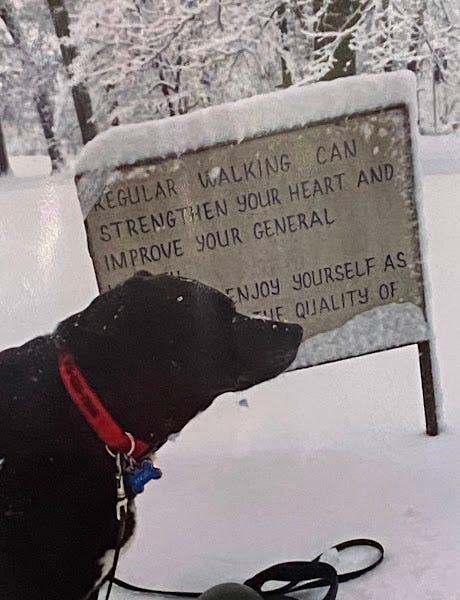
Delight Springs

Thursday, February 1, 2024

“Too much scepticism makes life impossible”… it seems

We're scheduled to discuss Pyrrhonian skepticism today in CoPhi, and we're meeting in the library. Really. It doesn't just seem so.

(Pyrrho seems to me a lot like Douglas Adams's "ruler of the universe"--"I say what it occurs to me to say when I hear people say things. More I cannot say..."…)
"All sorts of philosophers from Aristotle to David Hume ["a wise man proportions his belief to the evidence"] have argued that too much scepticism makes life impossible. In 1748 Hume wrote that a Pyrrhonian
. . . must acknowledge, if he will acknowledge anything, that all human life must perish, were his principles universally and steadily to prevail. All discourse, all action would immediately cease; and men remain in total lethargy, till the necessities of nature, unsatisfied, put an end to their miserable existence
Hume thought that a consistent Pyrrhonian Sceptic would not eat, drink or keep himself out of danger, because he would be incapable of deciding how to do any of these things. Should he put bread in his mouth or should he nibble a stone? Ordinary people believe that it is bread which is nourishing, but a Sceptic is surely committed to keeping an open mind [you know what they say about minds that are too open...] about it. Should he step aside from a thundering horse, or under its hooves? A Sceptic would have to suspend judgement on all such matters and suffer the consequences. One ancient author made a similar point by asking: 'how is it that someone who suspends judgement does not rush away to a mountain instead of to the bath, or stands up and walks to the door rather than the wall when he wants to go out to the market-place?'

Arcesilaus and other like-minded philosophers had an answer to this. A bath does seem to be the sort of place where you could get a good wash, and this explains why a Sceptic will head towards one when he wants to get clean. If a mountain seemed to be such a place, then he would go there instead; but it does not, so he goes to the bath. A door does seem to be the best way out of a house, bread does seem to be nourishing, and being trampled by horses does not seem to be a good idea. According to Arcesilaus, even though a Sceptic will refuse to form an opinion about how things really are, he can still freely admit that they appear one way rather than another. As Timon once said: 'That honey is sweet I do not affirm, but I agree that it appears so.'
[Timon appears to me too timid.]

Being human, a Sceptic is affected by appearances just like everyone else and so he will behave much like everyone else, at least in the essentials of life. He follows instincts, observes customs and generally acts in a sensible way, but he does so by habit or as a matter of human nature, not because he endorses any opinions about the world. As Sextus later put it, a Sceptic follows 'laws and customs and natural feelings' but lives 'without holding opinions'. [He's a conformist, then, paradoxically.] Thus if you were to ask him whether he definitely believes that bread is nourishing, a Sceptic would indeed say no, because he suspends judgement on the matter. But you will still find him in the larder." --Dream of Reason: A History of Western Philosophy from the Greeks to the Renaissance by Anthony Gottlieb

Tuesday, January 30, 2024

Circle time

"Nothing great was ever achieved without enthusiasm," affirmed the Sage who acknowledged his own occasional dips of enthusiasm but kept experimenting with words.


http://dlvr.it/T24P0Y

"Nothing great was ever achieved without enthusiasm"

Emerson would have a thing or two to say to the young people who fret and worry about what others think of them, lack enthusiasm, doubt their own originality and prospects. 

He said of the "meek young men" of his own day that they "grow up in libraries, believing it their duty to accept the views which Cicero, which Locke, which Bacon have given, forgetful that Cicero, Locke and Bacon were only young men in libraries when they wrote these books.” American Scholar

In Nature he said "The sun shines today also," so "Why should we not also enjoy an original relation to the universe? Why should we not have a poetry and philosophy of insight and not of tradition, and a religion by revelation to us, and not the history of theirs?" 

I've circled around again to Circles, the tenth of his first series of essays (1841), for reaffirmation of my own original relation to the universe. He'd of course prod me to "tell me what you know" rather than recycle his words, and I will. I do. I also share the circumspection he and I both admire in Montaigne: “Que sais-je?” We're all experimenting with words and visions here.

But so many of the words in Circles bear repeating. Here are some that struck me yesterday on re-reading.

The life of man is a self-evolving circle, which, from a ring imperceptibly small, rushes on all sides outwards to new and larger circles, and that without end. The extent to which this generation of circles, wheel without wheel, will go, depends on the force or truth of the individual soul… if the soul is quick and strong it bursts over that boundary on all sides and expands another orbit on the great deep, which also runs up into a high wave, with attempt again to stop and to bind. But the heart refuses to be imprisoned…

There is no outside, no inclosing wall, no circumference to us…

Conversation is a game of circles. In conversation we pluck up the termini which bound the common of silence on every side.

We can never see Christianity from the catechism:—from the pastures, from a boat in the pond, from amidst the songs of wood-birds we possibly may.

The natural world may be conceived of as a system of concentric circles, and we now and then detect in nature slight dislocations which apprise us that this surface on which we now stand is not fixed, but sliding.

No facts are to me sacred; none are profane; I simply experiment, an endless seeker with no Past at my back.

Nature abhors the old, and old age seems the only disease; all others run into this one. We call it by many names,—fever, intemperance, insanity, stupidity and crime; they are all forms of old age; they are rest, conservatism, appropriation, inertia; not newness, not the way onward. We grizzle every day. I see no need of it.[RWE was 38.]

But the man and woman of seventy assume to know all, they have outlived their hope, they renounce aspiration, accept the actual for the necessary and talk down to the young… This old age ought not to creep on a human mind. In nature every moment is new; the past is always swallowed and forgotten; the coming only is sacred. Nothing is secure but life, transition, the energizing spirit. No love can be bound by oath or covenant to secure it against a higher love. No truth so sublime but it may be trivial to-morrow in the light of new thoughts. People wish to be settled; only as far as they are unsettled is there any hope for them.

Life is a series of surprises…

The one thing which we seek with insatiable desire is to forget ourselves, to be surprised out of our propriety, to lose our sempiternal memory and to do something without knowing how or why; in short to draw a new circle. Nothing great was ever achieved without enthusiasm. The way of life is wonderful; it is by abandonment.

Abandonent. Let go the past, just for now. Write your words, imagine your vision. Let it rip. 

Then circle back for another pass, as the gyre expands to contain your expanding imagination. 

And repeat the cycle. 


Monday, January 29, 2024

"Beyond the reach of social anxiety"

As Eleanor Roosevelt said, "You wouldn't worry so much about what other people think of you, if you realized how them they do."

"...in order to feel social anxiety, you have to believe that other people’s negative opinions of you are worth getting upset about, that it’s really bad if they dislike you and really important to win their approval. Even people who suffer from severe social anxiety disorder (social phobia) tend to feel “normal” when speaking to children or to their close friends about trivial matters, with a few exceptions. Nevertheless, they feel highly anxious when talking to people they think are very important about subjects they think are very important. If your fundamental worldview, by contrast, assumes that your status in the eyes of others is of negligible importance, then it follows that you should be beyond the reach of social anxiety."

"How to Think Like a Roman Emperor: The Stoic Philosophy of Marcus Aurelius" by Donald J. Robertson: https://a.co/aEJLAkT

High anxiety

Today's Teenagers: Anxious About Their Futures and Disillusioned by Politicians

…Members of Gen Z, ages 12 to 27, are significantly less likely to rate their current and future lives highly than millennials were when they were the same age, it found.

Among those 18 to 26, just 15 percent said their mental health was excellent. That is a large decline from both 2013 and 2003, when just over half said so.

"We have to get these kids caught up or they're going to have a world of hurt in their lives, and consequently in our country."

nyt

Chekhov & Paine

It's their birthday. Thomas Paine (notes Sarah Bakewell in Humanly Possible) said
"some people seem to think it an expression of humility to call "the fertile earth a dunghill, and all the blessings of life by the thankless name of vanities." Instead, in Paine's opinion, it looks more like ingratitude." 
…Paine's preferred principles were humanist ones: be grateful for life, do not make a cult of suffering, be tolerant toward others, and try to deal with problems as rationally as possible. He summed up his Enlightenment humanist credo: I believe in the equality of man, and I believe that religious duties consist in doing justice, loving mercy, and endeavouring to make our fellow-creatures happy. The Age of Reason, with its message of fellow feeling, equality, happiness, and the enlightened celebration of a magnificent cosmos, brought Paine some far-from-happy experiences. —Bakewell, Humanly Possible
Anton Chekhov said, "Any idiot can face a crisis; it is this day-to-day living that wears you out."

His views on religion and morality were also those of a humanist: he disliked dogma and was skeptical about supernatural beliefs. As one twentieth-century admirer of Chekhov wrote: He said—and no one had said this before, not even Tolstoy—that first and foremost we are all of us human beings. Do you understand? Human beings! He said something no one in Russia had ever said. He said that first of all we are human beings—and only secondly are we bishops, Russians, shopkeepers, Tartars, workers. . . . Chekhov said: let's put God—and all these grand progressive ideas—to one side. Let's begin with man; let's be kind and attentive to the individual man. —Bakewell

WA

Saturday, January 27, 2024

Basking in the light

John Lachs drew his last breath in November, but his wisdom continues to illuminate my thought and pedagogy. Incandescence of memory, not just forgetful presence, is also *transcendence.


http://dlvr.it/T1ycJ2

Basking in the light

Still reflecting on JL's Stoic Pragmatism epilogue, so packed with light and wisdom. The final segment:

"…The consideration that in the end we die has disturbed my enjoyment of life just as little as the fate of the food I eat interferes with the delight of a good meal. Focusing on the destination makes us forget the pleasures of the road. Should the eventual extinction of the sun send cold shivers down our backs? Surely not; such issues simply do not matter. Untold generations will have basked in the light before the dark descends. Their joy redeems eventual disaster, or at least proves it irrelevant. Sometimes it is best to avert our gaze, for viewing matters in context liberates the mind, but seeing them in their ultimate outcome can paralyze it…

Reflecting on what is possible over an unlimited period of time generates foolish theories, baseless hopes, and unending worry. A part of the reason why animals live better than some humans is their freedom from ultimate concerns; they act as if they knew that finite creatures are not designed to deal with totality. 

Up to a point, life gets better in proportion to our ability to get absorbed in the immediate. Failure rehearses memories, caution advises planning; future and past squeeze us from two sides until life becomes the hurried conversion of one into the other. Even universities have become beehives that leave little time for leisured reflection or the life-giving moments in which one can simply be. Few things are more difficult for our burdened and busy generation... immediacy, which is not some unconceptualized given but simply the present in whose movement we can feel at home. Momentary forgetfulness can liberate us from the future and the past and reveal the exhilarating beauty of whatever comes our way. This is transcendence—probably the only sort available to animals. 

I am grateful for living at a time when I can contribute to the recovery of American philosophy, a great and greatly neglected national treasure. The founding of the Society for the Advancement of American Philosophy, in which I gladly participated, serves as clear evidence that just a few determined and persevering individuals can have a lasting effect on the future of a profession. We need to continue expanding the canon by adding to it thinkers whose work is excellent but who have, for one reason or another, been neglected over the years. I work on this, as I work on bringing philosophy into contact with a broader public, with the conviction that the energy and vision of a small band of people can make all the difference we need. 

The activist element in American philosophy seems to fit well with my temperament. I value the sort of robust engagement with the world that evokes personal activity and aims at social improvement. Scholarly imprisonment in universities strikes me as intellectually narrowing and emotionally impoverishing. It tends to make professors timid and compliant souls. I am interested in ordinary people and their problems because I see myself as no different from them; I simply cannot take claims about aristocracy of any sort seriously. 

As a consequence, I love philosophy for the perspectives it offers on human difficulties and the tools it provides for their resolution. Thinking about what I see around me is one of the great pleasures of my life. Acting on what I believe combines the satisfaction of being a whole person with the exhilaration of an experiment. Academics who live only in the mind sadden me. Their truncated existence denies them the robust delights and the sound common sense of those who engage the world on multiple levels. A sense of practical reality is a badly needed balance to excessive cerebration

Philosophy needs balance no less than do philosophers. Even if it could attain the precision of some of the natural sciences, philosophy would need the literary imagination to complete its task. Its product is not disinterested knowledge but a relationship that changes lives. To establish that relationship, we need to communicate both discursive ideas and visions. The manner of the communication can be as important as its substance; people respond to what is well thought and well said. The magnificence of philosophical ideas and the excellence of their expression are, therefore, integrally connected to their effectiveness. My ideal has always been to write philosophy with the beauty and inventiveness of Mozart's music, though I would also like for my ideas to be true in some sense on which philosophers will never agree. The momentousness of this ideal is measured best by seeing how far I fall short of it. 

In the end, I do not want to be absorbed in the technical details of the problems of philosophy. My passion is to deploy philosophy to deal with the important issues that face us as individuals, as a nation, and as members of the human race. There is a large public waiting anxiously for what philosophy can offer—for careful thinking, clear vision, and the intelligent examination of our values. That is where the future of philosophy lies, that is where American philosophy has always pointed us, and that is where I will continue to be."

Stoic Pragmatism by John Lachs

The Future of Academic Freedom

…Over time, Harvard, like many other universities, has allowed the core academic mission of research, intellectual inquiry, and teaching to be subordinated to other values that, though important, should never have been allowed to work against it.

Sometime in the twenty-tens, it became common for students to speak of feeling unsafe when they heard things that offended them…

https://www.newyorker.com/news/the-weekend-essay/the-future-of-academic-freedom

Zinn on meaningful writing

"The meaning . . . of a writer will be found not just in what he intends to say, or what he does literally say, but in the effect of his writing on living beings."
Howard Zinn, who died on this day in 2010

https://www.threads.net/@reboomer/post/C2mlAmYOXH5/

Friday, January 26, 2024

Intense loyalty, without footnotes

More of my mentor's imitable qualities:
"I have an intense loyalty to people near to me, which shows itself in my readiness to go to great lengths to promote their good. This attitude defines my relation to friends, students, and family.

I also believe that although some things matter intensely, many of the things that upset people are of little significance. This conviction has enabled me to live without condemning much and without the desire to run other people's lives. The connected respect for autonomy has been the source of great happiness for me; I attribute my deeply satisfying relations to my children to mutual acceptance built on caring and on love. Love and respect have also served as the foundation of the extraordinary relationship my wife and I enjoy, sharing all the tasks and pleasures of life, and reflecting and writing together on the problems of education.

In graduate school, we are taught to write with footnotes, evoking authority for all questionable claims. Philosophers, like other human beings, find it consoling to run with the crowd and embrace few views that are out of favor. Knowing the fickleness of public opinion, I could never make myself believe that the number of people holding a position has anything to do with its truth. Accordingly, I have learned to write without footnotes, and, when it seemed appropriate, I have embraced wildly unpopular, though not intrinsically outrageous, ideas."

Stoic Pragmatism by John Lachs

Thursday, January 25, 2024

Passion for teaching, respect for students, contempt for academic irrelevance

I find myself drawn again, at the outset of another semester's teaching, to the wisdom of John Lachs's Stoic Pragmatism, which begins with a simple truth— "Age clarifies"— and concludes with an epilogue I wish every teacher would commit to memory and practice. 
"…I am unable to think of anything more important for the future of academic philosophy in this country than for it to become less academic. 

Having had more than my share of bad instructors, I sought a job in education as a way to earn a living while I continued my philosophical reflections. I never suspected that I would develop a passion for teaching. Yet conveying to others the benefits I receive from philosophy has become a burning desire and a consuming activity in my life. I do it in a way that seems to some a form of witnessing, showing the immediate pertinence of philosophical ideas to my life.

 Immense satisfaction attends my good fortune in having had the opportunity to make a contribution to the lives of thousands of undergraduates. I view this multitude of people as extended family: I keep in touch with as many of them as I can and cheer them on in the pursuit of their purposes. I hope philosophy has made a significant difference in their lives. I have also been fortunate in having launched more than sixty young philosophers on their careers. My relation to them is one of lifelong concern and support; helping them with their problems and careers is of vital importance to me. I think of these activities not as the result of optional commitments on my part, but as the continuing expressions of my philosophical beliefs. 

People whose minds are energetic and who are interested in their fields find it easy to teach well. Bored instructors are boring and the self-absorbed fail to place themselves in the shoes of their students to see how what they say is received. Thinking before one's students' eyes—which means, among other things, teaching without notes—demonstrates what one expects them to do. Keeping in mind the interconnectedness of things and especially the relations of what one teaches to the ordinary concerns of students renders instruction vivid and, when things go well, even memorable. 

By no means least, good teaching requires deep respect for students. The activity is hallowed because it enables one human being to contribute to the creation of another. Its chance of success is enhanced by embedding it in wider human relations; truly good teachers tend to offer caring companionship as the context of instruction. Perhaps all learning is imitation; if so, there is added reason for teachers to offer themselves as living examples to their students. Knowledge that makes little difference to the instructor's life is, in any case, rightly suspicious and may deserve to be disregarded by students…"

Stoic Pragmatism by John Lachs

Wednesday, January 24, 2024

"You don't need to follow me...

You don't need to follow anybody." Brian was right. But we do need to stop glorifying militancy and commemorating racists.


http://dlvr.it/T1q0xg

Just drop an “r”

"…The South is littered with memorial battlefields, state parks and memorials and the federal acreage — 4,600 acres at Chancellorsville, 9,500 acres at Chickamauga, 5,000 at Manassas, 2,500 at Vicksburg, rows of rusting cannon, and then the monstrosity that is Gettysburg, a 6,000-acre junkyard of obsolescent obelisks and meaningless mind-numbing monuments and sentimental statuary, a National Park of Bad Art, so cluttered it's hard to walk through and imagine the ferocious battle that took place. Very few people under the age of 60 care about the war it commemorates, and the junk should all be trucked away to a landfill and the land developed into nice neighborhoods with hiking trails and flower gardens and finally put Pickett's Charge and the Lost Cause behind us and go on to more interesting things. You want a memorial, put up a podium on the spot where Abe Lincoln gave his speech and let visitors press PLAY and listen to it..." GK
This reminded me of our brief discussion in CoPhi yesterday of the problem of Forrest Hall. I have a fix, which I've shared with GK's readers:
The ROTC building on my campus in middle Tennessee, and any number of residential streets hereabouts, still bear the name of Nathan Bedford Forrest. Old misplaced sentiment dies hard, administrative wheels grind glacially. But this could be a relatively easy fix: just drop an r, and commemorate the trees instead of the racist.
I  once taught a class in Forrest Hall, and had some Opening Day fun with my classroom's militant decor.


Several students captured the moment when I raised my flimsy Phillip Toy Mart sword and contradicted the writing on the wall with Brian Cohen's balcony pronouncement: "You don't need to follow me, you don't need to follow anybody. You've got to think for yourselves..." 


Tuesday, January 23, 2024

Opening Day!

Just a week late, we make first contact in CoPhilosophy's Spring '24 semester today.


http://dlvr.it/T1m4S1

Opening Day!

Yet another one (finally!- after a week lost to weather) [but see Margaret Renkl, below: that week was a gift, not a loss], and even after all these years I still give it an excited exclamation mark. The first day of class, like the first day in  MLB, is a seasonal highlight. 

If you want to make a good first impression on your professor, class, do not tell me you don't know what "MLB" means. Most of you don't, these days. So I'll also have to explain what a scorecard is, and what it means to get to first base. In CoPhi as in life, the goal is to get there so you can eventually come home... and maybe "know it for the first time," as the poet from St. Louis said  ("the end of all our exploring/Will be to arrive where we started"). He didn't come home, he went to England and made a new home there. I came to Tennessee and made a new home here. The simple point is: when you make it home, you score.

The state of higher education, not unlike the state of the American union, is chaotic and of uncertain future. 

"It’s been quite a year. Colleges became flash points for protests over affirmative action, abortion rights, free speech and hate speech, affordability, equity, policing, sexual harassment and assault, unionization, and the Israel-Hamas war, provoking, arguably, the most divisive and contentious campus conflicts since Vietnam..." Inside Higher Ed

But all of that is not our concern on Day 1. Our job is to begin to learn some of the pedagogic ropes, to introduce our subject matter in broad strokes, and to introduce ourselves to one another. Who are you? Why are you here? 

Students usually give a variety of responses to that second question, some quite literal (because I was conceived and birthed) or prosaic (because I needed the credit hours) or conformist (or so it seems, after a string of short answers all say because this school is close to home) or pietistic (because god put me here). Many seem to interpret why to mean how, offering a biological explanation of their origins rather than an existential exploration of their aspirations and intentions. It's all good, on Day One. Nobody's in the cellar on Opening Day.

But I would propose, to those who say (or didn't say, but think) they don't want to know why they're here because that would create more anxiety to fulfill others' expectations,

Sounds like you think your purpose is something necessarily imposed externally, rather than something you yourself discover, fashion, and have a personal stake in. Not to have a purpose that you've made your own and internalized is to court nihilism. Or, it's to turn yourself into a robot like that forlorn little guy on Rick and Morty who learns his purpose is to pass the butter. Thing is, whether we're originally "programmed" (by nature, genetics, experience, god) with a set purpose or not, being conscious, reflective, and free means we get to regulate and possibly even re-write the program. I hope you'll come to see philosophy as an invitation to do just that, to find and follow the purpose-driven life. Otherwise, your answer to why you're here is: don't know, don't want to know, don't care. Doesn't matter.
I say it matters. You're not a butter bot. Find your purpose. 

And to those who matriculated here because they didn't want to stray too far from home:

Home is sweet, but again I encourage you all to push yourselves to expand your horizons and your conception of home. Growing up means making yourself at home in the wider world. Carl Sagan said it best: to be a true cosmopolitan is to be a citizen of the cosmos, no matter where you hang your hat.

What you want to do is what Jennifer Michael Hecht says the old "graceful life philosophers" like the Epicureans did: 

The experience of doubt in a heterogeneous, cosmopolitan world is a bit like being lost in a forest, unendingly beckoned by a thousand possible routes. At every juncture, with every step, one is confronted with alternative paths, so that the second-guessing becomes more infuriating even than the fact of being lost. After a direction is chosen, one is constantly met with another tree in one's path. What do you do if you come from a culture that had a powerful sense of home and local value, and now you are lost in something vast and sprawling, meaningless and strange? The stronger your belief in that half-remembered home, the more likely you are to panic, to grow claustrophobic among the trees and beneath their skyless canopy. Hellenistic men and women felt a desperate desire to get out of the seemingly endless, friendless woods. The graceful-life philosophies of this period were able to achieve an amazing rescue mission for the human being lost in the woods and bone-tired of searching for home. They did this by noticing that we could stop being lost if we were to just stop trying to get out of the forest. Instead, we could pick some blueberries, sit beneath a tree, and start describing how the sun-dappled forest floor shimmers in the breeze. The initial horror of being lost utterly disappears when you come to believe fully that there is no town out there, beyond the forest, to which you are headed. If there is no release, no going home, then this must be home, this shimmering instant replete with blueberries. Hang a sign that says HOME on a tree and you're done; just try to have a good time. — Doubt: A History: The Great Doubters and Their Legacy of Innovation from Socrates and Jesus to Thomas Jefferson and Emily Dickinson by Jennifer Michael Hecht
The great task of a reasonable life is to stop searching maniacally for a way out of the “forest” (the natural universe). "Hang a sign on a tree that says Home" and be done with it.

I did that once, or got Younger Daughter to do it back when she was in her arts-and-crafts phase. The sign eventually faded but the message has stuck.


So to begin: Who am I, why am I here?

Well, I'm the designated instructor, a veteran MTSU prof and also (like the poet) a native of the St. Louis region who ran away, I not so far though  as old Tom. (I had a professor at Mizzou who told me I wrote like Eliot. I chose to take that as a compliment, but many of my peers think less of poetic prose than I do. Their problem.) There's more about me in the sidebar bio, if anyone cares.

Why I'm here (in Honors 218): to introduce my field of study and promote the relevance and value of philosophy for life. Why I'm here on the planet: to ameliorate what I can, and keep moving forward-- to light a candle rather than curse the darkness.

And that, for present purposes, is who I am: a meliorist and a peripatetic, a guy who says most problems are made soluble-- or tolerable at least-- by putting one foot in front of the other and repeating. A guy who never took Latin but loves to say things like Solvitur ambulando and Sapere aude, and who likes to award bases to students who can translate such expressions and explain them. A guy who agrees with Carl Sagan that knowing we live on a pale blue dot ought to make us kinder, more humane, more enlightened, and more in love with life.

Time at last to make first contact. See you in class!


Monday, January 22, 2024

The gift of time

I'm grateful for it, and for Margaret Renkl's and Ross Gay's gratitude... and glad to get back to school too.


http://dlvr.it/T1k1dQ

When the Sky Offers an Unexpected Gift of Time

And that was the week that was. Don't be sad it's over, be glad it happened.
…In "The Book of (More) Delights," the poet and essayist Ross Gay writes about the gift of time that opens up whenever he unexpectedly arrives at an appointment early, or when the person he plans to meet is running late. Such unplanned changes in agenda can feel, he writes, "like the universe just dropped a bouquet of time, and often a luminous bouquet of time, in your lap."

That's what a snow day feels like here. A snow day in the American South on an overheating planet is exactly like an extravagant bouquet of luminous time that comes out of nowhere and lasts as long as it cares to, on a schedule we cannot entirely predict, much less control. Last week the sky offered an unexpected gift of time. Thank God I had no choice but to take it. —Margaret Renkl
And be glad it's finally time to get on back to school. Sure was pretty though.

Sunday, January 21, 2024

Is "better" the word?

Or reconciled? Accepting? At peace? Happier, maybe? Less charitably: happily deluded?

In any event, it's good to see a positive spotlight on humanism on the front page of the Sunday Times.
An Atheist Chaplain and a Death Row Inmate’s Final Hours

Devin Moss spent a year ministering to convicted killer Phillip Hancock. Together, they wrestled with one question: How to face death without God.
--

“It’s well known that people that really believe, that really have faith, die better,” he said. “How can we help people die better that don’t have supernatural faith?” nyt

As noted recently, Andrew Copson, and before him Corliss Lamont, have some ideas on this front. 

So has Professor Dennett. 
 
"People make a mistake in thinking that spirituality [necessarily] 
has anything to do with religion, immateriality, or the supernatural."

The humanist chaplain should consider the words as well of my late great mentor John Lachs in Stoic Pragmatismabout not counting on winning the supernatural afterlife lottery. "I am prepared to be surprised to learn that we have a supernatural destiny, just as I am prepared to be surprised at seeing my neighbor win the lottery. But I don't consider buying tickets an investment."

Better to invest in smelling the roses, loving life, being grateful for the time we've got.

And staying out of prison.

Saturday, January 20, 2024