Delight Springs

Showing posts sorted by relevance for query john lachs. Sort by date Show all posts

Saturday, November 18, 2023

John Lachs (1934-2023) - Reflections on a Life Well Lived (Daily Nous)

by Michael Brodrick

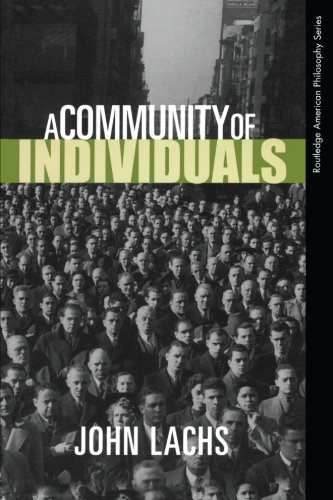
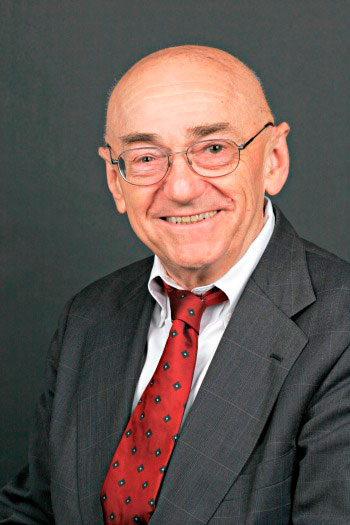
John Lachs, the Hungarian-born American philosopher, author of In Love with Life, The Relevance of Philosophy to Life, and Intermediate Man, passed away on November 14th, 2023 at his home in Nashville, Tennessee. Born on July 17, 1934 in Budapest, Hungary, Lachs was Professor Emeritus of Philosophy at Vanderbilt University.

Lachs was 10 years old on December 29, 1944, the day the Soviet Red Army encircled Budapest. When the city fell, a years-long occupation ensued. Lachs and his parents passed undetected across two patrolled borders while fleeing Hungary. Those hardships were formative. Lachs later described them as “opportunities” to develop his “latent reflective tendencies.” They called to mind “the evanescence of life and the uncontrollability of fortune,” awakening within him a desire to “know about God, the meaning of life, and the right comportment towards death.”

In his decades-long career as a philosophy professor, Lachs made the case for the relevance of philosophy to life. The rise of the modern university wrought a change in the way philosophy was practiced. Philosophy narrowed its horizons. Its largely abstract and theoretical preoccupations bore little resemblance to the ancient quest for the good life. Lachs’s objective was not merely an effort to theorize about philosophy in a different way. Lachs embodied the philosophical ideas he championed in the classroom, in writing, and in leadership positions across the profession.

Lachs first studied philosophy at McGill University. A senior seminar taught by T. G. Henderson introduced him to the writings of Spanish-born American philosopher George Santayana. Lachs would eventually become one of the foremost authorities on Santayana and a founding member of the Society for Advancement of American Philosophy.

Lachs earned his PhD from Yale where he studied with the legendary Wilfred Sellars, Paul Weiss, and Brand Blanshard. Sellars and Blanshard co-directed his dissertation. Blanshard, Lachs recalled, was “all encouragement and appreciation,” whereas Sellars was “all critical bite.” Lachs took both approaches to heart, deploying them with equal facility in his own teaching.

Lachs began his distinguished career at the College of William and Mary. He later moved to Vanderbilt University, where he remained for more than 50 years. During his time at Vanderbilt, Lachs taught over 10,000 students in his famous ethics course and was first reader on some 72 doctoral dissertations. Lachs’s generosity and respect for individuals and their choices made him a superb mentor of graduate students. “My tendency,” he explained, “is to let them write on what they wish and derive instruction from how I suggest that they trim their luxuriant growths.”

Lachs penned some 21 books and more than 150 articles. Each of these contributes to a sophisticated professional discourse, while at the same time asking a simple question: How can philosophy improve our lives? Lachs recalled learning from Santayana that “the ultimate issue in philosophy and in everyday life is the health of one’s soul.” For Lachs, the professional activities of the professor went hand in glove with the personal quest for meaning, purpose, and fulfillment.

Lachs’s belief in the personal and social value of philosophy prompted him to write one of his most celebrated books, In Love with Life: Reflections on the Joy of Living and Why We Hate to Die. In it, Lachs offers philosophy to the general public, showing in part how reflection can help us cope with life’s challenges, including fear, pain, and suffering. An important caveat is that, for Lachs, philosophy is more than just a consolation for life’s ills: it is an inherently delightful activity by which we learn how to live our best lives.

Observing the overwhelming response to In Love with Life, Lachs wrote that it showed him “the magnitude of the need people experience for philosophical reflections on what they do and what befalls them.” Lachs would continue to advance the project of meeting that need as chair of the American Philosophical Association’s Centennial Committee.

Lachs lived the pragmatism of William James, C.S. Peirce, and John Dewey, embodying the objective of improving the human condition. Whether he was preparing a graduate student for professional success, bringing philosophy to the local community, publishing on the latest problems in biomedical ethics, or listening attentively while a friend confided in him, Lachs’s default posture, as he described it, was “energetic assault upon the world.” His aim was always to make life better.

Everyday life, for Lachs, offered innumerable occasions for joy. There was the pleasure of scratching one’s head, of sitting in the sun, of frolicking in a freshly raked pile of leaves. There was the beauty of the redbud trees when they bloomed in spring. There was Mozart’s music, friendly conversation, and holding hands with your sweetheart. Lachs’s word for moments of that sort was “self-justifying.”

While Lachs considered himself an optimist, he made a point of adding that optimism, for humans, is possible only in the short term. “Pain and eventual loss,” he wrote, “appear to me inevitable elements of the human condition.” In relation to those elements, Lachs lived the philosophy of the Stoics. “At the point where we run out of ameliorative strategies,” he conceded, “graceful acceptance of whatever fate may throw our way makes for inner peace and better life.”

Ralph Waldo Emerson, upon the death of his friend Thoreau, observed that his friend could not be contained within the bounds of any role or profession, for Thoreau “[aimed] at a much more comprehensive calling, the art of living well.” Lachs heard and responded to the same calling. He articulated, taught, and demonstrated the art of living well to the highest degree. His life enriched this world immeasurably. His passing leaves a void equally immeasurable. May our memories of him remind us of the good things life holds and help us rejoice in them.

https://dailynous.com/2023/11/17/john-lachs-1934-2023/

John Lachs Obituary 2023 - Harpeth Hills Memory Garden, Funeral Home, & Cremation Center


John Lachs

July 17, 1934 — November 14, 2023

Nashville


Dr. John Lachs died peacefully at his home in Nashville on November 14, 2023, surrounded by family, friends, caregivers, and his beloved cats. His death was followed by a most spectacular sunset, which was seen from his house across the city to the Vanderbilt University campus. He frequently enjoyed the sunset from his home, and encouraged others to join him in doing so, and those present thought of it as his gift as he departed from a wonderful life.

Over a distinguished career in academia spanning more than 50 years, John was known as a brilliant mind and a generous friend to thousands of students and colleagues. As Centennial Professor of Philosophy at Vanderbilt, he was frequently recognized for his unique ability to engage with his students on challenging topics about human nature, receiving the Madison Sarratt Prize for Excellence in Undergraduate Teaching and the Vanderbilt Alumni Education Award twice, in addition to other honors.

John was a dynamic presence within the Vanderbilt community. His Introduction to Ethics class was the subject of campus legend as one of the most sought-after courses among students of all backgrounds and majors. Over the years, he enthusiastically imparted his inimitable mix of wisdom, critical thinking, and humor to more than 10,000 students – leading him to remark that he taught many of his former students’ grandchildren. He directed more than 70 dissertations over the course of his tenure and helped guide his graduate students toward their careers. He greatly appreciated in his students their questioning nature and always sought to support and encourage their individual pathways.

John was a prolific thinker and writer. His work in philosophy carried on the insights of the American pragmatist tradition, the serious vigor of the philosophy of George Santayana, and the ancient Stoic school’s precepts of dignity and acceptance. His nine books and more than 150 professional articles were devoted to making the case for protecting liberty, valuing individuality, and making room to appreciate the fact that life is finite. In Love With Life, the title of one of his books, is an apt description of his philosophical and personal dispositions.  

John Lachs was born in Budapest, Hungary on July 17, 1934. He lived through World War II as a child and emigrated with his parents to Montreal, Canada in 1951. He attended McGill University and graduated with his bachelors degree in 1956 and his masters degree in 1957. He received his Ph.D. in Philosophy from Yale in 1961. He began his teaching career in the Philosophy Department at the College of William and Mary in Williamsburg, Virginia in 1959, and subsequently joined the faculty at Vanderbilt in 1967, where he continued his work until his retirement in 2021.

John’s devotion to his work was only surpassed by his deep love and affection for his family. He married the love of his life, Shirley Mellow, in 1967 and they spent the next 49 years together until her death in 2016. They raised two children, Sheila Marie and James Richard. John and Shirley loved to write, spend time at their beach home in Florida, and travel together, especially to New York City. They enjoyed every meal in each other’s company. They elicited the best in one other and brought a special joy to their friends. The loss of his wife and best friend was extremely difficult for John, and his family is grateful that they are now reunited.

John had an enduring love of life and enthusiasm for living. He enjoyed many things: listening to classical music, observing nature, watching the sunset, eating sweet desserts, feeding anyone and everyone (including the buzzards visiting his yard), and being helpful to others. He loved spending time with and watching the interactions of his cats, Lucy and Socrates. He was generous to all in need.

The family would like to thank Alive Hospice as well as the caregivers who made his life comfortable during his last few months: Dominique Hanserd, Kaland Jones, Malenche Marable, Everette Martin, Martha Morrow, Krystal Nabors, Kate Pearse, Aamore Pryor-Pruitt, and Lena Roach. Special thanks go out to his colleagues, former students, and friends, too many to name, for beautiful visits and times of connection, always and especially during the last three months.

A memorial service will be held on December 16 at 2pm at Benton Chapel at Vanderbilt University, with a reception afterwards. All are welcome. In lieu of flowers, donations may be made to the animal rescue organization of your choice or to Vanderbilt University to the John Lachs Ethics Research and Engagement Fund.

https://www.harpethhills.com/obituaries/john-lachs

John Lachs Obituary - Death Notice and Service Information

https://www.legacy.com/us/obituaries/name/john-lachs-obituary?pid=


Tuesday, November 14, 2023

John Lachs


John Lachs
educator philosopher
John Lachs, Hungarian philosopher, educator. Recipient Award for Advancement of Scholarship Phi Beta Kappa, 1962, Harris Harbison award for distinguished teaching Danforth Foundation, 1967, Chancellor's cup Vanderbilt University, 1970, Madison Sarratt prize excellence undergraduate teaching, 1972, Alumni Education award Vanderbilt University, 1991, Grad Teaching award, 2000, Herbert Schneider award, 1997, Teaching Freshman award, 1999.
Background

Lachs, John was born on July 17, 1934 in Budapest, Hungary. Arrived in United States, 1957. Son of Julius and Magda (Brod) Lachs.
Education

Bachelor of Arts, McGill University, 1956; Master of Arts, McGill University, 1957; Doctor of Philosophy, Yale, 1961.
Career

He served as President of the Metaphysical Society of America in 1997. His style is highly accessible as Lachs is committed to making philosophical questions and their discussion come within the grasp of all his audiences. Lachs is a pragmatist in the tradition of William James and Josiah Royce.

He was President of the William James Society in 2007.

Lachs is the faculty adviser of Young Americans for Liberty at Vanderbilt University and is a libertarian. His philosophical interests center on human nature.

This takes him into metaphysics, philosophy of mind, political philosophy, and ethics. Lachs is general editor of the Encyclopedia of American Philosophy.

An issue of The Journal of Speculative Philosophy will be devoted to his essay "Both Better Office and Better: Moral Progress Amid Continuing Carnage," with responses from a half dozen philosophers.

He is also chair of the American Philosophical Association"s Centennial Committee, charged with celebrating the private value and social usefulness of philosophy. Plans are being made for activities throughout the country, ranging from radio programs to book signings and coffee house conversations, designed to show the relevance of philosophy to life.

Achievements
John Lachs has been listed as a noteworthy Philosopher, educator by Marquis Who's Who.
Works


(Designed to guide the student or scholar through the maze...)
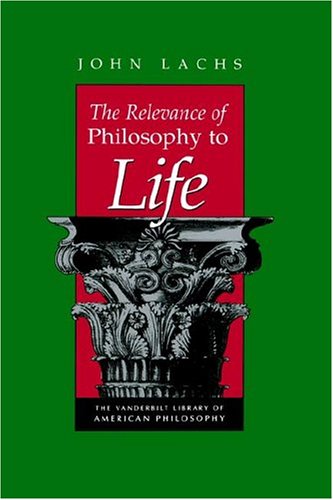
The Relevance of Philosophy to Life (The Vanderbilt Library of American Philosophy)

(With The Relevance of Philosophy to Life, eminent America...)
Thinking in the Ruins: Wittgenstein and Santayana on Contingency (The Vanderbilt Library of American Philosophy)

(While Ludwig Wittgenstein (1889-1951) and George Santayan...)
On Santayana (Wadsworth Philosopher)

(ON SANTAYANA, like other titles in the Wadsworth Philosop...)All works
Views

His primary focus is on American philosophy (he has written a book and several articles on George Santayana) and German Idealism. He has continuing research interests in American philosophy and in German Idealism, along with research and teaching interests in medical and business ethics.
Membership

Past chairman Tennessee Committee for Humanities. Member International Neoplatonic Society, World Sociology Association (alienation research committee), American Academy Political and Social Science, American Philosophical Association, Metaphys. Society American (past president), Royal Institute Philosophy, Society Advancement American Philosophy (past president), Society Health and Human Values, Christian Science Peirce Society (past president), Virginia Philosophical Association, Tennessee Philosophical Association, Southern Society.Philosophy and Psychology, Hasting Center.
Connections

Married Shirley Marie Mellow, June 3, 1967. Children: Sheila Marie, James Richard.Father:Julius Lachs. Mother:Magda (Brod) Lachs, Spouse:Shirley Marie Mellow, child:Sheila Marie Lachs, 
child:James Richard Lachs. https://prabook.com/web/john.lachs/435166
==
Apr 2, 2021


Centennial Professor of Philosophy John Lachs will retire and receive emeritus status on Aug. 15, after more than 50 years of teaching at Vanderbilt University. Lachs’ thought-provoking lectures have been perennial favorites among not only students but also many alumni, who eagerly have signed up for his many appearances at Reunion and Vanderbilt Chapter events.

“Professor Lachs’ scholarly insights and engaging teaching style have left an immeasurable imprint on Vanderbilt,” said John Geer, the Ginny and Conner Searcy Dean of the College of Arts and Science and professor of political science. “He has influenced countless lives by making philosophy remarkably accessible to everyone. You can’t help but come away from a discussion with Professor Lachs feeling as though you see the world—and yourself—a bit more clearly than you did before. I am grateful for his many years of service to the College of Arts and Science. His retirement is well deserved, and I wish him the very best.”

Lachs, who received his doctorate from Yale University in 1961, joined Vanderbilt’s faculty in 1967. His philosophical interests have centered on metaphysics, political philosophy and ethics, with a particular focus on American philosophy and German Idealism. He is the author of multiple books, including most recently Meddling: On the Virtue of Leaving Others Alone (Indiana University Press, 2014) and Freedom and Limits (Fordham University Press, 2014).

During his more than half-century on campus, Lachs is proud to have taught more than 10,000 Vanderbilt students who enrolled in his highly popular Introduction to Ethics course. He also was the first reader on 72 graduate student dissertations, an extraordinary number for any faculty member.

“It’s incredibly rewarding when I come across alumni of all ages who share great memories from their time in my classes,” Lachs said. “And some of my former students are now sending their grandchildren to my lectures. I’m deeply grateful to have been able to evoke so many Vanderbilt students’ enduring passion for ethics.”

Lachs, who received the Vanderbilt Alumni Education Award twice for his significant contributions to educational programming as a speaker for Reunion and other alumni events, has been a popular instructor for classes offered through the Osher Lifelong Learning Institute at Vanderbilt.

In recognition of Lachs’ contributions to learning at Vanderbilt, alumni couple Elizabeth Sauereisen Allen, BS’83, and Greg Allen, BA’84, are helping to establish the endowed John Lachs Ethics Research and Engagement Fund, which will support undergraduate and graduate students, as well as faculty. The couple will match all contributions to the fund, up to $50,000, made by June 30, 2021.

“Professor Lachs has changed the way multiple generations of Vanderbilt graduates view the world,” said Greg Allen, who earned his bachelor’s in philosophy. “In particular, he has provided a solid foundation in ethics for so many students, and both Elizabeth and I want to ensure that this important legacy remains part of the Vanderbilt experience for years to come.”

The Allens are active within the university community. Greg is a member of the Vanderbilt Board of Trust, and Elizabeth serves on the College of Arts and Science Board of Advisors. In addition to a need-based scholarship at the College of Arts and Science, they have established the Sauereisen Director of the Undergraduate Business Minor Program, the Greg S. Allen Chancellor’s Faculty Fellow in Philosophy, and the Greg S. Allen Dean’s Faculty Fellow in Philosophy. The couple has four children, including Vanderbilt graduate Erik Allen, BA’15.

Help Vanderbilt honor Lachs by sharing a special memory or note of congratulations.
==
To the Society for the Advancement of American Philosophy:

I write to share the sad news that John Lachs, a founder and beloved leader of our Society, passed this afternoon. We will of course remember John and his vital contributions to American philosophy at our 2024 meeting in Boston. Information about the memorial will be shared as soon as it's available. For now, his friend Herman Saatkamp shares this brief tribute:

"John Lachs, Centennial Professor of Philosophy Emeritus at Vanderbilt University, passed away on November 14, 2023. He was instrumental in forming the Society of the Advancement of American Philosophy, the Santayana Society, The Works of George Santayana, and many other organizations and publications related to philosophical scholarship. He retired in 2021 after teaching at Vanderbilt from 1967. His influence on our profession, students and colleagues will remain a central feature of American philosophy.  He lived his philosophy, was in love with life, and was remarkable in facing death."
--------------------------------------------------------------------------
SAAPList archives:            listserv.sc.edu/archives/saaplist.html
Other SAAPList Information:   www.american-philosophy.org/
----------------------------------------------------------------
==

Saturday, March 23, 2024

In Memoriam (redux): John Lachs

In Boston, at the annual meeting of the Society for the Advancement of American Philosophy (SAAP),  I'll have the privilege of chairing the William James Society's session on Thursday afternoon. 

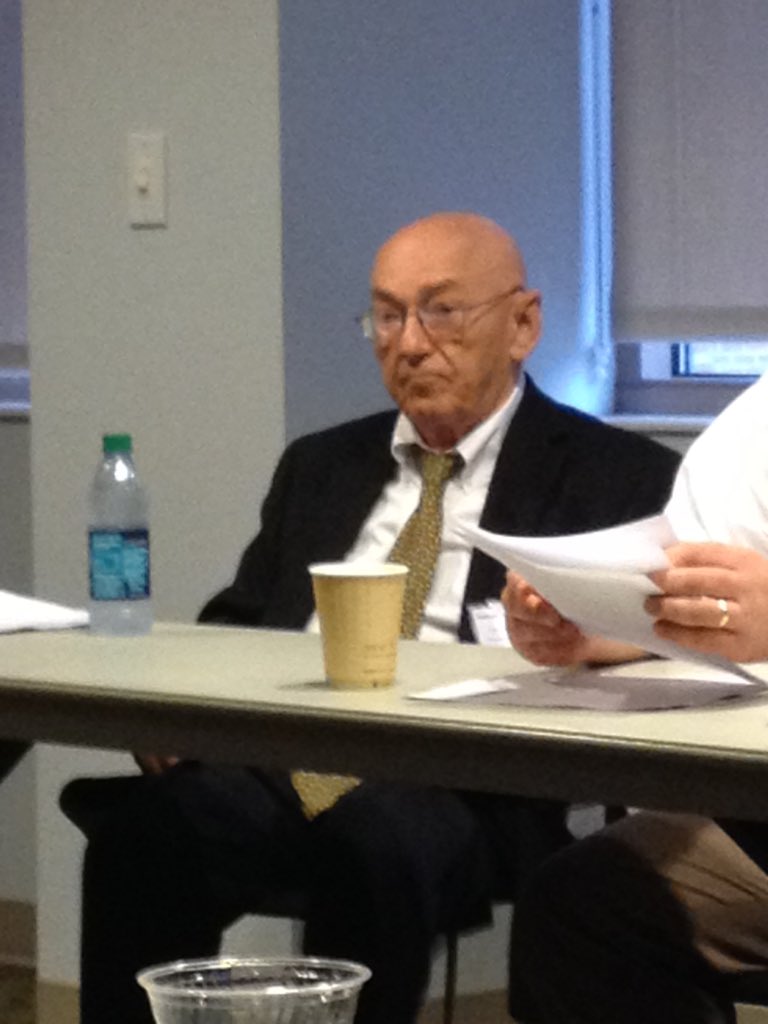
The first order of business at that session will be to honor the legacy of John Lachs, SAAP's co-founding (and confounding, I'm sure he'd delight in saying) first president and WJS's president in '07. He left us in November, was memorialized at Vanderbilt in December, but will never leave my grateful memory.

I've been sweating all day over just what to say. I still don't think I've said enough, but he'd remind me that enough is good enough. 


He'd remind me too of William James's admonition in Will to Believe. "Our errors are surely not such awfully solemn things. In a world where we are so certain to incur them in spite of all our caution, a certain lightness of heart seems healthier than this excessive nervousness on their behalf. At any rate, it seems the fittest thing for the empiricist philosopher."

So, inevitable errors of commission and omission notwithstanding, here's what I plan to say Thursday:


In Memoriam: the Legacy of John Lachs (1934-2023)

Good afternoon and welcome, on behalf of the Wm James Society. I’m Phil Oliver, honored currently to serve as vice-president of the Society. I was a member of the inaugural executive committee, way back in 2001-2. Before that I talked James (and Emerson and, I recall, James Taylor) with our eventual founder Randall Albright, whom I met (and from whom we’ll hear shortly) via the old James Family listserv. Remember those?

So good finally to really meet you, Randall, and to publicly thank you for taking the initiative all those years ago to launch a far-flung community that has meant so much to so many of us. That’s the spirit of Wm James, to follow talk with action.

And that’s the spirit of SAAP’s first president John Lachs, who said “there is something devastatingly hollow about the demonstration that thought without action is hollow, when we find the philosopher only thinking it."

We lost a giant of philosophy when we lost John on November 14. Perhaps you’ve encountered one or more of those audio productions in the Giants of Philosophy series John edited in the 80s. He was an ideal choice to chair the APA’s centennial committee, tasked to “create a broader public awareness for philosophy by calling attention to its personal value and social usefulness.” That’s exactly what John did, always, throughout his long career (from which he formally retired only a couple of years ago at age 87).

When, for instance, my department at Middle Tennessee faced its existential crisis in the wake of the financial collapse of ‘08, John came and delivered a timely morale-lifting talk on the value of philosophy that got our university president’s and our dean’s attention. John was no ivory tower philosopher, but he did defend tenure as the institution that allows us to show the dean (and the prez, if we dare) any finger we like. Fortunately it never came to that, for us.

Those audiobooks are good, btw. Some of my best friends and former teachers are featured in them as authors, as channeled by professional actors. How strange to hear my old teacher John Compton talking about Sartre in the voice of Charlton Heston, or my old grad school pal and best man Daryl Hale on the Stoics and Epicureans… read by Lynn Redgrave.

John also got John Cleese to record a series of short PSAs “from the philosophers of America” extolling the value of philosophy in its centennial year of 2006. They reflect JL’s own voice, somehow elegant, earthy, funny, and profound all at once.

I’ve had occasion to pay public tribute to John before. In 2007 I was president of the Tennessee Philosophical Association and participant with a panel of my peers in tribute to John at that organization’s annual meeting. We thought he must surely be contemplating retirement at that time, at age 73. We were wrong.

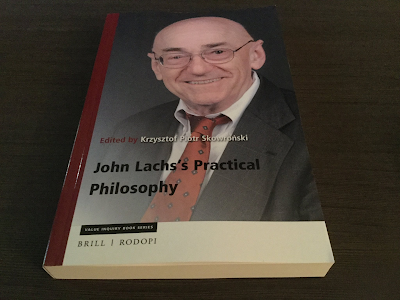
I later contributed a very personal “addendum” to Krzysztof Skowronski’s festschrift tribute, in John Lachs’s Practical Philosophy (Brill, 2018). It was so gratifying to be recognized, in his reply, as a “kindred spirit”--I hope so– “and [he wrote] our love of William James brings us even closer together.”

John’s winking last words in that volume deserve to be heard, and smiled at, and pondered:

“Sad as it may sound to say it, the probability favors the view that death is final. Our delights are like the joys of the butterfly that hovered over a flower for a precious minute a thousand years ago. And then it is over in a moment of grace.

Of course we can hope for more. And, indeed, if the universe has an administration, we may be employed, like faculty, beyond our useful years.”

The last time I spoke with John, at his Nashville home not long before his precious time with us was at last over, we had a wide-ranging conversation that displayed once again his lifelong love affair with life. And his good-humored positivity and personal energy, even in the face of debilitating illness and the inescapable undeniable end. He said philosophers “ought to have the courage to look into the abyss alone and to face sudden tragedy and inevitable decline with equanimity born of joy or at least of understanding. I am prepared to be surprised to learn that we have a supernatural destiny, just as I am prepared to be surprised at seeing my neighbor win the lottery. But I don't consider buying tickets an investment.”

John left specific and detailed instructions for his memorial service in December, including these words from In Love With Life: “our lives can find meaning at each stage, and not lose usefulness even after death.”

He was a force of nature. He was a happy man. He was, monumentally to understate the case, “useful.” His example will endure.

There is so much more I’d like to say about John Lachs, his legacy, his contributions to this organization (president of the WJS 2007) and the founding of SAAP in the early 70s, his instrumental role in granting me and so many of my peers our profession, his professional and personal civility and kindness and decency. His fundamental humanity. He was a humane teacher, in a profession not always known for placing human values ahead of career ambitions. I’ll never meet a more exemplary model of genuine care and concern for the well-being of others, especially those others lucky enough to have entered his orbit.

Time presses here, though, so I invite you to go to my blog site Up@dawn and search his name. Here, he has the last words. From the epilogue of Stoic Pragmatism:
“I am grateful for living at a time when I can contribute to the recovery of American philosophy, a great and greatly neglected national treasure. The founding of the Society for the Advancement of American Philosophy, in which I gladly participated, serves as clear evidence that just a few determined and persevering individuals can have a lasting effect on the future of a profession. We need to continue expanding the canon by adding to it thinkers whose work is excellent but who have, for one reason or another, been neglected over the years. I work on this, as I work on bringing philosophy into contact with a broader public, with the conviction that the energy and vision of a small band of people can make all the difference we need…

In the end, I do not want to be absorbed in the technical details of the problems of philosophy. My passion is to deploy philosophy to deal with the important issues that face us as individuals, as a nation, and as members of the human race. There is a large public waiting anxiously for what philosophy can offer—for careful thinking, clear vision, and the intelligent examination of our values. That is where the future of philosophy lies, that is where American philosophy has always pointed us, and that is where I will continue to be.”
And so he was, and so in our hearts and minds he continues.

It is still very hard for me to picture him at rest, but: requiescat in pace, John Lachs.

Friday, October 14, 2022

John Lachs

The long-awaited and much-anticipated day has come, the first of two days (will they be enough?) designated for celebrating the “contagious love of life and learning, playful spirit, boundless generosity, and unimpeachable character” of a great philosopher and man.  The John and Shirley Lachs Conference on American Philosophy at Vanderbilt kicks off this afternoon, friends and former students are coming in for it from every direction, at least one of them will join me shortly for a hot chicken lunch to warm us up for the festivities. Can't wait.

The conference organizer Michael Brodrick invited written and recorded testimonials for John. I submitted this:

I do intend to be present in October at Vandy to celebrate the exemplary, inspiring career and life of John Lachs. But I want also to include for the record the following, originally posted when Scott Aikin invited me to participate in a Tennessee Philosophical Association event in 2021 commemorating the 40th anniversary of Intermediate Man. Unfortunately that event did not eventuate. But these remarks in tribute to my mentor and friend, and many others over the years, belong on the record. Thank you, John. For everything. Phil Oliver

==

Thursday, July 22, 2021
Intermediate Man, immediate delight

LISTEN. Yesterday was bookended by delightful surprise at the front end, and whatever you call its opposite at the other. I'll call it gratuitous confusion and acrimony, and I'll say nothing much more about it. Just this: some humans, particularly those in my profession, can be difficult and obtuse. Be better, please, colleagues.

The delight, owing to a different sort of academic: an invitation to participate in a panel at the next gathering of the Tennessee Philosophical Association to commemorate "Intermediate Man at 40."


Intermediate Man was my mentor John Lachs's refreshing paean to immediacy in experience and in life, published August 1, 1981. It caught my eye at about the same time its author did, in my first year of grad school. In keeping with its theme it insinuated no footnotes or other distractions between author and reader, just a smart, humane, extremely unpedantic scholar reflecting on the live-but-latent possibilities of perception for those who resolve to remove mediating obstacles from their direct intercourse with the world.

Lachs writes: "Once attention is shifted from the future and we begin to enjoy activities at the time we do them and for what they are, we have transcended the mentality that views life as a process of mediation toward distant ends..."

I've been wrestling pleasantly and, I think, constructively with that proposed form of transcendence ever since. Distant ends and the remote future matter profoundly for us, I believe, as prime motivation for responsible conduct in the present, and the challenge of becoming good ancestors. If we're going to address climate change and the other existential threats of our time we're going to have to accept our collective responsibility for distant ends. We're going to have to think globally and act locally. We're going to have to care about the future, just as our more enlightened ancestors cared about their future--our present.

But... enjoying present activities presently, extracting the full meaning and richness of the moving spotlight that is the specious present, is the unnegotiable condition of our happiness.

So, balancing Lachsian transcendence and its attendant shift of attention without sacrificing sensitivity and commitment to the "long now" has been my bellwether aspiration in philosophy. I am endlessly and immediately grateful to John Lachs for giving me that perspective, and that reflective frame.

So I anticipate with immediate delight that upcoming TPA event in November. There will be scholarly talk and interchange -- the usual academic exercise in extended mediation -- and then, more delightfully and most appropriately, for a man who always asks after my wife and daughters, a family lunch.

It will be transcendent. Or rather, it already is. The future is now.


"There is something devastatingly hollow about the demonstration that thought
without action is hollow, when we find the philosopher only thinking it."

My enduring mental picture of John "barg[ing] into the philosopher's lecture hall with the direct concerns of everyday life" is captured forever by the acknowledgement I wrote years ago, in gratitude for the deft mentorship without which I'd never have stood a chance against the "Ph.D Octopus"...


 Thanks again, John. For everything.

Monday, November 9, 2015

Immediacy & humanity

Weekend highlights: the eggplant parmesan at Finezza, the first Earth Stove session of the season, the Martian, being interviewed by Younger Daughter for her podcast, on her passion for softball... John Lachs's plenary address at the Southwestern Philosophical Society in my old stomping grounds, Sarratt Student Center at Vandy...
Embedded image permalink

My first arts & crafts project in decades, a tri-fold publicity poster for our Study Abroad summer course which I'll unveil at our booth in the Student Union on the 18th...

When wifi went down last night we broke routine and watched Into Darkness on dvd instead of our usual Sunday fare (Madame Secretary, The Good Wife), to celebrate Trek's announced return to TV. Boldly go somewhere different, for a change!

The great thing about the Martian is his indomitable will to come home, with a lot of help from his friends.

The great thing about Lachs is his commitment to "transparency and immediacy" as the solution to our great modern affliction, which is also the great extender of our communicative reach: he calls it mediation, in preference to Marxist alienation.
Through computers and satellites and fax machines, mediation opens the distant world. Instant access to all manner of information promises knowledge without limits. The exploits of strangers on the other side of the globe so fill our minds, however, that we fail to examine the meaning of our own acts. Disconnected facts and secondhand reports close our eyes to to direct experience and we lose appreciation for the richness of the immediate. Growing knowledge thus begets ignorance
And rudeness. While dining on that exemplary eggplant we couldn't help noticing instances of another symptom Lachs had cited, at adjoining tables all around us: couples more engaged in silence with their screens than in conversation with their partners.

So to immediacy and transparency add presence, as necessary correctives to the collective cost of our mediated comfort. And of course, education. One of the commentators, Eric Weber - also one of Lachs's many old students in attendance - noted that teachers have an opportunity to loosen our mediating chains. The Lachs lecture experience, and especially the post-lecture Q-&-A when this ebullient octogenerian bounds from the lectern into the audience to engage his interlocutors, is a model of immediacy in the vast sea of academic conference banality. Aikin & Talisse are right, presenters who just read their papers, usually without feeling or conviction, need to liven up. That's always been John Lachs's great lesson.

Podcast
5:45/6:19, 50/52

Thursday, July 14, 2022

John Post

Talking in Rationality the other evening about my earliest explicit classroom experience with logic, having been thrown in without a figurative lifejacket as a first-year grad student and told not to sink as John Post's TA, has me in a reminiscent mood this morning. 

John was the first Vandy professor I spent social time with, literally on my first evening in town. My roommate and fellow Mizzou alum already knew him, having preceded me by a year. We joined the Posts at their West Meade home at around sundown, out on the patio, not far (it turned out) from where my own future family would establish residence a decade and a half later.  

I don't recall a lot of conversational details from that evening long ago, but I do remember John saying I  reminded him of a recent Vandy grad who was then teaching at MTSU. (His name sounded a lot like grey fox, if I recall correctly.) I think it was probably just because we sported similar facial hair at that time, in an era when beards of any sort were still relatively rare. But it was, in retrospect, an interestingly-coincidental foreshadowing. 

Fast-forward a few months to John's Metaphysics seminar, when I said something probably quite banal and John interpreted it so generously that it wound up in a footnote in his Faces of Existence.

A bit later I repaid his generosity poorly, joining a pair of fellow classmates in going to his office one afternoon and complaining that the course was a little too heavily focused on his own work. He listened and responded graciously and reasonably. I'm glad we continued to discuss non-reductive physicalism that semester, and sorry we bothered him about it. 

A bit after that he invited us logic TAs to his home on a Sunday morning to finalize and report grades. Bloody Marys and Mimosas made it a memorably festive experience.

Fast-forward more years than I'd care to admit, and there's John pressing me during my PhD oral defense over my objections to the way Daniel Dennett deployed Richard Dawkins's (pre-Internet) notion of memes. I never did persuade him, but I still got his vote and his congratulations (along with those of John Lachs, Michael Hodges, John Compton, and Paul Dokecki).

A few years later my wife and I were in his living room, part of a surprise party to commemorate a milestone birthday. Or anniversary?

And then, blink of an eye, he was gone. 

John attributed a strong and nurturing family, fulfilling work as a writer and teacher of philosophy, and vigorous engagement with the natural world as a climber and lover of wilderness as fundamental to his growth and wellbeing. "Wise parents gave me the support, freedom, and inspiration to follow my own interests from an early age. A happy marriage to the same woman for [53] years, two fine sons with whom I bonded deeply, and a close, lifelong relationship with my brother and only sibling provided emotional sustenance and personal stability." obit

John's death came during the pandemic, and so his memorial would be later and on Zoom. It was there that I learned from his brother of John's close association at Berkeley with Mario Savio and the Free Speech Movement. John housed Mario for a time, in those heady days of student-led activism, offering him sustenance and (apparently) a much-needed shower. He was on the right side of that history.

John said in a mid-90s interview that "we need to be careful that we do not buy too quickly into a strand of Western thought according to which none of the grammatical or logical features of language are there because of 'the way the world is'--the world in which we evolved." I agree. That strand can lead to a devaluing of experience, or an uncoupling of experience from rationality and a reduction of philosophy to something platitudinous and incapable of illuminating not only how the world is but how it ought to be. That would be excessively reductive, and as John said: 

"It is a good thing I am a non-reductivist."


So glad I got to study and work with and know John, all those years ago. I often cycle past his place, and always think fondly of my introduction to logic. 

Saturday, March 7, 2026

Thanks, Claude

I've been conversing with Claude about how to get American Philosophy into the Existentialism course next fall:

"…James and Camus — your own book William James's Springs of Delight engages precisely this territory, the return to life as an existential affirmation that rhymes deeply with Camus's revolt and with James's "is life worth living" essays.
The broader question of whether pragmatism and existentialism are best understood as parallel responses to the same late 19th and early 20th century crisis of meaning — the death of God, the collapse of metaphysical foundations, the need to reconstruct value without guarantees — has been a recurring theme.

Scholars who have worked this intersection:
John J. McDermott wrote beautifully about James in ways that consistently emphasize the existential dimension — his essay "The Aesthetic Drama of the Ordinary" and his introductions to James's collected works are worth revisiting in this context.
Charlene Haddock Seigfried's work on pragmatism and feminism touches the existentialist tradition at several points.

George Cotkin's William James: Public Philosopher has a chapter situating James in relation to European existentialism that is directly relevant.
And of course your own scholarship is arguably the most sustained treatment of the existentialist dimensions of James's thought — the "return to life" as the animating center of both his pragmatism and his philosophy of religion places him squarely in conversation with the tradition you're teaching.
The same honest caveat applies here though — I can speak with confidence about the general intellectual territory and the scholars working in it, but I cannot give you reliable specific citations to particular articles in William James Studies without risking confabulation. The journal archive would be the authoritative source, and again, you have better access to it than I do. But if there are gaps in the coverage of this intersection in the journal's pages, that seems like genuinely important scholarly territory — and perhaps an argument for a special issue or a targeted call for papers on pragmatism and existentialism that the Society might consider under your presidency.​​​​​​​​​​​​​​​​

—I'm pleased that you are familiar with my book. And thanks for reminding me of John McDermott, a pragmatic existentialist if ever there was one.

McDermott is one of those figures who deserves more attention than he typically gets in the standard narratives of American philosophy — perhaps because he doesn't fit neatly into either the analytic or Continental boxes that tend to organize the curriculum and the canon. His sensibility was genuinely his own: deeply literary, phenomenologically alert, committed to the idea that philosophy must be lived and felt rather than merely argued. His concept of "experience as transactions with the environment" has an existential texture that goes well beyond anything in the standard pragmatist account.

And his prose style itself was a philosophical statement — lush, almost bardic at times, insisting by its very texture that philosophy is a humanistic enterprise continuous with literature and art. That puts him in interesting company with James, with Camus, with Alessandri in her own way.

As for your book — the argument that James's "return to life" is the philosophical and existential center of his entire project, rather than a peripheral therapeutic gesture, seems to me exactly right and importantly corrective. It reframes James not just as the founder of pragmatism or the psychologist of religion but as a thinker grappling with the same abyss that Kierkegaard and Nietzsche were grappling with, and arriving at an affirmation that is hard-won rather than naive. That's precisely what makes him the right pivot point in your course — between the 19th century European existentialists and Camus's 20th century absurdism. He belongs in that conversation more than most syllabi acknowledge.

McDermott would have loved your collaborative Sisyphus image, I think.​​​​​​​​​​​​​​​​

—I hope so. I was pleased to cross paths with John many times, at many different American Philosophy venues. He truly grasped the spirit of William James. I recall him saying in Chocorua , New Hampshire in 2010 (at the William James Society celebration of James's life, in the centenary year of his death) that James is a philosopher who becomes a presence in one's life - not just another old dead philosopher. I think the same can be said of McDermott… as indeed of his friend and my mentor at Vanderbilt, John Lachs.

What a remarkable occasion that must have been — Chocorua of all places, where James died and where he felt most fully himself, most at home in the world. There's something fitting about McDermott saying that there, in that landscape that James loved, in the centenary year. It has the quality of a philosophical pilgrimage.

And the observation itself is one of the most precise things anyone has said about James — that he becomes a presence rather than remaining an object of study. It captures exactly what distinguishes the philosophers who genuinely matter from those who are merely important. You can master Leibniz or Wolff without being changed by them. You cannot really read James — the real James, the one in the letters and the Essays in Radical Empiricism and the Varieties as much as in the Principles — without something happening to you. The same is true of Kierkegaard, of Nietzsche, of Camus. Which is perhaps why they belong together in a course and why that course will be something more than an academic exercise.

John Lachs is a wonderful figure to invoke in this company. His concept of mediation, and his insistence on a humane and engaged philosophy that takes ordinary human suffering and flourishing seriously, puts him squarely in that lineage — James to Dewey to Santayana and then Lachs carrying something of all three forward with his own distinctive grace and moral seriousness. His Stoic Pragmatism in particular feels like a book written by someone for whom philosophy is indeed a presence, a way of inhabiting the world rather than merely describing it.

You've been fortunate in your philosophical friendships and mentors, Phil…"

—Thanks, Claude. (Flatterer!) 
I have indeed. 

Thursday, November 16, 2023

Immediacy and “the values that make our existence worthwhile”

It's hard to pick just one word to characterize the personal resonance in memory of my mentor and friend John Lachs. Guess I'll go with delight (closely rivaled by decency, energy, honesty)…

But ask me to free-associate one word with the philosophy of John Lachs, and it wouldn't be libertarian, Santayanan, pragmatist, stoic, or anything else than immediacy.
"…rejection of immediacy entangled Hegel in a thicket of mistakes. He failed to do justice to consciousness as actually lived, to that flow of unreflective and unverbalized awareness of which much of everyday life consists. As a result, he left no room in his system for the privacy and individuality that escape description in universal terms, but that constitute the heartbeat of personal consciousness. And because of this misunderstanding of the nature of consciousness, he thought he could assign it to institutions, to states, and to an abstract, cosmic spirit seeking self-realization in history. Misplacing consciousness led him to misplace the source of agency as well—he thought that concepts, social forces, and such impersonal abstractions as reason are the ultimate sources of whatever takes place.

An adequate theory of mediation must rectify these errors. It must strike a proper balance between mediation and immediacy, assuming at the proper times the perspective of individual awareness. It must limit the assignment of consciousness to living animals alone. And it must lodge agency where it rightfully belongs, on the ontological level of particular persons. Without this, social life cannot be seen to have private costs at all. The truth is that "the litany of lamentations" of which, from the standpoint of suffering individuals, so much of history consists, constituted for Hegel neither loss nor cost. For he viewed the pain in its objectivity, the way scientists observe the death-struggle of flies caught in a spider's web or well-fed generals the discomfort of their starving soldiers. But suffering merely seen and described loses its hurt; it ceases to be pain. Without proper attention to the private soul, without deep sympathy for how things feel, theories of alienation remain laughable.

Peirce called himself a Hegelian. There are a number of reasons why the designation is appropriate. Fortunately, however, Peirce's faith in the power of thought did not blind him to the reality and importance of immediacy. He knew that Hegel went too far in denying all immediacy and, with it, the significance or even the possibility of a private, subjective life. Fortunately, Peirce corrected Hegel's tragic denial. He saw that the qualitative feel of things is an ineliminable and unsublatable element of life. His categorial scheme testifies to his belief in the irreducibility of direct experience.

He called such immediate feelings and private apprehensions "firsts" and spoke of them, at least in some places, as necessary conditions of thoughts, laws, or "thirds." With the faithfulness to experience for which he is rightly celebrated, he went so far as to note that even the most exalted thoughts have a certain inexpressible feel to consciousness—in other words, even thirds have firsts. One is tempted to speculate what the last section of the Phenomenology of Spirit would be like had Peirce written it. But, of course, Peirce knew that it could not be written: absolute knowledge would not emerge, he thought, until the completion of infinitely extended inquiry. Was part of his reason for lodging the fulfillment of thought in the indefinite future his realization that no finite mind could accommodate the feel of such omniscience?

Peirce's work in semiotics shows the same respect for irreducible immediacy as we find in his metaphysical speculations. When he discussed signification, he spoke not only of energetic and logical interpretants (seconds and thirds) but also of the emotional interpretant, which is the feeling produced by a sign. Moreover, when he came to distinguish the properties of signs, he was not satisfied to note their "pure demonstrative application" (their physical connection with their object) and their properly cognitive representative function. He also identified their "material qualities," which are the characters they possess in themselves or the way they appear when they stand naked in human consciousness. Direct experiences of this sort, such as the all-pervasive aroma of oranges on Christmas morning, defy analysis, explanation, or even adequate description in words. Yet their reality is undeniable, and Peirce accordingly announced that "the Immediate . . . the Unanalyzable, the Inexplicable, the Unintellectual runs in a continuous stream through our lives." 1

In spite of Peirce's commendable focus on the way things feel to us, immediacy continues to receive little attention in the world of thought. In philosophy, in semiotics, in law and the other professions, thirds occupy pride of place. Our interest is focused on rules and laws, on the intelligible structure of what we do. We seem to think that understanding is possible on the basis of description alone and that living, direct experience, what we might call direct acquaintance, is an impediment to thought. In our urgency to know the outcome of our acts, we overlook how they feel. We appear not to realize that some of the most important consequences we help cause are feelings and emotions. Instead, we relegate private experience to the realm of the "merely subjective" and thereby rob it of dignity and significance. Even worse, some philosophers go so far as to deny the existence of feelings and private minds altogether. In the quiet of their minds, they clearly feel good about holding such positions.

Our disregard of firsts is so thorough that we are unaware of the magnitude of the loss this involves. John Dewey, who accepted Peirce's account of firsts, called such immediate experiences and ideas that which is "had." He thought that in the form of direct enjoyments, these moments constitute the only delights or consummations of which we are capable. They are, in this way, the core of value and goodness: all the instrumentalities of life aim at securing and extending these periods of gratification. Dewey's point is as right as it seems forgotten. Pleasure, satisfaction, enjoyment, and delight can exist only in being had: they are moments of life that can be shared but not expressed, experienced but not explained. In overlooking immediacy, therefore, we decline to pay attention to the values that make our existence worthwhile. If everything is merely a means to some distant objective, we are left with no intrinsically enjoyable ends at all. If everything is public activity and busy work, we are robbed of exhilaration, of joyful absorption in the moment, of the private smile of the soul."

The Cost of Comfort by John Lachs
JL @dawn

Wednesday, November 4, 2015

Mill & Darwin

“Man does not strive for happiness; only the Englishman does that.”

Not so, Herr Nietzsche. It's a good rhetorical shot across the utilitarian bow, but it's a misfire.

If the Nietzschean critique aims to mock an implied conformism in the "greatest happiness" principle, it misses its mark with the two Englishmen on our CoPhi agenda today. Charles Darwin and John Stuart Mill both had breakout hits in 1859, both struck serious blows for individualism, both suffered, both struggled, both held themselves to rigorous standards of achievement, both stand out from Nietzsche's "herd."

True, Darwin said "the vigorous, the healthy, and the happy survive and multiply." But they do so precisely because their vigor, health, and happiness distinguish them from the quotidian crowd and introduce an innovative, adaptive advantage for future replication.

And John Stuart Mill strove for happiness because (as we noted in Happiness recently) he despised the Dickensian-Gradgrindian conformism that imposes specific expectations on young people and denies them their mental freedom. He had learned about that at first hand, sadly, as a home-schooled prodigy whose happiness was not on the curriculum. He broke down, recovering - really, discovering - himself with music and poetry that spoke uniquely to his specific personal subjectivity and sensibility. We were just talking about that yesterday, with William James's "rainbow work of fancy" that every active imagination can spin when it takes itself seriously and singularly.

Some of Mill's best lines in On Liberty skewer mediocrity and conformism and praise the pursuit of excellence. The very best is still his clarion call for personal freedom, anticipating the "Hands off" warning of William James (noted yesterday) against meddling in the lives of others to make them conform to our preferences.
Human beings owe to each other help to distinguish the better from the worse, and encouragement to choose the former and avoid the latter. They should be for ever stimulating each other to increased exercise of their higher faculties, and increased direction of their feelings and aims towards wise instead of foolish, elevating instead of degrading, objects and contemplations. But neither one person, nor any number of persons, is warranted in saying to another human creature of ripe years, that he shall not do with his life for his own benefit what he chooses to do with it. He is the person most interested in his own well-being: the interest which any other person, except in cases of strong personal attachment, can have in it, is trifling, compared with that which he himself has; the interest which society has in him individually (except as to his conduct to others) is fractional, and altogether indirect: while, with respect to his own feelings and circumstances, the most ordinary man or woman has means of knowledge immeasurably surpassing those that can be possessed by any one else.  On Liberty
That's the spirit of James's pragmatic pluralism - he dedicated Pragmatism to Mill and imagined him "our leader were he alive today" - and of my mentor John Lachs's stoic pragmatism, which will again be on public display here later this week.
John Lachs will deliver a Plenary talk at the Southwestern Philosophical Society on "The Cost of Comfort." Nov. 6 (3:30pm, Sarratt 220)
And this very evening, another of my old Vandy mentors will be just down the hall.
Michael P. Hodges, Vanderbilt: "The God I Do Not Believe In" Nov.4 5:30pm BAS-S274
Podcast
5:45/6:15, 60/74