Delight Springs

Monday, March 29, 2021

Problems solved (or at least ameliorated, for now)

 An eventful weekend: got my second COVID shot yesterday morning, spent the afternoon with wife and Younger Daughter and Brother-in-law celebrating his birthday and his recovery from COVID and heart surgery; and on Friday, before Saturday's day-long deluge and resultant flooding (pics), had a charmed near-perfect early Spring day featuring (1) helpful physical therapy (decompression and laser) for my increasingly-debilitating ambulatory impairment, (2) a delightful bikeride in Warner Parks, and (3) a practically unimpaired and painless hike, first such in months, through the Burch Reserve. 

Looking forward to Democracy in America this week, where we'll conclude midterm reports--they've been great--and wrap up Kurt Andersen's Evil Geniuses. It's been eye-opening.

We began the course with its eponymous inspiration, Alexis de Tocqueville's 19th century classic. We come almost full-circle with Andersen's pointed observation of just how far we've fallen, in our corporate "donation"-driven, oligarchically self-interested and uncompromisingly polarized politics. "And so, inevitably, we must consult Tocqueville... In the 1830s [he wrote that] 'money does not lead those who possess it to political power'..." 

Andersen asks rhetorically if his grandchildren will grow up "as ignorant of [2020] as I was of the global viral pandemic that my grandparents survived and of the 1919 'race riots'...? Extrapolating from the present generation's collective lack of historical interest, I'd have to venture a probably. How does that make me feel about the long-term human prospect, and the future of American democracy? Not great. But also not overconfident that any of us has a clue where we'll be in a generation or two, either.

What would George Santayana say? I told you so? "Those who cannot remember the past are condemned to repeat it." Santayana is (was?) my mentor Lachs's favorite, and William James's teacher before he was his colleague. James described Santayana's Platonist philosophy as possessing "a perfection of rottenness". But as a pluralist he was still happy to make room for it. If Santayana didn't exist we'd have to invent someone like him.


Much in Andersen's final chapters deserves mention, but I'm particularly drawn to this: "it's all about solving the one overriding problem--what economists call the economic problem, how people decide how to use the available resources to survive and, beyond mere survival, to enjoy life... it becomes primarily a cultural and psychological problem that people must decide is solved." 

That is, if we can eventually automate and thus enhance our economy to the extent of displacing scores of people from jobs that fail to fulfill, and can free the greater number of us to flourish with a form of happiness based on activities rooted in work we actually enjoy, then we'll be in a position to decide there's more to life than material consumption. We'll be free to live what GS called the life of reason, and to validate his statement that there's no cure for life and death "save to enjoy the interval."

I'm just hoping they don't try to automate my job, which in the classroom or zoomroom most days (excluding those involving the filling out of forms, and the other administrative stuff) is truly a source of deepest enjoyment.

Tomorrow, for instance, we get to talk in CoPhi about John Rawls, Peter Singer, and (in the context of Alan Turing and AI) our future robotic overlords. So glad I still get to do that. 

Thursday, March 25, 2021

Hannah Arendt's world

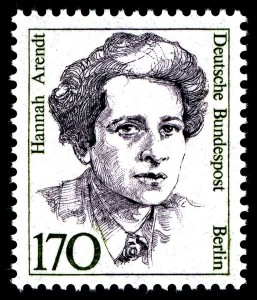
 LISTEN. WATCH (Recorded October '20). The most interesting philosopher in today's CoPhi lineup, for my money, and by far the one with the most timely and relevant message for this moment when the future of democracy feels so precarious, is Hannah Arendt. She warned us to beware the "terribly and terrifyingly normal" average fellow citizens we'd never suspect of harboring a capacity for sadism and violence. She said:

  • “The sad truth is that most evil is done by people who never make up their minds to be good or evil.”
  • “As citizens, we must prevent wrongdoing because the world in which we all live, wrong-doer, wrong sufferer and spectator, is at stake.”
  • “Before mass leaders seize the power to fit reality to their lies, their propaganda is marked by its extreme contempt for facts as such, for in their opinion fact depends entirely on the power of man who can fabricate it.”
  • “The ideal subject of totalitarian rule is not the convinced Nazi or the convinced Communist, but people for whom the distinction between fact and fiction (i.e., the reality of experience) and the distinction between true and false (i.e., the standards of thought) no longer exist.” Origins of Totalitarianism
In other words, Fantasyland is ripe for the picking. There may never in history have been such a concentration of banal, unthinking, uninformed, lonely (isolated, disconnected, paranoid/conspiratorial) people as we find here now. 

Paranoid/conspiratorial?

"[T]o a great many Americans, digital communication has already rendered empirical, observable reality beside the point... Many Americans have become so deeply distrustful of one another that whatever happens on Nov. 3, they may refuse to accept the outcome...Combating the deception that has overrun public discourse should be a primary goal of our society. Otherwise, America ends in lies." Farhod Manjoo

Why "lonely"? 
Loneliness radically cuts people off from human connection. She defined loneliness as a kind of wilderness where a person feels deserted by all worldliness and human companionship, even when surrounded by others. The word she used in her mother tongue for loneliness was Verlassenheit – a state of being abandoned, or abandon-ness. Loneliness, she argued, is ‘among the most radical and desperate experiences of man’, because in loneliness we are unable to realise our full capacity for action as human beings. When we experience loneliness, we lose the ability to experience anything else; and, in loneliness, we are unable to make new beginnings. --Samantha Rose Hill, Hannah Arendt Center for Politics and Humanities, Aeon [and see her FiveBooks recommendations]
But don't overlook the crucial distinction between loneliness and solitude, the latter being indispensable for the independence of thought that enables us to think for ourselves. Sapere Aude, as Arendt's fellow Konigsbergian implored. "We need the private realm of solitude to be alone with ourselves and think."

Let us hope she was right to think a relative few thinking, informed, connected citizens would or could suffice to neutralize their threat. "Under conditions of terror most people will comply but some people will not… No more is required, and no more can reasonably be asked, for this planet to remain a place fit for human habitation."

And, let us hope we can still share and vindicate her confidence in the power of education to resist the anti-democratic tide.
“Education is the point at which we decide whether we love the world enough to assume responsibility for it, and by the same token save it from that ruin which except for renewal, except for the coming of the new and the young, would be inevitable. And education, too, is where we decide whether we love our children enough not to expel them from our world and leave them to their own devices, nor to strike from their hands their chance of undertaking something new, something unforeseen by us, but to prepare them in advance for the task of renewing a common world.”
Love for the "common world," for John Dewey's "continuous human community in which we are a link," is precisely what we should be teaching and learning. Nothing else will save democracy or preserve a habitable planet for the next generations. That's why voting is such a big deal, even for blue voters in red states (and vice versa): it's our most democratic ritual of renewal. 

Originally published 10.22.20
==


Arendt thought philosophers should give more attention to natality, the natural complement of mortality.
The two central features of action are freedom and plurality. By freedom... Arendt means the capacity to begin, to start something new, to do the unexpected, with which all human beings are endowed by virtue of being born. Action as the realization of freedom is therefore rooted in natality, in the fact that each birth represents a new beginning and the introduction of novelty in the world.

...by acting individuals re-enact the miracle of beginning inherent in their birth. For Arendt, the beginning that each of us represents by virtue of being born is actualized every time we act, that is, every time we begin something new. As she puts it: “the new beginning inherent in birth can make itself felt in the world only because the newcomer possesses the capacity of beginning something anew, that is, of acting ” (HC, 9).

...“It is in the nature of beginning” — she claims — “that something new is started which cannot be expected from whatever may have happened before. This character of startling unexpectedness is inherent in all beginnings … The fact that man is capable of action means that the unexpected can be expected from him, that he is able to perform what is infinitely improbable. And this again is possible only because each man is unique, so that with each birth something uniquely new comes into the world ” SEP

Expect the unexpected. That's wisdom. 

Tuesday, March 23, 2021

Embrace the distant shore (but also be here now)

 LISTEN (recorded October 2020). Our discussion of Falter and the end of the "human game" yesterday in Environmental Ethics turned to questions of meaning and its possible loss in a technologically transformed future. Todd May's Stone conversation with George Yancy does too.

...I believe, with some of the existentialists, that we're not here for any particular cosmic reason or purpose. We just show up, live our lives, and then die. This doesn't mean, of course, that I don't believe in things like morality; rather, I ground morality and values in another way... our death threatens to sap meaning from our lives. Why is this? We live oriented toward our future. Our most important engagements — career, relationships, hobbies, etc. — presuppose future development. Death would cut us off from those developments and thus some of the meaning of our engagements. And it is important to note that because we can die at any time that threat is a constant one. We live under the shadow of death.

...we must engage in forward-looking projects and engagements, because that's inevitable for almost all human beings. A life without ongoing engagements is, for most people, an impoverished one... we must try to live as best we can within the moments of those engagements. Instead of solely looking forward, we should enjoy the present of what we do in the knowledge that at any moment the future could disappear. It's a kind of stereoscopic vision that seeks to orient toward the future while immersing in the present.

I don't think that doing this is easy. For my own part, living more fully in the present is difficult for me. But I have gotten to the stage in my life where I can see its far shore much more clearly than the shore I set out from, and so I am trying to do that with greater urgency... (continues)

He's right, properly focusing a meaningful present with an altered onrushing future while retaining what's valuable from the past is a difficult balancing act. Young people who can't quite see their own far shore so vividly may feel less urgency, but this isn't just a question of personal meaning. It's existential for our species, and our life on Earth. 

On the personal front, though, May's approaching shore reminds me of Northern Exposure's radio deejay philosopher Chris Stevens. "Be open to your dreams, people. Embrace that distant shore. Because our mortal journey is over all too soon." And, you are here right now. Don't just "snuggle up to your fiber optics baby and bliss out." Connect. Chris quoted Einstein to that effect too, in a nice riposte to Ayn Randian hyper-individualist libertarianism.

“Strange is our situation here on Earth. Each of us comes for a short visit, not knowing why, yet sometimes seeming to divine a purpose. From the standpoint of daily life, however, there is one thing we do know: that we’re here for the sake of others, above all for those upon whose smiles and well-being our own happiness depends; and also for those countless unknown souls with whose fate we are connected by bonds of sympathy.”

We'll talk about that today in CoPhi, beginning with Bertrand Russell's youthful discovery of John Stuart Mill's father's answer to the Big Question about God and the First Cause, then consider Freddy Ayer's youthful positivistic impudence and the brush with mortality that his wife said made him so much nicer "after he died," then Sartre, de Beauvoir, and Camus on freedom, absurdity, and the perpetual reconstruction of what we call our human and personal natures. 

If Sisyphus was really happy, btw, he'd have had friends helping him with that rock. And he'd have taken more moral holidays, when not working from home during the pandemic. [More Sisyphus cartoons]

Among today's Fantasyland fantasies we consider the incipient early-60s counterculture of Students for a Democratic Society, the culture of gun fetishism and our epidemic of gun violence, The Force, The Pill, and our national obsession with perpetual youth. 

That last topic is a good teaser for our next read, Why Grow Up?, which we'll open after we close How the World Thinks. We're about to do that, after today's chapters on Transience and Impartiality and next time's concluding thoughts. 

The acute Japanese sensibility to the fleeting seasons is one angle on transience. Those revered cherry blossoms are magnificent, and no small part of their magnificence is due to their rapid entrances and exits. They are a natural production of performance art. And tea can teach too. "Teaism is the noble secret of laughing at yourself... the smile of philosophy." 

And take a little wabi-sabi with your tea, to enjoy "the bitter-sweet pathos of things" and find "beauty in imperfection and consolation in impermanence."

Now, maybe I'm ready to go stand in line and vote this morning. 
==
Originally published 10.20.20

Monday, March 22, 2021

You say you want a revolution?

 Well that was a fine and timely Spring Break we gave ourselves (though we're not supposed to call it that, it was a Wellness Holiday)... and now it's Spring! Kurt Andersen sees a glimmer of light at the beginning of the end (let us hope!) of the pandemic.


Spring always effects a kind of revolution in my outlook and disposition, as the world turns and tilts to the sun. A year ago Spring 2020 was glorious, until on Friday the 13th they pulled the plug on Spring Training--we were in Scottsdale, enjoying our first Cactus League excursion--and the world sorta stopped revolving. 

This Spring, things are finally looking up. Went for an MRI last Wednesday, later today I'll see a neurologist, I go for my second COVID shot next Sunday, and then for a serious second consultation with the surgeon who may promise to fix my constricted spine and get me back to really enjoying the dogwalks that have become, thanks to my increasingly annoying stenosis, a slog.

Meanwhile, back in Democracy in America, it's morning in America again.


As Andersen tells the tale in Evil Geniuses, the Reagan Revolution was the pivotal turn away from the light that's landed us in our present hyper-partisan, oligarchic, plutocratic, un-democratic doldrums. (I'm struck once again, btw, by the stark contrast between our collective/political distress and the surge of Spring-fed delight so many of us are gratified to feel every year about this time. The saving salvific surge. Thank goodness for it. Or thank the equinox.) 
 
"Around 1980," Andersen writes, "the Great Uncoupling of the rich from the rest began." Gordon Gecko's ethos of selfishness reigned. ("Greed is right. Greed works.") "Nearly half of Americans said they worried a lot about being laid off... Since 1981 states have cut their funding of public colleges and universities by half... Americans' personal debt excluding home loans increased twelvefold..." And on and on goes the litany of our decline, or rather the decline of the 99%. Plus.

But I've just read Louis Menand's latest Americana essay in The New Yorker, and I take a small measure of courage from his reflections on the meaning of the pre-Reagan Revolution revolution that didn't quite come off.
...The music historian Greil Marcus was a Berkeley undergraduate in 1964. He described the experience of rallies and mass meetings this way:

Your own history was lying in pieces on the ground, and you had the choice of picking up the pieces or passing them by. Nothing was trivial, nothing incidental. Everything connected to a totality, and the totality was how you wanted to live: as a subject or as an object of history. . . . As the conversation expanded, institutional, historical power dissolved. People did and said things that made their lives of a few weeks before seem unreal—they did and said things that, not long after, would seem ever more so.
No, the '60s revolution did not come off. It sputtered and slid anti-climactically into the self-absorbed superficial 70s, eventually paving the way to the Reagan devolution. But as Menand suggests, those Michigan and Berkeley radicals help us recall the great message of American philosophy in the pragmatic tradition (not to mention Marx). "Things do not have to be the way they are."

And, 
The nation was at a crossroads in the nineteen-sixties. The system did not break, but it did bend. We are at another crossroads today. It can be made to bend again.

We'll see. 


Tuesday, March 9, 2021

Mill, Darwin, Kierkegaard, Marx

Today in CoPhi we lead off with Mill on Bentham, on happiness, pleasure, quality and quantity, and (crucially) liberty.

Would I rather be a sad human or a happy pig, Socrates dissatisfied or a fool satisfied? We get that question in both the Little History and How the World Thinks today.

Honestly, it depends on when you ask me. I'd prefer to be a happy human on some occasions, a happy pig on others, but never a sad anything. That of course is not an option, in Mill's dichotomy, but shouldn't it be? Can't I be suitably attentive to the world's multifarious deficiencies, and concerned about them, and in select instances actively engaged in ameliorating them, without sacrificing my own good humor?

And then, can't I have my moral holidays too? Can't I indulge my own preferred equivalents of lolling in mud, for a bit? Can't I ride my bike, swim, walk the dogs (again), hit the hammock and read a novel, and so on? Well, I too just take my moral holidays. [Wm James: "I just take my moral holidays; or else as a professional philosopher, I try to justify them by some other principle" than the Absolute Rationalism of philosophers who insist the world is in better hands than ours.]

J.S. Mill had to overcome his hothouse home-schooled "raisin" and learn that it was okay to spend a fraction of time listening to music and reading poetry, that doing so didn't make him a "pig" but a more sensitive and feeling human being. Wordsworth in particular, Mill's Autobiography reports, had a healing effect. "What made Wordsworth's poems a medicine for my state of mind, was that they expressed, not mere outward beauty, but states of feeling, and of thought coloured by feeling, under the excitement of beauty. They seemed to be the very culture of the feelings, which I was in quest of."

Worthy quest. Feelings rightly "colour" our subjective qualitative apprehension of pleasure and happiness, and while we should listen to people who've experienced "higher" pleasures we shouldn't allow them to deny us our own.

Thing is, the Mill who wrote On Liberty would never have thought to impose his own notions of "quality" on free individuals. He just wanted to start a conversation. Fair enough. I don't happen to think pushpin's as good as poetry either. We could talk about it. Free speech is really good for that sort of conversation.

Then today, Darwin. Huxley's reply to Wilberforce seems to me a tour de force of rhetorical brilliance.

...Wilberforce ask[ed] Huxley if he considered himself descended from an ape through his grandmother or grandfather... Huxley, then an undergraduate, retorted: “[A] man has no reason to be ashamed of having an ape for his grandfather. If there were an ancestor whom I should feel shame in recalling, it would be a MAN, a man of restless and versatile intellect, who, not content with an success in his own sphere of activity, plunges into scientific questions with which he has no real acquaintance, only to obscure them by an aimless rhetoric, and distract the attention of his hearers from the real point : eat issue by eloquent digressions, and skilled appeals to religious prejudice.” In short, Huxley preferred the disgrace of an ape to the ignorance of his opponent. Dday
Debates, we've had occasion to notice, are frequently un-enlightening. This one at least had the virtue of being entertaining, and of spotlighting anti-evolutionists' aversion to science. Natural selection is an ingenious idea, one of the best ever in Daniel Dennett's estimation. Darwin didn't think it disproved God, a matter Darwin in any event thought beyond our power to resolve. He did think it proved the unified co-lineage of all humanity, probably far more powerful a belief if we all could accept it.

We read of the Scopes Trial last week in Fantasyland, I'd love to revisit the Dayton judge's disqualification of "my first landlord's" (and the other scientific experts') testimony. Mizzou zoologist Winterton Curtis might have told them about the humanistic philosophy of life, its spiritual joy in living and confidence in the future, and the role of evolutionary theory in establishing our species' capacity for joy and confidence. What a missed opportunity.

If you heard a voice purporting to be God, telling you to murder your child, what would you do? I'd get myself to an infirmary, or a counseling center. I think I'd do that whether or not I happened to identify as Christian. Nothing should ever be allowed to violate the sacred trust of the parent-child relationship, particularly not disembodied phantom voices.

As for trust: Soren Kierkegaard was a Christian who mistrusted Christendom and thought true faith an irrational "leap." What would Anselm and Aquinas say? Leaps into the darkness are sometimes required of us, but shouldn't we have a good reason to jump? And shouldn't a good reason be more than a subjective "truth"?

Julian Baggini: Kierkegaard's point is that no matter how rigorous your logical system, there will always be gaps. As these gaps are logical gaps, it is futile to try to bridge them. Instead, they can only be breached by a leap of faith. What characterises a leap of faith is the absolute uncertainty that underlies it. Faith is by definition that which cannot be proven or disproved. That is why a leap of faith is undertaken in "fear and trembling".


Was Karl Marx an Epicurean communal-ist rather than a statist/communist? Wasn't his vision of utopia ("from each according to ability, to each according to need" in a world where no one has to work at menial tasks merely to meet the basic necessities of living) unrealistic, in a world like ours and a moment like this? Unrealistic not so much due to an allegedly permanent intractability of human nature, but because we've repeated the charge about our essential greed and egoism so often that too many of us now believe it and can't see past it?

But it's a lovely vision, nonetheless.

In Fantasyland we've entered the era of pre-Internet/YouTube/Netflix/Social Media/videogame popular entertainment, already monopolizing people's leisure hours in the 50s. Now we play and work on screens, as I'm doing right now. Thanks, both sincere and sarcastic, are due to Disney and Jobs among others. And what of Hugh Hefner's Playboy philosophy? [see Carlin Romano's America the Philosophical]

Should small children be made to recite a pledge, "under god" or not? Should any of us pledge blind allegiance to anything? How about the New Age "create your own reality" mentality?

How the World Thinks asks if it's more important to form good habits or to follow strong principles, to build our characters and become good people. Isn't that another false either/or? Don't Aristotle and Confucius have a better idea, about virtue and the mean etc.? Truly good people don't really need a Golden Rule, do they? And the people who need rules most are the least apt to follow them. "Nurture makes actual what nature makes possible." That's possibly the most hopeful statement of all.

Tuesday, March 2, 2021

Wrong again, Pope & Pangloss

Today in CoPhi, Pope (Alexander) speaks for Leibniz/Pangloss: "whatever is, is right." But that's wrong, right? No reasonable, sane, sensitive and caring person really believes that nothing is ever wrong. So much is wrong, right now. The "Principle of Sufficient Reason" is wrong, if taken to imply that all's right with the world or that the one we've already got is the best we could possibly have. Divine providence is wrong if it can do no better than kill and maim innocent victims. Why, for that matter, did I have to burn myself with java this morning?

Ah well, I should stop kvetching and follow Candide's fine advice: cultivate your garden, work your fields. That means do something, don't just sit there.

Candide and his companions have travelled the world and suffered immensely: they have known persecution, shipwrecks, rapes, earthquakes, smallpox, starvation and torture. But they have – more or less – survived and, in the final pages, find themselves in Turkey – a country Voltaire especially admired – living in a small farm in a suburb of Istanbul. One day they learn of trouble at the Ottoman court: two Viziers and the Mufti have been strangled and several of their associates impaled. The news causes upset and fear in many. But near their farm, Candide, together with his friends Martin and Pangloss, pass an old man who is peacefully and indifferently sitting under an orange bower next to his house... 'people who meddle with politics usually meet a miserable end, and indeed they deserve to. I never bother with what is going on in Constantinople; I only worry about sending the fruits of the garden which I cultivate off to be sold there.’ (BoL, continues)

Cultivating our garden, at this moment, does not afford us the luxury of ignoring the doings in our nation's capitol. We're going to have to mess with politics, that garden's been corrupted and only we can fix it. But the old man's got a point. Do what you can. Don't think all's for the best. If you spill the coffee, clean it up.

We have many other possible discussion topics today, as our reading ranges over Deism, ID (If the human eye was intelligently designed, why do so many of us need glasses?), Hume on miracles and the vanishing self, Rousseau's freedom and chains and "general will," Johnson's "refutation" of Berkeley's idealism, "The Birth of a Nation" screened in Wilson's (very) White House, the Scopes Trial, lots of name-drops we should all now recognize in How the World Thinks (including Socrates and Montaigne on learning to die, Plato, Aristotle, and Descartes on "soul," and these questions: Is it wrong to adopt the religion of your community without questioning it? 207 Can we really author our own lives? Do Americans underrate "contingency" and show too little humility? 208 Is there a breakdown of equilibrium between intimacy and integrity in the west? 214 But if we have time for just one, I like this: Do you "belong in your hometown"? 215

Thomas Wolfe said you can't go home again (Look Homeward, Angel), but of course you can. After you've got an education and seen Paris, though, do you want to? But isn't home another garden that needs tending? We all need to try and be safe at home.

Originally published 9.30.20

Monday, March 1, 2021

The quest

I always breathe a sigh of relief, to turn the page on the shortest and often-bleakest month. Twenty-eight days of February, many of them gray and chill and too many of them dangerously icy, were quite enough.  On the 28th we zoomed again with Older Daughter in LA, and then Iturned on the A's-Dodgers Cactus League game from Mesa and opened my arms to Spring. 

Also began seriously pondering how to top my sister's wonderfully silly  birthday/v-day gift (hers is on St. Patty's Day). She keeps finding clever Python-esque presents, year after year. This one arrived from India, mysteriously bundled.


What is my quest? That's always the question, indeed.

Well, one part of my quest this week is to evoke the ever-positive and supportive presence of our departed friend Don, in Democracy class, as we conclude Democracy in Chains and begin report presentations. Over the weekend I reviewed the Zoom recording of his last time with us, on February 9. He appeared tired but still vigorous, enthusiastically sharing several thoughts. He didn't appreciate the over-officiousness of the Super Bowl refs. He encouraged us to stand up and resist the Charter School movement and its subversion of support for public education. He asked us all to get engaged in public life, identify causes worth our time and efforts, write letters to the editor etc.

But I think Don also understood: there's finally only so much any of us can do to save the world, as individuals. We should do what we can, of course, especially in league and in solidarity with like-minded peers. 

And then we should do what only we can really do for ourselves, viz., accept the limitations of our personal reach, and resolve nonetheless to be kind and, in just that way, to pursue our happiness. This is how you resolve the dilemma E.B. White faced, when he said "I arise in the morning torn between a desire to improve the world and a desire to enjoy the world. This makes it hard to plan the day." And that is my quest too, to both do what I can to improve the world and to enjoy it.

A student in the MALA Communication class quoted Matthieu Ricard ("the happiest man in the world") quoting Buddhist sage Shantideva: "All the joy the world contains has come through wishing happiness for others. All the misery the world contains has come through wanting pleasure for oneself." Could be.

So, to further our noble quest: be a Stoic Pragmatist, or a Conscientious Epicurean, or a Dewey-eyed Realist, or a Jamesian Meliorist who takes Moral Holidays, and remember what Kurt Vonnegut said: “Hello babies. Welcome to Earth. It's hot in the summer and cold in the winter. It's round and wet and crowded. On the outside, babies, you've got a hundred years here. There's only one rule that I know of, babies-"God damn it, you've got to be kind.”

Let's pay Don's kindness forward. It'll improve the world and we'll enjoy it.

Thursday, February 25, 2021

Don

Don has left us, credential in hand. The Dean who first headed our Master of Liberal Arts program made sure of it, made sure Don got his diploma. Sometimes, in some ways, there is justice in this world. There'd be a lot more, if there were more people like Don. 

He was kind, caring, civically engaged (constantly writing letters to the editor and encouraging others to do likewise, working tirelessly on behalf of causes he believed in like expunging Nathan Bedford Forrest's disgraced name from our ROTC building), and the very epitome of a Lifelong Learner. He knew instinctively and implicitly what John Dewey meant when he said education is not preparation for life, but life itself.

He was a decade ahead of me. My goal now is to possess and express a fraction of his curiosity and enthusiasm in 2030. Just being here then won't suffice.

Just a decade, but I find myself experiencing almost-filial feelings of loss that remind me of my old dad's departure over a decade ago.

Shortly before my father's passing in 2008, I sat down with him and talked about things I'd long postponed. Then I read to him from an 1882 letter William James sent from abroad to his father on learning of the latter's illness:
"Darling old Father,
...We have been so long accustomed to the hypothesis of your being taken away from us, especially during the past ten months, that the thought that this may be your last illness conveys no very sudden shock. You are old enough, you've given your message to the world in many ways and will not be forgotten; you are here left alone, and on the other side, let us hope and pray, dear, dear old Mother is waiting for you to join her. If you go, it will not be an inharmonious thing. Only, if you are still in possession of your normal consciousness, I should like to see you once again before we part... though we have often seemed at odds in the expression thereof, I'm sure there's a harmony somewhere, and that our strivings will combine. What my debt to you is goes beyond all my power of estimating,—so early, so penetrating and so constant has been the influence... —As for the other side, and Mother, and our all possibly meeting, I can't say anything. More than ever at this moment do I feel that if that were true, all would be solved and justified. And it comes strangely over me in bidding you good-bye how a life is but a day and expresses mainly but a single note. It is so much like the act of bidding an ordinary good-night. Good-night, my sacred old Father! If I don't see you again—Farewell! a blessed farewell! Your WILLIAM."

Don got his message out, I think. And the best case for dreaming of "the other side" I can think of is the prospect of talking to him again. But like my own dad, Don's going to be with me for the rest of my life.

Our last communication:
Donald Enss
Sun, Feb 14, 1:12 PM (10 days ago)
to me

Dear Dr. Oliver,

Happy Birthday!

Don

Phil Oliver
Sun, Feb 14, 2:11 PM (10 days ago)
to Donald

Thank you, Don. You've inspired me to make the most of the years ahead.

And I'm not the only one.  

Monday, February 22, 2021

Hopeful for a good man

 The big thaw is happening here now, puddles of melt-water and piles of slush, dotted by shrinking patches of white, are all around. The dogs finally got a decent walk yesterday. And I got to Zoom with Older Daughter in LA and Younger Sister in MO. That's the good news.

The sad news is that my student Don, who retired and returned to school when we began the Master of Liberal Arts program at MTSU several years ago, who has taken just about every class I offer, who rode with me to Dayton TN for the Scopes re-enactment a few summers ago, who is an expert on the history and significance of the women's suffrage movement, and who is just a capstone project away from finishing his degree, is very ill. 

I don't pray, but I do hope. I hope he knows what an inspiration he has been, to me and to so many others, persevering through a prolonged health crisis with grace and courage and good cheer. I've seen his kindness and wisdom positively impact his peers and countless younger students. He doesn't need a formal credential to attest to all that, but I hope he gets it. 

And my hopes are more than wishes. 


Wednesday, February 17, 2021

Skeptics, fake and for real

We're still in the deep freeze here, with classes canceled for a third consecutive day. But we're more fortunate than many, in places like Austin, we still have power and heat and light. So why not think about some old dead French philosophers? Weather is a passing thing (though climate is more persistent), doubt and uncertainty are forever.

LISTEN (recorded Sep. 2020). Tomorrow in CoPhi we'll turn to three French philosophers, Descartes the pretend-skeptic, Montaigne the real one, and Pascal the gambler who wanted desperately to suppress his doubts in deference to the promises of faith.

Rene Descartes "meditated" himself into a conjured and contrived form of doubt, but never really doubted for an instant that the world revealed by the senses--beginning with the senses themselves, and our perception of ourselves as sensate creatures capable of encountering a world--is real enough. What he doubted was not his and our existence as embodied knowers, but the status of that knowledge. For him, if we're not indubitably certain then we know nothing.

C.S. Peirce the fallibilist, as noted in How the World Thinks, said it's an error to pretend to doubt in philosophy what we do not doubt in real life. That's one of Descartes's errors. His mind-body "ghost in the machine" dualism is another. The worry that life is but a dream is fun to discuss and make movies about (Matrix, Inception etc.) but whether we're dreams or dreamers may, as the Chinese sage said, be a distinction without a practical difference.

Blaise Pascal is best known for his famous Wager and its "What have you got to lose?" premise, but I'm more struck by his statement that the immensity and silence of the night sky terrified him. Fear in general seems to have motivated his approach to theology, specifically fear of eternal damnation. As we said in one of our Zoom sessions yesterday, fear-based thinking and living is ill-advised in politics. Probably in religion too.

Michel du Montaigne's rhetorical/skeptical question was Que sais-je? What do I know? The answer depends on what we want from knowledge. If not Cartesian certainty, but practical guidance tempered by humility and a willingness to revise our beliefs and practices in the light of what we learn, then I think he knew quite a lot. He learned to get back on the horse that throws you, and knew that life should not be lived in fear of dying or anything else.

In Fantasyland Kurt Andersen says Christian religiosity is "the grandest and greatest conspiracy of all" (89), and that Enlightenment skepticism received a religious make-over in America that predisposed the national mind to become an incubator of conspiracy-mindedness. The QAnon nonsense is just the latest incarnation of an old tendency, going back to the Freemasons whose big secret mission, said Ben Franklin, was that they had none.

Wouldn't it be nice if nations and traditions just stopped insisting on exclusive divine sanction for their beliefs?

In How the World Thinks we wonder about Islamic notions of "perfect divine transcendental unity" and their dis-unifying consequences.

Is ordinary experience, day to day, "nothing more than a powerful illusion"? 149 Does anyone ever really act as if they believed that? Is it possible to function effectively and happily with such an attitude? Or in predestination and one's pre-"recorded destiny"? 154 Or in natural disasters that kill innocent people according to "God's will" for which the victims are nonetheless "culpable"? 155

More too on Harry Frankfurt's "bullshit" (162) and Jeremy Bentham's "felicific calculus" and Stephen Hawking's greatly exaggerated reports of the demise of philosophy (167). And a question about reductionism that reminds me of a mantra we met in the Atheism course several years ago: "physics fixes the facts." But not all of them, Baggini says, not if fixing means reducing. There are no car batteries in fundamental physics...

Monday, February 15, 2021

Democracy in chains

We're having a rare middle Tennessee ice-and-snow day, they've closed campus and encouraged everyone to hunker down and stay off the roads. 

I'm happy to stay in today and enjoy the ample remains of all the wonderful food my family feted me with on my birthday, including my favorite Indian spread from Sitar and the luscious German Chocolate cake Younger Daughter baked. And Krispy Kremes. 

And I'll scribble my reflections on her generosity of spirit in the blank book she made from recycled paper and the husk of a bad old book called Problems of the Spirit-filled Life. 

Older Daughter's spirit is nourishing and heartwarming too, she zoomed in from LA to promise the gift, when the accursed pandemic is finally behind us, of a father-daughter roadtrip up and down the Pacific Coast Highway en route to all the MLB parks in California. That after phoning in a Friday night pizza-and-IPA growler order for us from Tailgate. 

It all took the sting out of turning the age of Paul McCartney's nightmare vision (at age 22) of a lonely senescence in an unimaginably distant future. Will you still be sending me a valentine, birthday greetings, bottle of wine? 

I'm pretty blessed, as people around here sometimes say. 

❤ 💘 💙

We're scheduled to discuss Thomas ("nasty brutish and short") Hobbes and Niccolo ("ends justify means") Machiavelli in CoPhi tomorrow. 

In Democracy in America tomorrow night we're scheduled to discuss Nancy MacLean's Democracy in Chains: The Deep History of the Radical Right's Steralth Plan for America.

Hobbes and Machiavelli were not friends of democracy.

Neither was the MTSU alum who is celebrated on our campus with a commemorative plaque, a reading room in the library, and an honors fellowship in his name: James M. Buchanan, born in 1919 "along the Dixie Highway" in the village of Gum, Tennessee, just 8 miles from our school.

His story, and the threat to American democracy it represents, is dramatically told in Nancy MacLean's Democracy in Chains, the kindle version of which is currently on sale for $1.99. Everyone connected with MTSU needs to know the story, and the origins of the Political Economy Research Institute on our campus.


"James M. Buchanan, economist and author, received the 1986 Nobel Memorial Prize in Economic Sciences. Grandson of a former governor, he attended Middle Tennessee State Teachers College, the University of Tennessee, and the University of Chicago. Buchanan's emphasis on applying market principles to political choice led to the founding of the subdiscipline of Public Choice, recognized throughout the world. Since 1983, Buchanan has been associated with George Mason University." Marker

In my classes at least, Professor Buchanan, you are busted.

Thursday, February 11, 2021

Free

LISTEN (recorded Sep.'20). Today in CoPhi we begin with Augustine and his famous pre-pious "ask" of God, for chastity later. Even Saints must sow their oats. His Manichaean "solution" to the problem of suffering, a less than omnipotent god who needs all the help He can get, still impresses me as more plausible than any standard Christian alternative. An all-hands account of how we can best counter the world's ills makes more sense and greater appeal than the claim that all's already right with the world. Clearly it's not.


The problem of suffering is the toughest nut for any conscientious person of faith to try and crack. Even if "moral evil" and the suffering it produces were entirely a product of human free will, and free will were a divine gift with no strings attached, there's still the sticky matter of natural geo-cataclysms. "Acts of God," in  the insurers' responsibility-ducking argot, are not on us. Victim-blaming is no solution.

Then, Boethius in his prison cell yakking with Lady Philosophy. But where was Lady Theology? And why didn't he write The Consolation of Christianity?

If "God grasps everything in an instant" and "sees past, present and future as one," how does that make us free? How does timeless presence exculpate the all-seeing Omniscient One? People have tried to explain this to me for years, but I think He's still on the hook if He's anywhere or anywhen at all.

Do humans really have a transparently self-validating idea in mind of perfection, an idea so compelling that we have no choice but to acquiesce in its logical necessity? And what would that do to free will, Anselm?

Aquinas's (and Aristotle's) First Cause argument leaves inquiring minds wondering about its unasked and unanswered question, obvious even to a child... or to children like J.S. Mill and Bertrand Russell, at least: what caused the First Cause? Nothing? If the First Cause domino provides its own impulsion , then so can a universe. And anyway, the impulsive force need not be conceived as possessing personal or moral properties. It could just be The Force, neutral with respect to our notions of good and evil.

In Fantasyland  it's time again to marvel at Ronald Reagan's duplicity or credulity (or both) in telling the legend of Thomas Jefferson's Constitutional Convention angel. When Trump tells a tale we all know he's bullshitting. Was Reagan?  Or was he an even scarier sort of Confabulator in Chief, one who actually believed his own phantasms?

Cane Ridge, Kentucky, the 19th century Woodstock? A come-to-Jesus fest is not the Garden either Epicurus or CSNY had in mind, I think. It was suggested in class the other day, though, that some people attend Bonnaroo and Burning Man seeking refuge from the commercial and militarized mania of our workaday world. Not my idea of paradise, but to each her own.

I'll never understand why so many Americans believe(d) Joseph Smith, either. Kant and Emerson would have something to say about that, about thinking for oneself and having an "original relation to the universe." To that point, I found my missing questions for last time, on How the World Thinks. One of them is: Should later thinkers consider themselves "mere commentators"? And: Should enlightened thinkers still venerate tradition?

If we can get past those, we'll take up time (one of Augustine's timeless topics) and karma. Both flirt with fatalism, as I see it...

Today in Environmental Ethics, we're on to Hope Jahren's chapter on food and climate change. I suggest we take a look at Michael Pollan's latest publication on the subject. "The Sickness in Our Food Supply" concludes:
"...post-pandemic politics [will] need to confront the glaring deficiencies of a food system that has grown so concentrated that it is exquisitely vulnerable to the risks and disruptions now facing us. In addition to protecting the men and women we depend on to feed us, it would also seek to reorganize our agricultural policies to promote health rather than mere production, by paying attention to the quality as well as the quantity of the calories it produces. For even when our food system is functioning “normally,” reliably supplying the supermarket shelves and drive-thrus with cheap and abundant calories, it is killing us—slowly in normal times, swiftly in times like these. The food system we have is not the result of the free market. (There hasn’t been a free market in food since at least the Great Depression.) No, our food system is the product of agricultural and antitrust policies—political choices—that, as has suddenly become plain, stand in urgent need of reform."
Cheap and abundant calories are not the only things killing us, but at least they're something we can choose personally to do something about... if, that is, we have the right sort of free will. 

Originally published 9.16.20

Tuesday, February 9, 2021

"I too am an Epicurean"

LISTEN (recorded November 2019, this was originally posted for our Philosophy of Happiness class's discussion of Epicureanism). It's our penultimate lesson in how to be an Epicurean, today in Happiness, with the chapters on "Science and Scepticism" and "Social Justice." (And, sneak peaks of reports on Stoicism and Watts redux, and a surprise.)

"Our life has no need now of unreason and false opinion," but now more than ever that's what we have in spades. See yesterday's dawn mention of Kurt Andersen's "plunge" into the Fox abyss, and Moscow Marsha, and really just about everything in the headlines over the last several years. Will we ever get out of Fantasyland? Maybe, when Fred Rogers's children take the lead.

Or we could just accept the atomic premise that most of what happens depends on the swerving "little particles" over whose movements we exercise minimal control. But we can save that discussion for the last chapter - "Should I be a Stoic instead?"

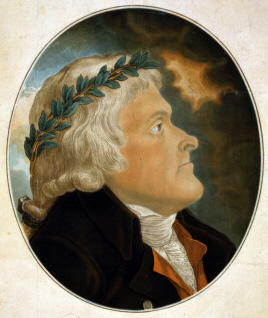
Meanwhile, convenient as it would be for those of us in the most egregiously emitting nations to do so, we can't afford the luxury of accepting things like climate change as entirely beyond the scope of our involvement. We have a moral responsibility to seek solutions. Being an epicurean does not mean retiring to our respective gardens and awaiting the apocalypse. What would Thomas Jefferson do?


What he said was:

I too am an Epicurean. I consider the genuine (not the imputed) doctrines of Epicurus as containing every thing rational in moral philosophy which Greece & Rome have left us. Epictetus indeed has given us what was good of the Stoics; all beyond, of their dogmas, being hypocrisy and grimace. their great crime was in their calumnies of Epicurus and misrepresentations of his doctrines: in which we lament to see the candid character of Cicero engaging as an accomplice. the merit of his philosophy is in the beauties of his style. diffuse rapid, rhetorical, but enchanting. his prototype Plato, eloquent as himself, dealing out mysticisms incomprehensible to the human mind, has been defied by certain sects usurping the name of Christians; because, in his foggy conceptions, they found a basis of impenetrable darkness whereon to rear fabrications as delirious, of their own invention...I do love the Monticello Sage's Plato-bashing here, notwithstanding the latter's truly admirable and visionary gender utopianism. But one of chapter 12's epigraphs does make things uncomfortable for a Jeffersonian: "A free life cannot acquire great wealth, because the task is not easy without slavery..." He kept his slaves but squandered much of his wealth on books and wine. We hold these truths to be self-evident... Noble words, ignoble deeds.

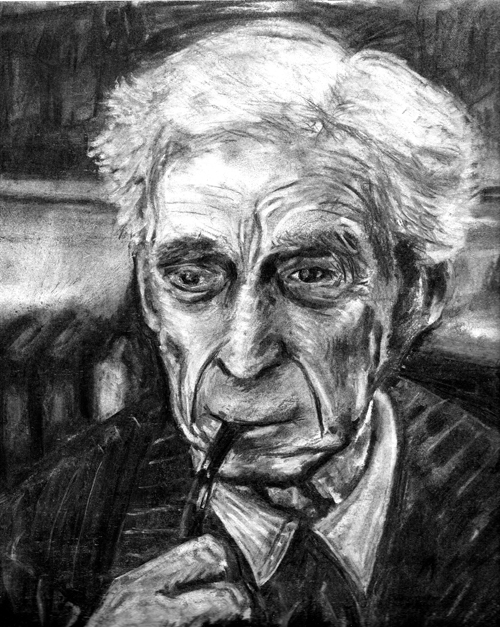
Was Marx an Epicurean at heart? His youthful ideal "society of the future would be recreational and allow for individual whims and preferences," like Bertrand Russell's. He too was an epicurean, of sorts. But his critics will remind us, he also said "better red than dead."
In a world where no one is compelled to work more than four hours a day, every
person possessed of scientific curiosity will be able to indulge it, and every painter will be able to paint without starving, however excellent his pictures may be. Young writers will not be obliged to draw attention to themselves by sensational potboilers, with a view to acquiring the economic independence needed for monumental works, for which, when the time at last comes, they will have lost the taste and the capacity.
[…]
Above all, there will be happiness and joy of life, instead of frayed nerves, weariness, and dyspepsia. The work exacted will be enough to make leisure delightful, but not enough to produce exhaustion. Since men will not be tired in their spare time, they will not demand only such amusements as are passive and vapid. At least 1 per cent will probably devote the time not spent in professional work to pursuits of some public importance, and, since they will not depend upon these pursuits for their livelihood, their originality will be unhampered, and there will be no need to conform to the standards set by elderly pundits. But it is not only in these exceptional cases that the advantages of leisure will appear. Ordinary men and women, having the opportunity of a happy life, will become more kindly and less persecuting and less inclined to view others with suspicion. The taste for war will die out, partly for this reason, and partly because it will involve long and severe work for all. Good nature is, of all moral qualities, the one that the world needs most, and good nature is the result of ease and security, not of a life of arduous struggle... "In Praise of Idleness" [b'p]... Russell on the value of philosophy for life

Some questions: Is Epicurean scepticism peculiarly well-suited to this moment in history?Will we ever, or should we even desire to, explain everything in terms of micro-phenomena?
Should an Epicurean concerned about climate change become an activist? Should calculations of personal happiness and the enjoyment of one's own life be decisive for him/her in addressing that question? Is it self-destructive to affirm "the view that the fate of all plants, animals and humans resides with a loving and intelligent deity?

Monday, February 8, 2021

Faith in democracy

LISTEN. The morning after the Super Bowl is always when I begin my countdown to the true arrival of Spring (Training): pitchers and catchers report, at several camps at least, in 8 days. 

Attempts by the host cities in Arizona to postpone Cactus League 2021 have been withdrawn. Fans of course will still be discouraged from flocking to the desert and to Florida's Grapefruit League, and should be. But just imagining the anticipated sound of balls popping mitts and cracking bats has already returned the bounce my step has been missing since March. That's my "faith in the promise of spring," or (as Margaret Renkl says) of bluebirds. It's Cardinals for me. But as for the Boss's plea for a re-united USA, I'd like to agree that "there's hope on the road up ahead." I don't think a jeep in Kansas is going to get us there.


This week John Dewey is up, in Democracy. (When I say Democracy, these days, or DemMALA, I mean my Master of Liberal Arts course Democracy in America.) 

Dewey appreciated our national pastime. "The sources of art in human experience will be learned by him who sees how the tense grace of the ball-player infects the onlooking crowd," he wrote in Art as Experience. Maria Popova, like E.J. Dionne discussing American democracy: 21 historic answers to 5 urgent questions, is  also Dewey-eyed. The rest of that book's subtitle is Dewey's own phrase, "the task before us." 

Democracy, wrote Dewey in Creative Democracy: The Task Before Us (1939), is "a belief in the ability of human experience to generate the aims and methods by which further experience shall grow in ordered richness." But ability should not be confused with probability. This attitude is indeed an  aspirational article of faith,  no less than it was on the eve of America's entry into the war against fascism abroad.  Today the challenge is closer to home. The late Dewey devotee Richard Rorty was blunt: "Dewey's dreams of participatory democracy will never come true." Oh he of little faith. I still want to believe, and to affirm the possibility at least, that there are enough Amanda Gormans and Greta Thunbergs out there to wake their generation to the dream. 

So we'll talk about it in class. Are public schools still (were they ever, can they still be) an "assimilative force" for unity in American life, bringing people of different races, religions, and customs together? Is the charter school movement scattering that force?

When our girls were small I was, for a time, a public school activist. I started an online discussion group called Nashville PTO Talk, that got a bit of play in local media reporting. The tagline on all my posts was Dewey's statement in  The School and Society (1899): "What the best and wisest parent wants for his own child, that must the community want for all of its children. Any other ideal for our schools is narrow and unlovely; acted upon, it destroys our democracy." 

I believe that wholeheartedly. I wish more of our elected representatives did too. "As charters became more acceptable, so did school choice, which in turn allowed conservative politicians to advocate for home schooling, private school tax credits and charter expansion. And here we are today. What was once unthinkable — the dismantling of our nation's public schools — is now a real possibility." Thanks, Betsy DeVos and friends. So many deep private pockets, so many captive and corruptible/corrupted legislators.

Every school, Dewey thought, must become "an embryonic community life...we shall (then) have the deepest and best guarantee of a larger society which is worthy, lovely and harmonious." Is this utopian? Can we foresee a time when our legislators view public education in this light, and fund it accordingly? Not here, not now. But I'm counting on the Amandas and Gretas to turn that around.

“Education is not preparation for life; education is life itself. Education, therefore, is a process of living and not a preparation for future living.” So we're in process, on the road to better days. We have to believe that, in the pragmatic sense of belief as a roadmap and action-plan, if we're to move in the right direction. Right?

And that's what Dewey is all about: moving forward, generation after generation, transmitting an improved legacy "that those who come after us may receive it more solid and secure, more widely accessible and more generously shared than we have received it.” Keep the faith, Dewey-eyed democrats. Spring is coming. 
“The things in civilization we most prize are not of ourselves. They exist by grace of the doings and sufferings of the continuous human community in which we are a link. Ours is the responsibility of conserving, transmitting, rectifying and expanding the heritage of values we have received, that those who come after us may receive it more solid and secure, more widely accessible and more generously shared than we have received it.” John Dewey, A Common Faith (1934) 


Tuesday, February 2, 2021

Aristotle

Today in CoPhi it's our first pass at Aristotle. "One swallow doesn't make a summer" (or a spring-were the Greeks really so vague about the seasons as these alternative translations suggest?) was his most poetic observation by far.
If then the work of Man is a working of the soul in accordance with reason, or at least not independently of reason... and we assume the work of Man to be life of a certain kind, that is to say a working of the soul, and actions with reason, and of a good man to do these things well and nobly, and in fact everything is finished off well in the way of the excellence which peculiarly belongs to it: if all this is so, then the Good of Man comes to be "a working of the Soul in the way of Excellence," or, if Excellence admits of degrees, in the way of the best and most perfect Excellence.
And we must add, in a complete life; for as it is not one swallow or one fine day that makes a spring, so it is not one day or a short time that makes a man blessed and happy.

Happiness is far more than the sum of its parts, it's a quality of soul steeped in a lifetime of habitual virtue. Or so we say, when interchanging "happiness" with "eudaimonia." Flourishing or well-being are better substitutes. By whatever name, though, Aristotle's saying the good life takes time, possibly more time than a lifetime affords. If your child suffers a tragic and premature end, even after you've gone, your life has suffered diminution. In some non-trivial sense your well-being has taken a hit, your flourishing has foundered.


Russell: From 335 B.C. to 323 B.C. (in which latter year Alexander died), Aristotle lived at Athens. It was during these twelve years that he founded his school and wrote most of his books. At the death of Alexander, the Athenians rebelled, and turned on his friends, including Aristotle, who was indicted for impiety, but, unlike Socrates, fled to avoid punishment. In the next year ( 322) he died. Aristotle, as a philosopher, is in many ways very different from all his predecessors. He is the first to write like a professor: his treatises are systematic, his discussions are divided into heads, he is a professional teacher, not an inspired prophet. His work is critical, careful, pedestrian, without any trace of Bacchic enthusiasm. Russell didn't much like Aristotle's perennial quest for the "mean" between extremes, particularly when applied to truth and other intellectual virtues. But splitting the difference between excess and deficiency is often the right strategy in life.

...with respect to acting in the face of danger, courage {Gk. ανδρεια [andreia]} is a mean between the excess of rashness and the deficiency of cowardice; with respect to the enjoyment of pleasures, temperance {Gk. σωφρσυνη [sophrosúnê]} is a mean between the excess of intemperance and the deficiency of insensibility; with respect to spending money, generosity is a mean between the excess of wastefulness and the deficiency of stinginess; with respect to relations with strangers, being friendly is a mean between the excess of being ingratiating and the deficiency of being surly; and with respect to self-esteem, magnanimity {Gk. μεγαλοψυχι&alpha [megalopsychia]} is a mean between the excess of vanity and the deficiency of pusillanimity.So many of the circumstances of life are beyond our control, on either side of the grave. Can we increase our chance of eudaimonia, or must we just learn to accept our fate and let happiness happen or not? Aristotle says we can take steps to develop our character, form strong habits, and live the good life. This is only partly subject to our control, since much depends on the quality of our early nurture. Some overcome adverse beginnings, others are derailed. Life and luck are unfair.

And that's why Aristotle was so concerned to create a just society, a polis capable of nurturing and supporting all its citizens (except slaves and women-in this regard Plato scores over his pupil). "We live together, and need to find our happiness by interacting well with those around us in a well-ordered state." If you choose to go it alone, you may or may not be pleased with your life but you definitely won't flourish in Aristotle's terms.

The middle ages enshrined Aristotle as The Philosopher, the great authority not to be challenged. He would have hated that, inimical as it is to the spirit of free and open debate governed by reason alone.

Only hedonists conflate pleasure and happiness, but that doesn't mean the relation between them is easy to pin down. Wouldn't Aristotle admit that it might be possible to indulge the right pleasures at the right time for the right reasons etc., thus acknowledging that the time and place for pleasure is always a matter of judicious discretion? Bertrand Russell seemed to think he would not, and for that reason found the Nichomachean Ethics less than wholly appealing. "The book appeals to the respectable middle-aged, and has been used by them, especially since the seveteenth century, to repress the ardours and enthusiasms of the young. But to a man with any depth of feeling it cannot but be repulsive." Repulsive!

I would have said tepid, not repulsive, but Russell has a bit of a point. I'll still line up on Aristotle's side of the School of Athens, though. Which side are you on? (2.20.18)

Other old Aristotle posts..older still

Monday, February 1, 2021

Give me a break

LISTEN. It's already February, and just the second week of the Spring 2021 academic year. We're not ready for a break, yet, but I predict we will be in about six weeks. Will Phil see his shadow tomorrow? 

"I feel I need to take a break from academia."

This time last year, I was about to deliver my Honors College talk on the environment and looking forward to my trip later in the month to Chicago (where I sat in an over-crowded and poorly-ventilated space, across from Daniel Dennett, to hear Martha Nussbaum), followed by our Arizona spring training holiday in early March (it was glorious for a couple of days, a vivid picture-memory of the Dodgers-Rockies game with David Price on the mound and Nolan Arenado in spitting distance on the on-deck circle stands out). At the time there were eight - 8! - confirmed cases of COVID in the U.S. 

And now here we are. 60 Minutes last night offered a sobering reminder of how lucky some of us are, unlike so many who've been devastated by this scourge.

We turn next in CoPhi to Aristotle, and in Democracy in America to Democracy in America.

Aristotle was no democrat, though he harbored more grudging sympathy for its potential in some circumstances and societies than did his teacher Plato. 
Although Aristotle classifies democracy as a deviant constitution (albeit the best of a bad lot), he argues that a case might be made for popular rule in Politics III.11, a discussion which has attracted the attention of modern democratic theorists. The central claim is that the many may turn out to be better than the virtuous few when they come together, even though the many may be inferior when considered individually. For if each individual has a portion of virtue and practical wisdom, they may pool these assets and turn out to be better rulers than even a very wise individual... (SEP)

Tocqueville is a little harder to pin. He famously warned of the tyranny of the majority, but also (says John Keane in Why Read Democracy in America)

was sure that the fundamental problem of modern democracy was not the frantic and feverish mob, as critics of democracy from the time of Plato had previously supposed. Modern despotism posed an entirely new and unfamiliar challenge. Feeding upon the fetish of private material consumption and the public apathy of citizens no longer much interested in politics, despotism is a new type of popular domination: a form of impersonal centralised power that masters the arts of voluntary servitude, a new type of state that is at once benevolent, mild and all-embracing, a disciplinary power that treats its citizens as subjects, wins their support and robs them of their wish to participate in government, or to pay attention to the common good.

 That sounds about right. We've met the enemy, Pogo, and he is us. 

He's also the generic idiot in fur and horns, with whom I do not claim a shared identity but whose ilk will be the final ruin of this experiment in self-government if the rest of us don't pay a whole lot more attention to the common good.


Tuesday, January 26, 2021

Opening deja vu

LISTEN. It's Opening Day, deja vu all over again. Yogi probably didn't say that ("I didn't say everything I said") but Mr. Cub definitely did say let's play two! Lucky me, I get to play four today and tonight.


Ernie got to play on grass under the big sky at Wrigley Field, before they conformed and added lights and night games. We'll play on Zoom-CoPhi first (a triple-header), then Democracy in America (a night game). 

Back before COVID shut us down last March, we had a campus to roam. Haven't been there in quite a while, but I'm actually about to hit the highway so I can go and Zoom from my office. In "normal" times, on a clear 60+ degree day in January such as this promises to be, I'd introduce my new students to the peripatetic way of philosophizing on Day One.

So maybe today I'll strap on  the iPhone chest-mount and take them for a remote ramble. We'll see.

In any event, I'll again urge us all to find our own piece of turf and sky each day. I guarantee it will improve our experience of the course. As Chris Orlet reminds, in Gymnasiums of the Mind: Solvitur Ambulando, "it is solved by walking"--for pretty much any it.
Nearly every philosopher-poet worth his salt has voiced similar sentiments. Erasmus recommended a little walk before supper and “after supper do the same.” Thomas Hobbes had an inkwell built into his walking stick to more easily jot down his brainstorms during his rambles. Jean- Jacques Rousseau claimed he could only meditate when walking: “When I stop, I cease to think,” he said. “My mind only works with my legs.” Søren Kierkegaard believed he’d walked himself into his best thoughts. In his brief life Henry David Thoreau walked an estimated 250,000 miles, or ten times the circumference of earth. “I think that I cannot preserve my health and spirits,” wrote Thoreau, “unless I spend four hours a day at least – and it is commonly more than that – sauntering through the woods and over the hills and fields absolutely free from worldly engagements.” Thoreau’s landlord and mentor Ralph Waldo Emerson characterized walking as “gymnastics for the mind...”

"Gymnastics for the mind" could just be another name for philosophy, which I follow William James in defining simply as "an unusually stubborn effort to think clearly." And sometimes, philosophy is an equally stubborn effort to stop over-thinking. Woody Allen's character (in Manhattan was it, Ed?) said the brain is our most over-rated organ.

Another baseball sage, Johnny Damon, once said that thinking too much only hurts the team. "Ninety percent mental"? We'll see about that too.


Monday, January 25, 2021

Opening Day 2021!

 LISTEN. Some more student introductions, on the eve of Opening Day... (I must be crazy to have stacked all my classes this semester on Tuesday/Thursday, from roughly 9 am to 9 pm with just a pair of breaks. What doesn't kill us makes us stronger, though, if Nietzsche was right. He wasn't, but it's a useful fiction.)

My personal philosophy is "Yesterday is history. Tomorrow is a mystery. But Today is a gift: that is why it's called the Present" as quoted by Master Oogway from the animated film Kung Fu Panda. I think it is really important to live presently and to not let the past and future bring down your day or make you feel anxious or upset.

I love the Panda philosophy, which Older Daughter introduced me to years ago. The idea of doing what you can do today, and then putting it behind you and meeting the next, is greatly appealing. It's a kind of stoicism, isn't it? And it reminds me of that ubiquitous internet quote that Emerson may or may not have actually said or written: “Finish each day and be done with it. You have done what you could. Some blunders and absurdities no doubt crept in; forget them as soon as you can. Tomorrow is a new day. You shall begin it serenely and with too high a spirit to be encumbered with your old nonsense.” 

Presentism has its limits and problems, but there's nothing like a new day (right, John Legend?) to clean your slate (right, John Locke?) and make a dawn in a person. (Right, HDT?) "Morning is when I am awake and there is a dawn in me."
I love political Science and to learn all about the history of democracy in America. This year politically has been a mess and I can’t wait to hear everyone opinion. It is my second semester in MALA and I am still struggling to figure out what to do with it but I’ll get there.
I was a Poli Sci undergrad major for two years, before switching to Philosophy at Mizzou. So, it took me more than your two semesters to figure out what to do with my formal education. The philosophers there seemed to have a better grasp on the core insight that drew me to an interest in politics, Aristotle's: "Man is by nature a political animal," where the political is understood as broadly social and collaborative... hence "democratic"...
I currently live in Johnson City, but I will be moving to _____ very soon with my fiancé... I have decided to take philosophy because I needed a fine arts class and philosophy sounded the most interesting. I am not sure exactly what philosophy means to me, but if I had to say what it meant to me it would be that philosophy is something that is central to who you are as a person. I am not exactly sure what my philosophy would be.
I taught in Johnson City for a year in the early '90s, right before moving back to Nashville and marrying. What pretty country!

We academic philosophers don't normally think of ourselves as in the "fine arts," not at least in the primary sense:
1. "creative art, especially visual art whose products are to be appreciated primarily or solely for their imaginative, aesthetic, or intellectual content."
The secondary meaning comes closer:
2. "an activity requiring great skill or accomplishment."
But I always say, following William James's first Pragmatism lecture, that we're ALL philosophers, skillful or otherwise. "I know that you, ladies and gentlemen, have a philosophy, each and all of you, and that the most interesting and important thing about you is the way in which it determines the perspective in your several worlds..."

One goal of our course is to all become at least a bit more skillful at articulating our personal philosophies, our sense of what it means to think and act with wisdom. ("Philo" + "sophia" in Greek means the love of wisdom.)

So, here we go again. Opening Day 2021!