Delight Springs

Monday, September 15, 2014

Stoics & ethics

Ken Burns' Roosevelts debuted last night. I never stop marveling at his skill in making old black and white images spring to life. "It is the great arrogance of the present to forget the past," he said, and "Do something that will last and be beautiful." 

It’s a terse and breezy reading assignment in Little History today in CoPhi, on the Stoics EpictetusCicero, and Seneca. We're also looking at the first half of our chapter on Right & Wrong, concerned mainly with deontologists and utilitarians. (They're bumping last year's complementary discussion of Stoics & Pragmatists.)
 ’Being philosophical’ simply means accepting what you can’t change, for instance the inevitable process of growing older and the shortness of life. 
‘Stoic’ came from the Stoa, which was a painted porch. 
Like the Sceptics, Stoics aimed for a calm state of mind. Even when facing tragic events, such as the death of a loved one, the Stoic should remain unmoved. Our attitude to what happens is within our control even though what happens often isn’t. [The Philosophy of Calm, Ph'er Mail]
Stoics think we are responsible for what we feel and think. We can choose our response to good and bad luck… They believe emotions cloud reasoning and damage judgment. 
Epictetus [don't confuse him with his predecessor Epicurus] started out as a slave. When he declared that the mind can remain free even when the body is enslaved he was drawing on his own experience. [Tom Wolfe's Epictetus, nyt]
The brevity of life and the inevitability of aging were topics that particularly interested Cicero and Seneca. 
Cicero said old people can spend more time on friendship and conversation. He believed the soul lived forever, so old people shouldn’t worry about dying. [Epicurus already told us they needn't worry in any event.]
For Seneca the problem is not how short our lives are, but rather how badly most of us use what time we have. 
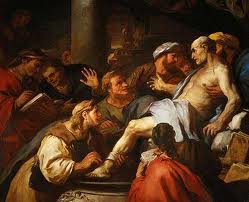
“The greatest obstacle to living is expectancy, which hangs upon tomorrow and loses today… The whole future lies in uncertainty: live immediately.” Maria Popova, Brainpickings 

The Stoic ideal was to live like a recluse… studying philosophy and get[ting] rid of those troublesome emotions. 
The New Yorker (@NewYorker)
Seneca’s plays were gore-fests. His wealth was vast. He counselled tyrants. And he called himself a Stoic?nyr.kr/1EPqUOh


But Nigel Warburton‘s question is right on target: at what price? If you’re even half human, like Mr. Spock, you’ll only damage yourself by suppressing your affective side. Calm may not be the greatest good, after all. On the other hand, Stoicism is widely misunderstood - even by Vulcans.

Anyway, Roman philosophy is under-rated. The Romans have done a lot for us.


And not all emperors were so bad as Nero. Marcus Aurelius was actually quite sane, and humane.

Stoicism, with its general mindset of not allowing oneself to be moved or harmed by externals beyond one's control, and the crucial assumption that our own thoughts are ours to manage, always courts the cold of Vulcan indifference but also offers the last line of defense for prisoners of war and victims of malice. If you really can persuade yourself that physical pain is nothing to you, that emotional stress can't touch you, that's quite a defensive weapon.

And if Stoicism can turn the chill of age into the warmth of experience, friendship, and joyous memory, that's quite an achievement. The older I get, the more I appreciate old Seneca's wisdom about time (not that it's in such short supply but that we're such bad managers of it). But I continue to question his passive compliance with crazy Nero. Is that Stoicism or impotent resignation? Surely there's a difference.

The Euthyphro Dilemma is on our plate today. "Is the pious or holy [or, ethically speaking, the right or the good]  beloved by the gods because it is holy [right. good], or holy (etc.) because it is beloved?" Euthyphro didn't grasp the issue. Do we? Either God's not the source of good, or good's good only nominally and arbitrarily. Nigel implies there's something destructive or Hobson-ish about this choice, but isn't it just blindingly clear that pole A is the one to grab? Well no, it won't be to many students. A good discussion is called for.

"Deontology," a scary word for a scary over-devotion to "duty." Or so I'll say, today.

And, time permitting, I'll put in some good words for both Jeremy Bentham and J.S. Mill's respective versions of consequentialist utilitarian hedonism. Let's not choose, let's pick cherries.

Finally, the bonus topic: Robert Nozick's Experience Machine. Fire it up, we'll see if anybody really wants to step inside.

I'm "flipping" my classes these days, which practically means less of my "content" explicated during the precious minutes of classtime (though it's still right here for the taking, as always) and more group discussion. I like my DQs today, especially Do you think the only thing preventing you from being good is the fear of divine retribution for being bad? Or do you think that to be good one must simply believe in goodness and reciprocity ("Do unto others" etc.)? 

In other words, Julia Sweeney, Why aren't the godless all "rushing out and murdering people"?

And, Is it better to be a sad but wise Socrates than to be a happy but ignorant fool?

Don't worry, be happy is not too far off the path of wisdom,  is it? 

Thursday, September 11, 2014

Terror-free on 9/11

Another 9/11. Will there ever be one to eclipse that horrific day 13 years ago? Watching the President announce our latest war on terror last night, it really feels like we're stuck in one of those sci-fi time loops. We need something to spring us. We've got to get ourselves back to the Garden.


Humans have always found and will always find something to be terrorized by. Blaise Pascal, we noted in class, was so frightened by the cosmos itself ("the eternal silence of these infinite spaces") that he felt compelled to subdue his own exquisitely rational/mathematical mind and brainwash himself into believing life in our universe comes with ultimate satisfaction guaranteed. Don't bet on it.

The inherent mortal terror of existence is precisely this knowledge that we must die sooner or later, one way or another, without any sure promise of a 2d act. Nor have we any assurance of solid reviews for the show.

We have a hard time remembering our good luck and being suitably appreciative (let alone grateful and joyous): we get to die, because we got to live. We're here now, invited to savor the free lunch of existence.

So: we'll speak again in class today of Epicurus and the simple life, the life of freedom and fearlessness, the privilege of existence. Even when dying a miserably painful death, our philosopher took time to disarm fear and celebrate life. "On this truly happy day of my life, as I am at the point of death, I write this to you. The diseases in my bladder and stomach are pursuing their course, lacking nothing of their usual severity: but against all this is the joy in my heart at the recollection of my conversations with you."

And that's how to beat terror. A good and timely reminder on this date, in this time. We're not dead yet, nor are our children, nor theirs to come. If you want to be happy, be. Live.


Wednesday, September 10, 2014

Pyrrho, Epicurus, & God

In CoPhi today it's Pyrrho the deep skeptic,  Epicurus the hedonist (though I've indicated *my dissatisfaction with applying that label to him) and seeker of simple pleasures and happiness; and God (subbing this time for the APA).


So, to Pyrrho and Epicurus... but first a quick follow-up on Plato and Aristotle. Check out this version of School of Athens.

As for Aristotle’s eudaimonia, in some ways it anticipated Epicurus’s garden and what Jennifer Michael Hecht calls “graceful-life philosophies” that proclaim in all simplicity: “we don’t need answers and don’t need much stuff, we just need to figure out the best way to live.” Then, and only then, will we be happy.

As for Pyrrho: If you’d asked him Who rules the Universe?, he might have replied: Lord knows. Cats, again. And pigs.
pig 

Reminding us of Pyrrho’s famous pig, who impressed Montaigne by riding out a storm at sea with much greater equanimity (and, crucially, much less comprehension) than his human shipmates, and of J.S. Mill’s declaration that it’s “better to be a human dissatisfied than a pig satisfied,” Hecht comments: “This whole pig-versus-philosopher debate is pretty hilarious, yes?”

Yes. But I agree with Spinoza and Hecht. “The happiness of a drunkard is not the happiness of the wise,” though of course there are happy occasions when it has its place too. Bottom line: “Knowledge and wisdom are worth it,” it can be everything to have found true love and meaningful work, and both– all-- can end in a flash, without warning. Stay on your toes, but don’t fret too much about the storm.
piranha
One more little animal image for Pyrrho, whose name I prefer to pronounce compatibly with this mnemonic trick: just remember that a pyrrhonic skeptic is like a piranha fish, toothily devouring every proposed candidate for belief. Cats and pigs too, probably.

Bertrand Russell: "
He is said to have maintained that there could never be any rational ground for preferring one course of action to another. In practice, this meant that one conformed to the customs of whatever country one inhabited. A modern disciple would go to church on Sundays and perform the correct genuflexions, but without any of the religious beliefs that are supposed to inspire these actions." Like Pascal's Wager, this approach smacks of insincerity. Laziness, too, since it purports to show "the ignorant to be as wise as the reputed men of learning." What's a better way? To be curious and hopeful.
The man of science says 'I think it is so and so but I am not sure.' The man of intellectual curiosity says 'I don't know how it is but I hope to find out. The philosophical Sceptic says 'nobody knows, and nobody ever can know.'

And as for Epicurus, Jennifer Hecht‘s got his number. It’s listed.
For an Epicurean, somewhere there are beings that are truly at peace, are happy… The mere idea of this gentle bliss is, itself, a kind of uplifting dream. After all, we human beings know a strange thing: happiness responds to circumstances, but, basically, it is internal. We can experience it when it happens to come upon us; we can induce it with practices or drugs; but we cannot just be happy.

No, we must work to “solve the schism” between how we feel and how we want to feel. Happiness is a choice and a lifetime endeavor, and though it comes easier for some than for others there are tips and tricks we can use to trip our internal happy meters and achieve ataraxia, peace of mind, simple contentment, “tranquillity, or the freedom from disturbance and pain that characterizes a balanced mind and constitutes its first step toward the achievement of pleasure.”

(But btw, as for that claim that we can't just "be happy": Mr. Tolstoy, subject of yesterday's bonus quiz question (and Google Doodle), seems to have thought otherwise. The pithiest quote I've found from the prolix author of War and Peace: "If you want to be happy, be.")

Stop fearing the harmless and remote gods, Epicurus said. Stop fearing your own death, it’s not (as Wittgenstein would echo, millennia later) an event you’ll ever experience. “Life is full of sweetness. We might as well enjoy it.”

*Sissela Bok calls Epicurus a hedonist, but that's only technically correct. Yes, he said pleasure's at the heart of happiness. But what kind of pleasure?

A happy life is tranquil, simple, loving, and above all free from pain, fear, and suffering, available to all regardless of social status, nationality, or gender. Such a life of pleasure, Epicurus held, would of necessity have to be a virtuous one; ...


That’s Alain de Botton, author of a text I used to use in this course, and controversial proponent of religion for atheists. (Don’t confuse him with Boethius.) His interview with Krista Tippett was instructive. Like Jennifer Hecht, he wants us to use philosophy to enhance our bliss and sweeten our dreams.

Pyrrhonian deep skepticism and moral/cultural relativism share a common root. Simon Blackburn voices the right reply to those who say we can function without beliefs, or without discriminating between better and worse beliefs, when he points out that this is simply impractical and socially dysfunctional. Not only might you get run over by a racing chariot or step off a cliff, you also scatter seeds of discord within your community and perhaps even your family.

So I too “would defend the practical importance of thinking about ethics on pragmatic grounds.” To pretend  with “Rosy the Relativist” that we can all simply have and act on our own truths, our own facts, without confronting and negotiating our differences and critically evaluating our respective statements of (dis)belief, really is “farcical.” Lord knows.

We won’t suffer a meaning deficit, though, if we live simply and naturally in the company of friends who’ll help us conquer our fears and address our many questions about life, the universe, and everything. That’s the Epicurean way, when we decide nature’s already provided enough for our peace of mind and our contentment. That’s ataraxia.

So finally there are these dots, connecting Epicurus and Pyrrho:
Epicurus, though no friend to skepticism, admired Pyrrho because he recommended and practiced the kind of self-control that fostered tranquillity; this, for Epicurus, was the end of all physical and moral science. Pyrrho was so highly valued by his countrymen that they honored him with the office of chief priest and, out of respect for him, passed a decree by which all philosophers were made immune from taxation.

Tranquility and a free ride: now that would make me happy. 

We're also finishing the God chapter in Philosophy: The Basics today. We consider Hume on miracles, Pascal's Wager, Don Cupitt's non-realism, faith and fear (and Epicurus again). It's hard to contest Nigel's last observation, that some people would rather give up one or more of God's omni-attributes than give up God, period. But then we're going to have to ask them: Is your downsized God big enough to create and sustain a cosmos? Heretofore, as the late great Carl Sagan observed, most humans have conceived their gods on a blighted and decidedly non-cosmic scale.

Monday, September 8, 2014

Aristotle & God

We have Aristotle on two tracks (the Little History and Philosophy Bites) today in CoPhi. God's on 3d (pinch-hitting for Lucius Outlaw and last year's America the Philosophicaldiscussion of the historical role of African-Americans in philosophy, if you're interested).

Aristotle‘s in the Pythons' philosopher's song too, though he's even more sober than his Ionian predecessors. He rejected his teacher Plato’s metaphysics, returned to the cave of the phenomenal world to take a closer look, avoided universalizing abstractions and CAPS (preferring forms in things to transcendent and remote FORMS "above"), and inspired the name of our annual Spring speaker series in the philosophy department at MTSU, the Lyceum


(We actually now also have a *Fall Lyceum at MTSU, inaugurated last year by Carlin Romano.)


The best quick & graphic way of illustrating the difference between Plato and his student Aristotle, I’ve found, is by pondering Raphael’s famous painting School of Athens [annotated]. Pay close attention to the hands. 

A new history of western philosophy takes that painting to heart. The Cave and the Light: Plato Versus Aristotle, and the Struggle for the Soul of Western Civilization, by Arthur Herman,  traces its implications for centuries of philosophers who lined up to squeeze into the School behind either Plato or Aristotle.
They began as student and master. They ended as rivals. Plato is supposed to have said, “Aristotle kicked me,as foals do their mothers when they are born.”All the evidence, however, suggests the crucial break between them came after Plato's death. Aristotle entered Plato's Academy in Athens at age seventeen, probably in 367 BCE. When he left, he was in his forties...
Why they broke is a fascinating story reflected in centuries of divergent influence. If I were going to have to line up in that painting I'd have to pick Aristotle's side.

"How Aristotle Invented Science"

Aristotle said one swallow doesn't make a summer, and a few moments of pleasure don't add up to a happy life. Nor does a "happy childhood." We must be in it for the long haul, and must see our good as coordinate with that of others including those who'll succeed us after we're gone. It's all about eudaimonia ("you die" is a helpful mnemonic, aggressive and hostile though it sounds, and though it really means you live.)

It's probably for his ethics that Aristotle is most widely renowned, but Bertrand Russell for one was unimpressed. "There is in Aristotle an almost complete absence of what may be called benevolence or philanthropy. The sufferings of mankind, in so far as he is aware of them, do not move him emotionally." (Hold that thought, when we talk about the problem of evil.)

Aristotle was a naturalist, noticing our continuity with the rest of nature. Like trees and plants we flourish when well-nurtured. Unlike them, we must take charge of our own nurture in order to reach our potential and achieve The Good Life in tandem with our peers.

It's so ironic that the middle ages made Aristotle "The Philosopher," i.e. the unquestioned Authority. That was indeed "against the spirit of philosophy."

Terence Irwin's podcast interview is compelling listening, for those unaccustomed to a Yorkshire accent (or whatever it is). He makes the same point I just did about coordinating the personal and the public good, and "identifying one's own interest with other people's interest" etc. 

He also helpfully corrects overly-simple reductions of Aristotle's ethics to a dogged middle-of-the-roadism. Avoiding extremes doesn't mean choosing the blandest, milk-toastiest possibility. No, his Golden Mean means doing the right thing at the right time for the right reason etc., and that could very well turn out to be something exciting. Or scary. (Like going after ISIS? What would Aristotle say?)

Aristotle's version of God, on the other hand, may just be too bland for your taste. It's not a he or she, or really even an it as we typically understand things. 
To Aristotle, God is the first of all substances, the necessary first source of movement who is himself unmoved. God is a being with everlasting life, and perfect blessedness, engaged in never-ending contemplation. IEP
This is a remote and impersonal God, who won't intervene in our affairs and could really care less about them. 

The God implied in the Hebrew Bible book of Ecclesiastes seems fairly indifferent to human suffering & flourishing too, and unpromising with respect to the old dream of Sunday School heaven and immortality. Jennifer Hecht glosses it smartly in Doubt:
Koheleth brushed aside the dream of an afterlife with a simple appeal to reason--Who knows this?--and the conclusion that humans have nothing above the beasts in this regard...
But it doesn't follow that simple happiness is unavailable in this life. The recipe's pretty simple too.
Love your spouse. Get some work to do, do it with all your might; enjoy the simple pleasures of food, drink, and love. Everything else is vanity. 
But, it's a form of vanity we can live with. The search for true love, solid friendship, good work, and daily delight might just be enough. Enjoy your life. A person could do worse. The search for happiness on this orb is anything but a "dismal" undertaking, as someone sadly suggested. You could ask Aristotle. It's the end and aim of life.

Not everyone agrees with Aristotle about that, of course. For some, the end and aim is to serve and glorify God (and maybe reap the reward of that elusive afterlife after all). Their god knows and cares about human striving, and presumably abhors gratuitous suffering.

But there's the rub that's rubbed raw in our Philosophy: The Basics reading today: the perennial problem of evil or suffering, or the worry that our world is too full of woe to lay at the figurative feet of an omni-being. And even if we think we can disarm some of the problem by deploying the timeworn Free Will Defense, we leave "natural" evil (killer storms, quakes, disease) unaccounted for.

We also read today of David Hume's posthumous objections to weakly-analogical Paley-ish Design Arguments. Human artifacts are one thing, the products of complex time-borne natural phenomena seem to be something very different. 

But natural selection, the "blind" and unpremeditated evolutionary process whereby organisms thrive when they develop adaptations suitable to the conditions of their environment, can be considered a form of Design without a Designer. We should ask and try to answer: Is there an important difference between intelligent design and natural complexity?

Must there have been a universal First Cause? But what caused the cause? That question is neck-and-neck with the problem of evil, in turning out many a young non-theist. J.S. Mill and Bertrand Russell, for instance.
[T]the argument that there must be a First Cause is one that cannot have any validity. I may say that when I was a young man and was debating these questions very seriously in my mind, I for a long time accepted the argument of the First Cause, until one day, at the age of eighteen, I read John Stuart Mill's Autobiography, and I there found this sentence: "My father taught me that the question 'Who made me?' cannot be answered, since it immediately suggests the further question `Who made god?'" That very simple sentence showed me, as I still think, the fallacy in the argument of the First Cause. If everything must have a cause, then God must have a cause. If there can be anything without a cause, it may just as well be the world as God, so that there cannot be any validity in that argument. Bertrand Russell, Why I Am Not A Christian

I think I've heard just about every imaginable response to this question, through the years in my classrooms, but I'll ask it again: 

If you believe in God, how do you attempt to reconcile or understand the full extent of human suffering? (Think of particular instances such as the "agony of a young child dying of an incurable disease," or an innocent gunshot or terror victim, or someone killed in a storm and their survivors.) Do you see it as part of a divine plan we just have to trust, or a deep mystery we shouldn't think too much about? Or do you believe in a God who is less than omnipotent and is just doing the best He/She/It can to bring about a harmonious and just Creation?

If you don't believe in God, is that in whole or in part because of the Problem of Evil? Or something else?

Or maybe you're like Charlie Brown's antagonist Lucy, who once responded to his Socratic query about the meaning of it all that "I just don't think about things I don't think about." Didn't seem to make her any happier, not thinking. Did it?

Friday, September 5, 2014

Socrates in Love

Our CoPhi discussions of Socrates, Plato, Platonic love, Higher Love, and human reality yesterday inspired at least one student, who boldly and generously offered to host gatherings that might partake of the free truth-seeking spirit of Socratic dialogue. We noted (with M.M. McCabe) the allure of a kind of conversation our culture's almost forgotten how to have, an occasion for everyday people to get together and 
to discuss with others in this open-minded, open-ended way that allows them to reflect on what they think and us to reflect on what we think, without dictating, without dogma, without insistence, and without imperative... to be true to themselves: to be sincere about their beliefs and to be honest... and to have some respect for their companion.
Christopher Phillips was similarly inspired when he created Socrates Cafe,
gatherings where people from different backgrounds get together and exchange thoughtful ideas and experiences while embracing the central theme of Socratizing; the idea that we learn more when we question and question with others.
The point is to foster mutual understanding, empathy, respect, and collaborative enlightenment, to break down barriers to communication, to go beyond the superficial plane of trivial and meaningless talk that so often characterizes our public exchanges, to put partisan prejudice aside and really listen to one another.

And, as with the great Gadfly himself, the point is to puncture the pretense that only a few of us really Know, and are licensed to engage in such discourse. No: philosophy is supposed to be for everyone.

So, with the pleasing vision of Socrates Cafe coming soon to the agora of our little 'boro in mind, it felt serendipitous to come across this last night in the Times:
We can talk across lines [of partisan division and mistrust] by talking about what we love, because a lot of us love the same things: our kids and grandkids, our country, the natural world, the idea that people should be able to get ahead in life. Then we can talk about our doubts, because we all doubt that what we love is being served well. Beginning a conversation with loves and doubts rather than political ideologies opens a new door to dialogue, driven by story-telling rather than political point scoring. ("Reclaiming 'We the People,' One Person at a Time")
This is the Socratic dream of one Parker J. Palmer, who runs retreats based on something he calls a Circle of Trust. Like Chris Phillips, he wants "to help people step back from the noise of modern life, reflect, and return more centered and effective in their vocations." 

"Talking about what we love": that's what Socrates was all about, at his ancient Symposium and in Phillips' Socrates in Love. Let's do it too.


Wednesday, September 3, 2014

Socrates & Plato

Western philosophy began well before Socrates, but we'll leave the pre-Socratics to themselves for now and pretend that Socrates was indeed the first (western) philosopher. We'll also soft-pedal Bertrand Russell's judgment (later shared by Izzy Stone) that the Platonic Socrates is "dishonest and sophistical in argument... smug and unctuous... not scientific in his thinking... [guilty of] treachery to truth" and so on. If the esteemed Socrates-as-paragon and personification of intellectual integrity ("I'd rather die than give up my philosophy" etc.) didn't exist we'd have had to invent him. Perhaps Plato did.
In the southern part of Europe is a little country called Greece… the Greeks have lived in it for more than three thousand years. In olden times they believed that before they came to the land it was the home of the gods, and they used to tell wonderful stories


And then Socrates came along to challenge some of those stories. (There actually were some important pre-Socratics like Thales and Democritus already challenging what everybody knew, but we’re jumping ahead in our Little History.) And that’s why, from a western philosopher’s point of view, the Greeks matter.

The old Parthenon must have been lovely, but I think ours is prettier nowadays. And btw, our Parthenon's city ("The Athens of the South") is hot (as in cool) lately. 
??????????

[There's a new theory about the old Parthenon, btw. "Horses and riders, youths and elders, men and women, animals being led to sacrifice: What is the Parthenons frieze telling us?"... more]

Socrates, from Alopece, near Athens, asked a lot of questions. Like Gilda Radner's Roseanne Roseannadanna. Like Bertrand Russell:


In all affairs it's a healthy thing now and then to hang a question mark on the things you have long taken for granted.

Did curiosity kill the philosopher? No, a narrow plurality of 500 jurors did. (His unrepentant attitude during sentencing didn't help, either.) They convicted him of "impiety" (atheism) and corrupting the youth of Athens. One more reason I'm lucky to live in the 21st century: I don't like hemlock. I'm like Woody Allen, that way. (But if shocking new allegations are true, hemlock may be too good for him.) Steve Martin (did I mention that he was a philosophy major?) had a go at it too. Here's a good Discussion Question: what would you do, in Socrates' cell?

He was “snub-nosed, podgy, shabby and a bit strange,” says our text. "He was ugly," says podcastee Mary McCabe. But brilliant and charismatic too, as gadflies go.  Said he had nothing to teach, but those around him (including young Plato) said they learned plenty from him, especially how 
to discuss with others in this open-minded, open-ended way that allows them to reflect on what they think and us to reflect on what we think, without dictating, without dogma, without insistence, and without imperative... to be true to themselves: to be sincere about their beliefs and to be honest... and to have some respect for their companion.
 If that's not good teaching, what is? 

The annotated and hyperlinked Last Days of Socrates is a gripping and inspiring tale, whether or not its hero was really as heroic through all the days of his life as Plato and his other admirers would have us believe. The honored pedestal version of this gadfly remains a worthy ideal for philosophy.


"Plato, they say, could stick it away..." -they being Monty Python. And the late great Hitch sang it too, sorta. But Plato was a serious and sober fellow, in Reality, usually capitalizing that word to distinguish it from mere appearance. The everyday world is not at all what it appears to be, he said. If you want Truth and Reality and the Good, get out of your cave and go behold the Forms. He seemed to think that’s what his hero Socrates had done. I’m not so sure. But read the relevant Platonic dialogues telling the tragic and inspiring story of the last days of Socrates and see what you think.

He also had interesting thoughts about love and eros, as expressed through his constant dialogue character "Socrates" (who may or may not have spoken faithfully for his martyred namesake) in Symposium.  Angie Hobbs says Plato rejected Aristophanes' mythic notion that we all have one unique other "half," formerly parts of our hermaphroditic spherical selves, that would complete us and make us happy. But he defended a view some of us find equally implausible, the idea that the true and highest love spurns (or spins upward from) particular persons and embraces the Form of Beauty.

The Form of Beauty "is always going to be there for you," but on the other hand "it's never going to love you back." Unrequited affection is hardly what most of us think of as Perfect Love. There's a myth for you. This really was an early foreshadowing of the phenomenon recently deplored in the Stone, our modern turn to abstraction and virtual experience in lieu of immediacy and reality and touch. ("Losing Our Touch", nyt). Reminds me, too, of Rebecca Goldstein's Plato at the Googleplex: Why Philosophy Won't Go Away.

We romantics (as Angie Hobbs pronounces herself, and as I confess to being too) should know better than to seek a perfect match. We should know better than to think that any enduring relationship can be wholly free of "pain, fragility, and transience." Those are inevitable parts of the story and the glory of human (as against Ideal, Platonic, Perfect) love, no? Just ask Cecil the Butler about Sidney Poitier. 

Tuesday, September 2, 2014

I believe in the peripatetic life

Back from the Labor Day weekend, we turn happily to our philosophical labors in CoPhilosophy. Today we introduce (and maybe even emulate) the peripatetics, and we explore the earnest atmosphere of This I Believe.

Aristotle (384-322 B.C.) founded his Lyceum just outside Athens and 
gathered around him a group of brilliant research students, called “peripatetics” from the name of the cloister (peripatos) in which they walked and held their discussions. The Lyceum was not a private club like [Plato's] Academy; many of the lectures there were open to the general public and given free of charge. EB
Nowadays, a "peripatetic" has just come to mean someone who travels a lot. I prefer the older signification, of someone who (like Aristotle's students in the Lyceum peripatos) walks while talking philosophy. That's how we'll understand and apply the concept in our CoPhi collaborations.
...the act of ambulation – or as we say in the midwest, walking – often serves as a catalyst to creative contemplation and thought. It is a belief as old as the dust that powders the Acropolis, and no less fine. Followers of the Greek Aristotle were known as peripatetics because they passed their days strolling and mind-wrestling through the groves of the Academe. The Romans’ equally high opinion of walking was summed up pithily in the Latin proverb Solvitur Ambulando: “It is solved by walking.”
...Erasmus recommended a little walk before supper and “after supper do the same.” Thomas Hobbes had an inkwell built into his walking stick to more easily jot down his brainstorms during his rambles. Jean- Jacques Rousseau claimed he could only meditate when walking: “When I stop, I cease to think,” he said. “My mind only works with my legs.” Søren Kierkegaard believed he’d walked himself into his best thoughts. In his brief life Henry David Thoreau walked an estimated 250,000 miles, or ten times the circumference of earth. “I think that I cannot preserve my health and spirits,” wrote Thoreau, “unless I spend four hours a day at least – and it is commonly more than that – sauntering through the woods and over the hills and fields absolutely free from worldly engagements.” Thoreau’s landlord and mentor Ralph Waldo Emerson characterized walking as “gymnastics for the mind.”
In order that he might remain one of the fittest, Charles Darwin planted a 1.5 acre strip of land with hazel, birch, privet, and dogwood, and ordered a wide gravel path built around the edge. Called Sand-walk, this became Darwin’s ‘thinking path’ where he roamed every morning and afternoon with his white fox-terrier. Of Bertrand Russell, long-time friend Miles Malleson has written: “Every morning Bertie would go for an hour’s walk by himself, composing and thinking out his work for that day. He would then come back and write for the rest of the morning, smoothly, easily and without a single correction.” 
None of these laggards, however, could touch Friedrich Nietzsche, who held that “all truly great thoughts are conceived by walking.” Rising at dawn, Nietzsche would stalk through the countryside till 11 a.m. Then, after a short break, he would set out on a two-hour hike through the forest to Lake Sils. After lunch he was off again, parasol in hand, returning home at four or five o’clock, to commence the day’s writing. Christopher Orlet, "Gymnasiums of the Mind"
This I Believe was MTSU's freshman summer read this year. Jay Allison, who revived the old '50s TIB franchise, was to have spoken at convocation on August 23 but weather interfered.

Here's where it all began, in 1951. As Mr. Murrow said, there's no "pill of wisdom"... but lots of wise people are real pills. Many of these concise testimonials of conviction will make you feel better about the human condition.


These little essays are sometimes light and fluffy, sometimes dense, sometimes funny, occasionally profound. I'm asking students to find their faves. Sticking just to those included in Jay Allison's first book, I guess these would be mine:

This just scratches the surface. There are tens of thousands of essays in the archives, growing daily; and that probably doesn't include yours. Yet.