http://dlvr.it/T1FTZ2
"There is only one solution if old age is not to be an absurd parody of our former life, and that is to go on pursuing ends that give our existence a meaning — devotion to individuals, to groups or to causes, social, political, intellectual or creative work… In old age we should wish still to have passions strong enough to prevent us turning in on ourselves. One's life has value so long as one attributes value to the life of others, by means of love, friendship, indignation, compassion." Simone de Beauvoir[John Lachs could have written that.]
Hundreds of genetic variants carried by Neanderthals and Denisovans are shared by people who like to get up early.
Neanderthals were morning people, a new study suggests. And some humans today who like getting up early might credit genes they inherited from their Neanderthal ancestors.
The new study compared DNA in living humans with genetic material retrieved from Neanderthal fossils. It turns out that Neanderthals carried some of the same clock-related genetic variants as do people who report being early risers...
https://www.nytimes.com/2023/12/14/science/neanderthal-sleep-morning-people.html?smid=em-share


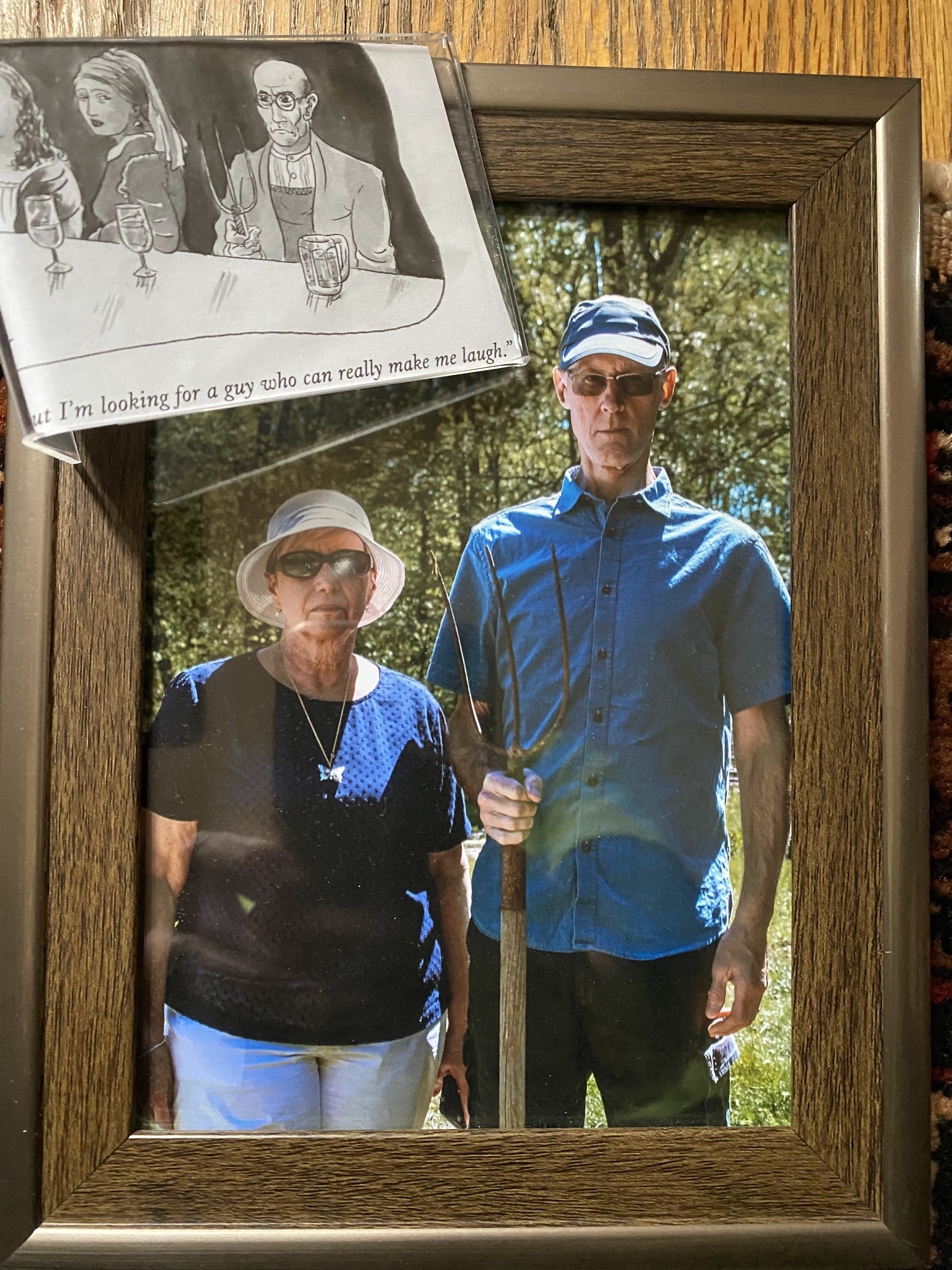

...During his years at Poetry [as editor], Wiman came to feel alienated from contemporary poetry and what he regarded as its self-obsessed confessionalism. Before he learned he had cancer, he'd been planning to resign from the magazine—he and [wife Danielle] Chapman, in thrall to the mythology of another pair of poet partners, Donald Hall and Jane Kenyon, living and writing in pastoral bliss in New Hampshire, hoped to leave Chicago for Tennessee and make Fairfield into their own Eagle Pond Farm. But Wiman's cancer treatments can cost more than a million dollars a year; handcuffed by health care, they stayed put. Then, in 2010, Wiman was invited to give a lecture at the Yale Institute of Sacred Music, on the campus of the Yale Divinity School. He was so taken by his conversations with the students, the way they talked so straightforwardly about their faith and their fears and what he considers life's ultimate concerns, that when he got home he wrote a letter to Yale angling for a job.
Wiman became a senior lecturer in religion and literature, and Chapman became a lecturer in English. He is now the Clement-Muehl Professor of Communication Arts. One Friday morning this fall, at nine-thirty on the nose, he arrived in a seminar room on the Sterling Quadrangle for his course "Poetry and Faith" holding up a stack of handouts like Perseus holding the head of Medusa. He'd woken that morning full of fever and pain and nausea—something that still happens to him every few weeks, most often from colds and viruses his weakened immune system can't fight off—and had considered cancelling the class, but he wanted to clear up something he'd said the previous week, about Philip Larkin's "Aubade." Wiman had told his students that the poem spoke the truth to him as a Christian, which shocked some of them, since it famously describes religion as "that vast moth-eaten musical brocade / Created to pretend we never die."
For Wiman, the poem's theological power comes from its confrontation with "a kind of absolute nothingness." His handout contained a few quotations clarifying the point. The first was from the German theologian H. J. Iwand: "Our faith begins at the point where atheists suppose that it must be at an end. Our faith begins with the bleakness and power which is the night of the cross, abandonment, temptation, and doubt about everything that exists!" The second was from a letter written by Dietrich Bonhoeffer not long before he was murdered by the Nazis: "We cannot be honest unless we recognize that we have to live in the world etsi deus non daretur" (as if there were no God). Before Wiman could finish with the handout, a student tried to slip in late. Wiman reminded his class of the punishment for tardiness—memorizing a sonnet—then turned to that week's readings, which were about love..." --Casey Cep, NYer
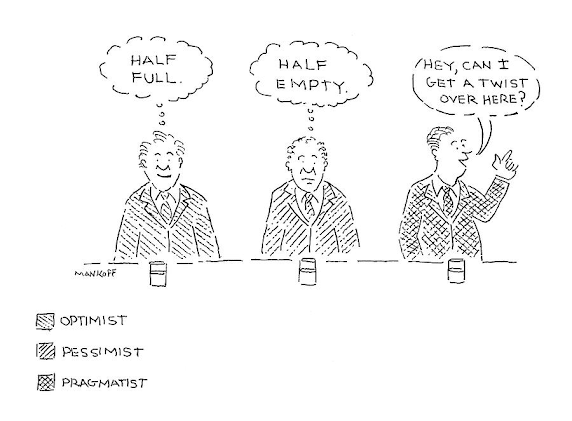
To love god, he thinks, one must love life, the world, and all that's in it. Pragmatic meliorists differ on that point, loving only what's lovable and fighting what isn't.
But for a man racked with debilitating cancer, having survived a brutal Texas childhood, to have made such a gracious accommodation to his own suffering is impressive. Maria Popova is impressed, and characteristically insightful about Wiman and his relevance to those of us who cannot share his particular variety of faith. He, she writes,
considers how any large and luminous love transcends the personal — the realm of the self — and unselves us into the sacred…
At its core, love is the quality of attention we confer upon another; and as Simone Weil observed in her timeless meditation on the nature of grace, “attention, taken to its highest degree, is the same thing as prayer.” All of love’s gravity and all of its grace are found in our acts of attention.
Like WJ I cannot pray ("I cannot possibly pray-I feel foolish and artificial"). But that line would have grabbed WJ's attention, as it has mine. Especially that word love.


"Toward the end of Nature, for example, Emerson turns directly to his reader and says unblushingly:Writing a book, no less than plowing a field and laying out a diamond, is building a world too.
Every spirit builds itself a house, and beyond its house a world, and beyond its world a heaven. Know then, that the world exists for you. For you is the phenomenon perfect. What we are, that only can we see. All that Adam had, all that Caesar could, you have and can do. Adam called his house, heaven and earth; Caesar called his house, Rome; you perhaps call yours, a cobbler's trade; a hundred acres of ploughed land; or a scholar's garret. Yet line for line and point for point, your dominion is as great as theirs, though without fine names. Build, therefore, your own world." --Robert Richardson, First We Read...
"I would go so far as to suggest that you should always write your lead (redoing it and polishing it until you are satisfied that it will serve) before you go at the big pile of raw material and sort it into a structure.
O.K. then, what is a lead? For one thing, the lead is the hardest part of a story to write. And it is not impossible to write a very bad one. Here is an egregiously bad one from an article on chronic sleeplessness. It began: “Insomnia is the triumph of mind over mattress.” Why is that bad? It’s not bad at all if you want to be a slapstick comedian—if humor, at that stratum, is your purpose. If you are serious about the subject, you might seem to be indicating at the outset that you don’t have confidence in your material so you are trying to make up for it by waxing cute. I have often heard writers say that if you have written your lead you have in a sense written half of your story.
Finding a good lead can require that much time, anyway—through trial and error. You can start almost anywhere. Several possibilities will occur to you. Which one are you going to choose? It is easier to say what not to choose. A lead should not be cheap, flashy, meretricious, blaring. After a tremendous fanfare of verbal trumpets, a mouse comes out of a hole blinking." --Draft No. 4: On the Writing Process
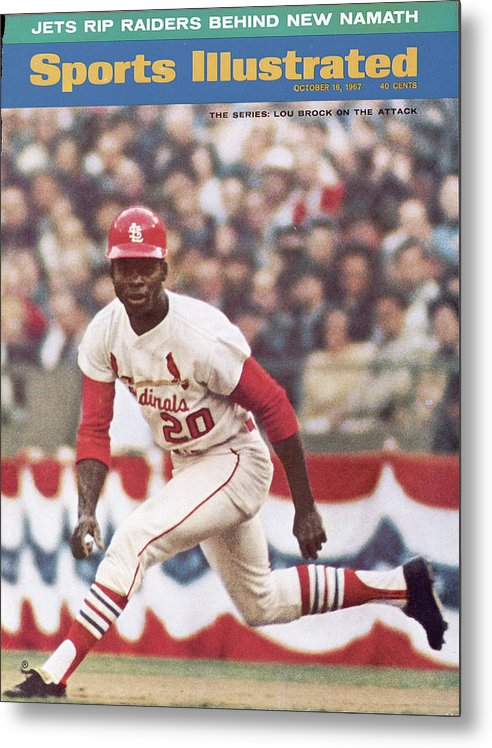
So the takeaway is: take the time and trouble to do and re-do a good lead, which--like a good lead-off hitter--sets the table and the tone for what follows. So who's the inspiration here? Shoeless Joe? Rickey Henderson? Ichiro?
No. I'm sticking with Lou, my boyhood hero, c.1967.
Here it is, the new year getting older by the moment. I find myself wanting to work, this morning, on the Honors Lecture I've just agreed to deliver in April. But there are other and more pressing deadlines to meet. So I'll just nod at this now, and then try to re-direct my attention.
The lecture series is called Mental Health and the Good Life: Strategies for Happiness, Wholeness, Wellbeing. My contribution will be "Healthy Minds, Flourishing Lives: A Philosophical Approach to Mental Health and Happiness"...
These elderly folks [on his cruise] were carelessly frittering away their children’s inheritance, money that might’ve put a young person through Malarkey State for a degree in communications and a career as an influencer, but it was sweet to see the affection between the lengthily married, the exchange of glances, holding hands, the impulsive kiss. To stay in love, that’s a good way to maintain compos mentis…Many kids these days, I observe, are avowedly angst-ridden and seemingly not much in love with life. But that's the bedrock of every other form of vital human connection. I made that point the last time I spoke to the Honors College in August '22, talking about Aristotle on friendship.