Delight Springs

Tuesday, May 10, 2016

A mindful Mothers Day

Yesterday's Happiness class in the former Baptist sanctuary led us to consider the Buddhist prescription for afflictive, destructive emotions - especially anger. Meditative practice, they say, yields pure awareness, and in that constructive state of lucid selflessness we can stand apart from violent emotion and see it as just a passing thought we need not feed or identify with.

Sounds too easy. But my account of last week's softball incident brought nods of recognition. Most of us have witnessed bad behavior at sporting events, more often from parents than participants.

Does conflict on the field of play really neutralize our ancestral violence, or enable it? When "Big Papi" (David Ortiz), the soon-to-retire Red Sox star, goes crazy over a strike call, menacingly charges the umpire, and is praised by the jock commentators for his "passion," does that communicate to kids the idea that it's more than okay to cede self-control to an emotional seizure just because we want so desperately to win a game?

It's asking a lot, I guess, to expect professional athletes to set a mindful example when they've always been encouraged ever since their own childhoods to play with unbridled abandon. Self-restraint (let alone selfless kindness and compassionate decorum) is apparently just for losers. That's the way politics is being played this season too. But this is one "cherry" I'd love to see a generation of students pick from the Bodhi tree.

We also talked yesterday about the simple but deep happiness we can all glean, if we choose, from occasions like Mothers Day. Ours, spent on Sunday with family at Granny's out in the Tennessee hinterlands she calls "God's country," was a treasure. It was made especially joyous, for me, by Younger Daughter's heartfelt presentation of a thoughtful homage to her mother reminiscent of last Fathers Day, artfully inscribed on large wooden letters spelling M-O-M. (My "D-A-D" present has become a happy shrine, out back in my getaway shack.)

Such a gift is a great symbol and token of what the Buddhists call "loving kindness." Some of that middle school mindfulness training must have stuck, after all.

5:45/5:46, 67/83
Postscript. I was pleased to find two essays in the Times this morning that directly echo themes we discussed in class yesterday:

Monday, May 9, 2016

Commencement

Commencement on Saturday afternoon was long and hot, as usual, under the medieval robes in Murphy Center. Our speaker Kary Antholis, a filmmaker & HBO exec, gave the grads a short and worthy sendoff.
Explaining that his Oscar-winning documentary on Holocaust survivor Gerda Weissmann Klein, “One Survivor Remembers,” had its impetus in his own mother’s family’s horror in Greece at the hands of the Nazis, Antholis recalled Mrs. Klein’s beautiful, gracious words that night and their impact since. (You can see Mrs. Klein’s speech here.)
“You do earn success with hard work and self-reliance, but you also will be served by remaining mindful of the people who’ve helped you along the way,” Antholis said.
“As you go forward and build your lives, enjoy success and endure setbacks, please know that you will always be well-served by honoring the voices, values and love of those who have supported you and made sacrifices for you.”
Over the speaker's right shoulder, nodding attentively (in response to something cynical my colleague Jack, off-camera, whispered as he looked up briefly from his book), there I am, at about the 3'46" mark.


Fortunately my face doesn't betray the discomfort of those tiny rock-hard plastic seats on my aching joints. I never sit still for two and a half hours, except at Commencement.

What really matters, though, is how happy it made all those kids - some not so young anymore - to walk off that stage with those credentials. 


If I ever give a commencement speech I'll quote Kary Antholis on always being mindful of the others whose support and sacrifice enables our personal flourishing. I'll mention Buddhist altruism, compassion, and kindness too. "Our own happiness is intimately linked to that of others," writes Matthieu Ricard. The Dalai Lama backs him up on that. The souvenir Older Daughter brought back from Bonnaroo two years ago, now on display in a corner of my office, nearly says it all:


“We are visitors on this planet. We are here for one hundred years at the very most. During that period we must try to do something good, something useful, with our lives. if you contribute to other people's happiness, you will find the true meaning of life.”
5:30/5:47, 70/81/62


Saturday, May 7, 2016

Afflictive emotions

Ankle healed and other ailments in remission, Younger Daughter returned to softball action yesterday just in time to help her team cap an undefeated season. Drove in the tying come-from-behind runs, scored the winner. A joyous moment of celebration!

But the moment was quickly muted by an ugly scene, centering on a teammate who'd been heckled during the game and decided to confront her hecklers. She had to be physically restrained and removed. The situation wasn't her fault, but her response to it was disastrous. The mood of festivity turned to confusion and sorrow as the crowd dispersed, the victors feeling cheated of their hard-won but short-lived elation.

We humans, some more than others, are primitively wired for this sort of sudden fight-or-flight reversal when laughter turns instantly to rancor and tears. It's part of our native inheritance, a residual vestige of a time before softball when every encounter might have been expected to turn violent and possibly terminal.

The Buddhists speak of the "afflictive emotions" -  anger, pride, jealousy, attachment and ignorance. Matthieu Ricard says we can manage and even transcend them, with a lot of practice.
Anger can fill our mental landscape and project its distorted reality on people and events. When we are overwhelmed by anger, we cannot dissociate from it. We perpetuate a vicious circle of affliction by rekindling anger each time we see or remember the person who makes us angry. We become addicted to the cause of suffering.
But if we dissociate from anger and look at it with mindfulness, that which is aware of anger is not angry, and we can see that anger is just a bunch of thoughts. Anger doesn’t cut like a knife, burn like a fire, or crush like a rock; it is nothing more than a product of our mind. Instead of “being” the anger, we understand that we are not the anger, in the same way that clouds are not the sky.
So, to deal with anger, we avoid letting our mind jump again and again to the trigger for our anger. Then we look at anger itself and keep our attention upon it. If we stop adding wood to a fire and just watch, the fire will die out. Likewise, anger will vanish away, without being forcibly repressed or allowed to explode.
There is no question of not experiencing emotions; it’s a question of not being enslaved by them. Let emotions arise, but let them be freed from their afflictive components: distortion of reality, mental confusion, clinging, and suffering for oneself and others.
There is great virtue in resting from time to time in pure awareness of the present moment, and being able to refer to this state when afflictive emotions arise so that we do not identify with them and are not swayed by them.
So easily said, harder done. Younger Daughter's old school tried to introduce her to mindfulness in the middle grades. She wasn't ready for it then. Maybe, after the scene at the ball-field yesterday, she and her teammates might give it another look.

They're back out there Monday for the big tournament. There's no better time to practice pure awareness than now.

6 am/5:49, 50/85

Friday, May 6, 2016

Frude and his discontents

It's Sigmund Freud's birthday. He'll get a mention in Happiness as one of the skeptics who doubt our capacity for genuine subjective well-being, we discontented partial products of civilization. But he doesn't doubt our universal hunger for happiness. “What do [people] demand of life and wish to achieve in it? The answer to this can hardly be in doubt. They strive for happiness; they want to become happy and to remain so.” The trouble is, our heritable nature teems with unexpressed and socially unapproved uncivilized desires whose satisfaction, hence our happiness, cannot be sanctioned.

Maybe. But as he also notes, we have it in ourselves to reconstruct those desires. We can find tremendous satisfaction in our work, for instance. 
And yet, as a path to happiness, work is not highly prized by men. They do not strive after it as they do after other possibilities of satisfaction. The great majority of people only work under the stress of necessity, and this natural human aversion to work raises most difficult social problems. Civilization and its Discontents
He wasn't speaking for himself, apparently. He took great satisfaction in his work. Many of us do. True, we've conditioned ourselves to an aversion to the word and some of its socially constructed connotations. But that's just a bad habit.

We need to habituate ourselves to a different attitude, and perhaps a different language. "Work" may be an un-redeemable four-letter-word. Why not just call what we do for fun and satisfaction living? The problem, of course, is that too many people don't derive fun and satisfaction from what they do for money.

Barney Fife was wrong. "Frude" did not quite have it all figured  out.

6 am/5:50, 47/74

Thursday, May 5, 2016

Going nowhere on shanks' mare

My Stroll Thru Western Civilization course, beginning Wednesday, now has a syllabus. Meeting once a week for (up to) three hours, We'll cover the ground in brisk strides of two or three chapters per session. We'll mimic the peripatetic style when we can. Those of us who are able and eager will occasionally "walk up and down" while discussing our subjects.
Our focus will be on interpreting the western philosophical tradition as an ongoing response to Plato (to whom British philosopher A.N. Whitehead famously said all of western philosophy is a series of footnotes) and Aristotle (whose students were known as Peripatetics, from the Greek word meaning "to walk up and down" while learning). We'll follow their tracks to our own doorstep, noting as we go the growing rosters of "players" on Teams Plato and Aristotle. We'll take note, as well, of those whose thought was substantially conducted "on shanks' mare."
That's a strange expression, Bruce, "shanks' mare."
Page xv

That was Ron Strickland's invitation in his "Compendium of Remarkable Walks," and it's mine in MALA 6030 - a course I wouldn't have been able to offer this summer if my Study Abroad course in Britain had drawn just a bit more interest. Counting on better luck (aka "the residue of design" by #42 and his patron) with that next year.

But it is a sweet irony that, as things turn out, I'll stay put in middle Tennessee this summer to undertake a larger stroll than originally envisioned. Globetrotting travel author Pico Iyer appreciates such irony.
I'm a lifelong traveler. Even as a little kid, I was actually working out that it would be cheaper to go to boarding school in England than just to the best school down the road from my parents' house in California... almost inevitably, I became a travel writer so my job and my joy could become one.... [But] one of the first things you learn when you travel is that nowhere is magical unless you can bring the right eyes to it. You take an angry man to the Himalayas, he just starts complaining about the food. And I found that the best way that I could develop more attentive and more appreciative eyes was, oddly, by going nowhere, just by sitting still.
He doesn't necessarily mean literal seated meditation, zazen. He does mean stepping back from the immersive business of constantly going, and increasingly of staring at screens and projecting contrived personae through them. This came up in discussion in our Happiness class Monday, it'll probably come up again as we focus on Buddhist happiness next. We all need to find time for a happy stillness. I find mine, most often, on shanks' mare. The nectar for me (and John McDermott) is still in the journey, most often a journey to no place in particular.


Happy birthday to the melancholy Dane, Kierkegaard. He got around plenty on shanks' mare, and probably only ever achieved a quiet mind while hoofing it around Copenhagen, before dying at 42 (not his lucky number). Wonder how he'd feel about being on screen?

The crucial thing is to find a truth which is truth for me, to find the idea for which I am willing to live and die.

6 am/5:51, 45/64

Wednesday, May 4, 2016

Presence, past and future

Thinking more this morning of life-changes, and dipping into Matthieu Ricard's 2004 "Habits of Happiness" TED Talk, where he says some of us believe only in "remembering the past, imagining the future, never the present." I don't know anyone who really says that, but many of us act as though we believe it most of the time. That was Kierkegaard's point, when he complained of the mania of busy-ness. We don't stop to smell the roses often enough, to slow down, to forget the clock and the to-do list and just inhabit the moment attentively.

Others, though, "say happiness is right now; it's the quality of the freshness of the present moment."

They're missing out, too. But on what?

Ricard quotes Henri Bergson, "All the great thinkers of humanity have left happiness vague so that each of them could define their own terms." Smart. When I find a way to articulate what's wrong with pure presence, to the exclusion of past and future - especially future - I'll finally have defined happiness my way and identified my happiness project - which, btw, Gretchen Rubin rightly said we all should undertake. There is no single Project, just so many projects. Most of them have been allowed to gather dust.

We noted in Bioethics, contrary to the conventional wisdom, that many older people are also happier than at any earlier stage of life. Slower, sure. But steadier too, those who've kept themselves mentally engaged, active, and curious. There are genes for that of course, but you don't have to have won the genetic lottery to develop your happiness skills. 

Among them: a capacity for attentive presence, a reminiscent fondness for the past of pleasant memory, and an active interest in what William James called our most vital question. "What is this world going to be? What is life eventually to make of itself?" Happy people take delight in imagining the future, caring about it, building it - or at least not impeding or derailing it. 

My current cosmic leisure-reading looks forward and back, while pondering life in all its dimensions. The big picture is not an enemy of meaningful presence, and may even be one of its conditions.

Image result for how it all began impey  Image result for five billion years of solitude the search for life among the stars

"On this day in 1675, England’s King Charles II commissioned the Royal Greenwich Observatory, the center of time and space on Earth..." And its the birthday of Horace Mann, who said we should all “be ashamed to die until you have won some victory for humanity.”

6 am/5:52, 47/68


Tuesday, May 3, 2016

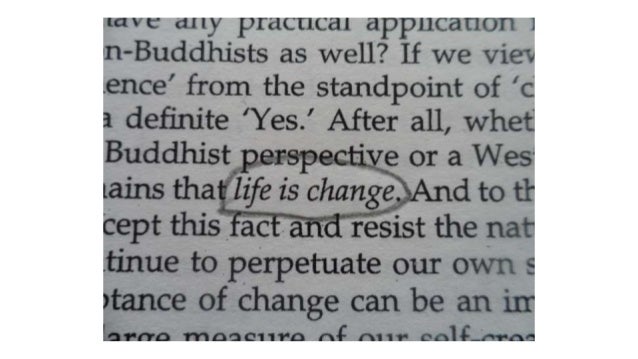
"Life is change"

Our first Lifelong Learning Happiness class yesterday was great fun, over in the Ingram Building across the street that used to be a Baptist church before the university bought it. The amusing irony is not lost on me, that I'm preaching happiness in a place I had to leave, to find our subject and my calling. Big change.

I had plenty of room to roam, with my mobile mic in the former sanctuary, as we introduced our topic and ourselves. It was quite a change from my usual classroom situation, to be in the presence of so many "mature" learners (not decades younger than I) who got all my dated references, laughed at my bad jokes, and weren't at all reticient to speak up and say what they'd learned over a lifetime.

One of the points they seemed to concur with: happy people aren't afraid to make a change. Gretchen Rubin, for instance, whose ongoing Happiness Project (not to be confused with Project Happiness, also dedicated to positive change) is happening because she found life in the legal fast lane insufficiently gratifying. She acknowledged the necessity of change.

Chris Phillips also comes to mind. He left a lucrative advertizing career to launch Socrates Cafe.

And then there's Matthieu Ricard, the molecular biologist who left France for Tibet, became the Dalai Lama's French translator and "the happiest man in the world." We'll talk about him next week. Can't wait.

6 am/5:53/7:34, 55/69/49

Monday, May 2, 2016

"Felt Time"

An opening day in May, before the old grading's done. Not used to that. Feels like time has come a bit undone.

All the Happiness authorities say it's good, though, to vary routine and seek novelty. Time and memory have much to do with happiness, and the more variety we can squeeze into our lives the deeper our well of memorable experiences to draw on in later life.

"Two millennia after Seneca’s acutely timely treatise on how to extend the shortness of life by living wide rather than long," Maria Popova notes, Marc Wittmann in Felt Time examines the psychology of expanding our experience of time:
In order to feel that one’s life is flowing more slowly — and fully — one might seek out new situations over and over to have novel experiences that, because of their emotional value, are retained by memory over the long term. Greater variety makes a given period of life expand in retrospect. Life passes more slowly. If one challenges oneself consistently, it pays off, over the years, as the feeling of having lived fully — and, most importantly, of having lived for a long time. (continues)
Hence the tragedy of Alzheimer's and its anticipation, as featured in the Times yesterday. And yet, it's possible to mute the tragedy's early stages with a little help from your friends in the support group.
“It’s like a party,” she would tell others. “Everyone’s laughing. And everyone is happy they are with people just like them who can’t get the words out and can’t find the bus pass.”
Sitting there in the bubbly ambience, she would sometimes think, We shouldn’t be this happy.
It was as if they were all high. High on Alzheimer’s.
Good for them. When that high wears off, they may want to consider other possibilities for generating new life-expanding situations and novel experiences. 

Live wide and long, and prosper.

6 am/5:54, 62/72/53

Friday, April 29, 2016

Sacred space

Happiness, the Briefer Course commences Monday. I've billed it as a distillation of the course I've done many times before, but deciding what to distill and what to leave out of our four May sessions is a challenge. And, how to begin.

I've lately been concluding some of my classes, on the last day, with a quote from Joseph Campbell about following your bliss and not following a guru. Maybe he'll be good on Day 1, too.

[Sacred space] is an absolute necessity for anybody today. You must have a room, or a certain hour or so a day, where you don’t know what was in the newspapers that morning, you don’t know who your friends are, you don’t know what you owe anybody, you don’t know what anybody owes to you. This is a place where you can simply experience and bring forth what you are and what you might be. This is the place of creative incubation. At first you may find that nothing happens there. But if you have a sacred place and use it, something eventually will happen. Power of Myth, Brainpickings
Something like happiness may even happen there, and may be mobile - so long as you remember to make your way back to the sacred space again tomorrow and the next day and the next, and don't bog down in unreasonable expectations of personal perfectability. Errors and false starts happen, inevitably, but they're not irrecoverable. Or so I think I've learned.

6 am/5:57, 57/84

Thursday, April 28, 2016

Lucky as Lou

Grading time again. Best way to learn? Practice, practice...

Image result for grading cartoon

"Mature" learners, like those I'll be meeting Monday in my Lifelong Learning class on happiness, know that practice counts.

They (unlike Calvin) also know that "youth's a stuff that won't endure," and that "to see the daylight still under any conditions" makes us lucky as Lou Gehrig. He died at 38, had a horrible disease named for him, and considered himself "the luckiest man on the face of the earth."

Lou knew. We're all lucky and, happiness researchers confirm, happier when we know it. Happy people are grateful to be alive. They treasure their good health for as long as it lasts, and turn it into gratifying experience. Many of them practice gratitude, some even keep a gratitude journal. I guess that's kinda what this blog is, though I sometimes use it to complain about politicians and ungrateful students.

What else will I tell my mature students on Monday? For one thing, that happy people know what they know, but don't pretend to know it all. They're Socratically humble and self-effacing. They live and learn, remaining always open to new possibilities and perspectives. I probably don't need to tell them that. I'm looking forward to learning from them. I always do.

And the happiest mature people know that so-called little things matter a lot, like Grandpa at the softball game last night with Coach's toddler. He couldn't stop effusing over how smart and cute and clever she is. It's when we stop to look and appreciate the promise of the next generation that we really get it: "Oh, but the long, long time the world shall last," after we're gone.

6 am/5:58, 66/86/57

Tuesday, April 26, 2016

The End

An unexpected trip to the emergency clinic, after Younger Daughter's inelegant slide at second base last night, is another little reminder that things can end more suddenly than expected. (It was just a sprain, fortunately, and her team swept the doubleheader.)

It's suddenly semester's end today. We wrap up CoPhi with questions about the future of life and intelligence (the AI debate between Turing and Searle) and, prompted by Peter Singer, what we all owe one another.

In Atheism, Russell's last words both affirm and swipe at American philosophy, disputing de Tocqueville's judgment that Americans are the least philosophical of peoples but also repudiating the pragmatic suggestion that truth has anything essential to do with utility. Then, a look at how Russell's heir Hitchens handled his own sudden end.

In Bioethics, Atul Gawande's touching farewell to his father reminds me of one of my last hard but healing conversations with mine, and of something else William James said as his own time grew short in the summer of 1910.
...youth's a stuff that won't endure, in any one, and to have had it, as you and I have had it, is a good deal gained anyhow, while to see the daylight still under any conditions is perhaps also better than nothing, and meanwhile the good months are sure to bring the final relief after which, "when you and I behind the veil are passed, Oh, but the long, long time the world shall last."
Gloomy perhaps, but as Sam Scheffler says, the collective afterlife on this side of the veil gives us all a lot to live for. Like Lou Gehrig, we're lucky - the luckiest - to have seen and felt the daylight at all. Life goes on, nothing is concluded.

And my lifelong learning Happiness class begins on Monday. It almost never ends.

5:30/6:01, 63/89/62

Thursday, April 21, 2016

A better life

Busy day ahead: Wittgenstein, Arendt, and Rawls in CoPhi, Russell on "nice" people and sexual ethics in his day, in Atheism (what would he say about our culture of sexting and oversharing?), Gawande on autonomy and "A Better Life" in Bioethics, then a pitch for my summer course "A Stroll Through Western Civilization," and finally a talk to the Students for Environmental Action I'm calling "Earth Day 2016: A Glimmer of Hope".

John Muir is an Earth Day hero, a self-described “poetico-trampo-geologist-botanist and ornithologist-naturalist etc. etc.,” an early-riser, thousand-mile walker, and inventor of "a bed that set him on his feet every morning and simultaneously lighted a lamp, then opened each of his textbooks for a set length of time." He wrote his address: “John-Muir, Earth-planet, Universe.”

Image result for mark twain halley's cometThe Almanac also reports that this was the day in 1910 when Mark Twain went out with the comet he rode in on.

Twain wasn't quite old enough then, at 75, to join my collection of inspiring older people. If I get to the end of my Earth Day slideshow this evening, I'll mention one of them: the late, great environmental steward Stewart Udall. He wrote a wonderful letter to his grandchildren (and he was one of those magnificent citizens of the planet and universe, like John Muir, who considered us all his grandchildren).
This is the most important letter I will ever write. It concerns your future—and the tomorrows of the innumerable human beings who share this vulnerable, fragile planet with you. It involves changes that must be made if environmental disasters are to be avoided. The response to this challenge will shape the future of the entire human race…
Why am I so optimistic about your future? Because the world has had its fill of fear and is hungry for hope. Because an educational revolution has been underway for the past two decades in several countries and has enhanced the capacity of nations to deal with unprecedented challenges... the doubling and prospective tripling of the number of highly trained, selfless scientists and engineers has produced a pool of brainpower and moral power that is ready to create the building blocks of a new and better world.
The challenges that your generation faces will test your ingenuity and generosity. Your eyes will scan horizons that human beings have never contemplated. Whether you are a person of faith who believes the Earth is the Lord’s and the fullness thereof, whether you are an individual who has had mystical experiences that link you to the network of eternity, or whether you are a fervent conservationist who wants to leave a legacy for your progeny, the earth needs your devotion and tender care.
Go well, do well, my children! Support all endeavors that promise a better life for the inhabitants of our planet. Cherish sunsets, wild creations, and wild places. Have a love affair with the wonder and beauty of the earth!
5:30/6:07, 67/72